


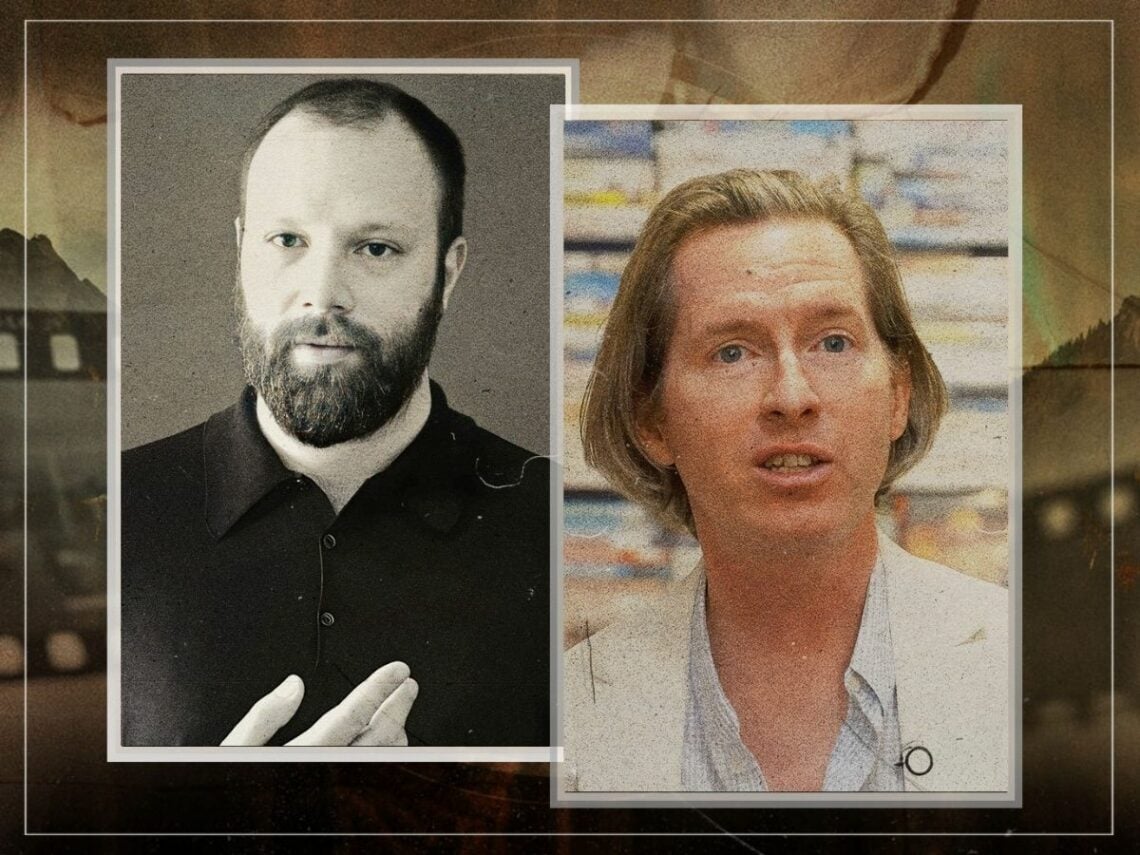
Has Yorgos Lanthimos made Wes Anderson obsolete?

At this point, we all know what to expect from a Wes Anderson movie. There will be meticulously framed sets steeped in colour theory, a star-studded cast, and a tone that is so catatonically deadpan that the slightest arch of an eyebrow or twitch of the mouth looks like pure melodrama. No one goes into a Wes Anderson movie expectin anything different, and yet, it is still possible to be profoundly disappointed.
His latest film, The Phoenician Scheme, stars Benicio del Toro as an infamous business magnate who uses his vast wealth to control various regions around the world. Following one of many near-assassinations, he summons his daughter Liesl (Mia Threapleton) from the nunnery where she is about to take her vows and declares that he intends to make her his sole heir after a brief trial period.
The trouble with the film is that there is no emotional centre whatsoever. Tom Hanks, Bryan Cranston, and Scarlett Johansson show up to deliver lines devoid of feeling, but far from being funny, it all starts to feel profoundly grating. Of course, deadpan comedy is supposed to be delivered without emotion, but that does not mean that it is doomed to be soulless, too.
In recent years, no one has demonstrated this seeming paradox better than Yorgos Lanthimos. Time and again, he has shown that characters who deliver lines in a monotone can run the gamut of emotions. In fact, that deadpan delivery can itself be expressive, making the characters seem tragic, arrogant, or fantastically liberated.
In movies like The Lobster and The Killing of a Sacred Deer, he uses flat line delivery to reveal the emotional isolation and resignation of the characters. In Poor Things, it does even more heavy lifting. Bella Baxter (Emma Stone) is an adult woman with the rapidly evolving brain of an infant. She is either delighted by or unfazed by pretty much everything she sees, and her deadpan way of speaking highlights how unconcerned she is with the sorts of interactions that send socially conditioned adults into fits of panic. The deadpan humour here is both comedic and revealing. It tells us something about the soul of her character and makes her an aspirational figure.
The Phoenician Scheme, in contrast, does very little to justify the deadpan line delivery. On the contrary, the actors seem to be trying so desperately to avoid using the muscles in their faces that it becomes a distraction. They endure plane crashes without so much as a flinch, perform blood transfusions while staring blankly into space like automatons, and discuss the murder of loved ones without a hint of irritation, let alone grief.
It is here, unfortunately, that we must talk about Brechtian alienation. The German playwright Bertolt Brecht created his own style of theatre in which taking the audience out of the story was the point. He believed in making his audience think critically about the political underpinnings of a play by preventing them from getting caught up in the emotional world of his characters. To accomplish this, he would sabotage immersion by, for example, requiring his actors to speak in a monotone, breaking the fourth wall, and keeping the sets as rudimentary as possible.
One could argue that Anderson is trying to be the modern-day Brecht, but there are a few issues with this contention. For one thing, he isn’t trying to impart a political message, or, if he is, he is doing so very badly. For another, there ain’t nothing minimalist about those sets. If anything, he’s using Brechtian alienation to plunge his audience into the endless intricacies of the backdrop rather than take them out of it. In The Phoenician Scheme, the interactions between the characters are so flat that you will probably find yourself tuning them out and sinking comfortably into the warm embrace of those unparalleled visual details. At this stage, Anderson should probably just take up photography or get into diorama building.
Last but not least is the fact that the director made a name for himself, doing just what Lanthimos does. His best film, 1998’s Rushmore, exquisitely employs deadpan humour to single out its two main characters — a teenage boy and a wealthy middle-aged industrialist — as kindred spirits. They are lonely, isolated, and too disdainful of everyone around them to accept anything else. It is his most poignant film and a high watermark that he has surpassed visually, but never emotionally.
It’s no revelation to say that Anderson’s most recent work has put style over substance. However, as directors like Yorgos Lanthimos demonstrate that it’s possible to steep a film in irony and visual beauty while conveying deep emotion, the soullessness in The Phoenician Scheme is all the more glaring. You can gaze in wonder at screen grabs of it all day, but hit ‘play’ and you might find yourself feeling utterly empty.
