


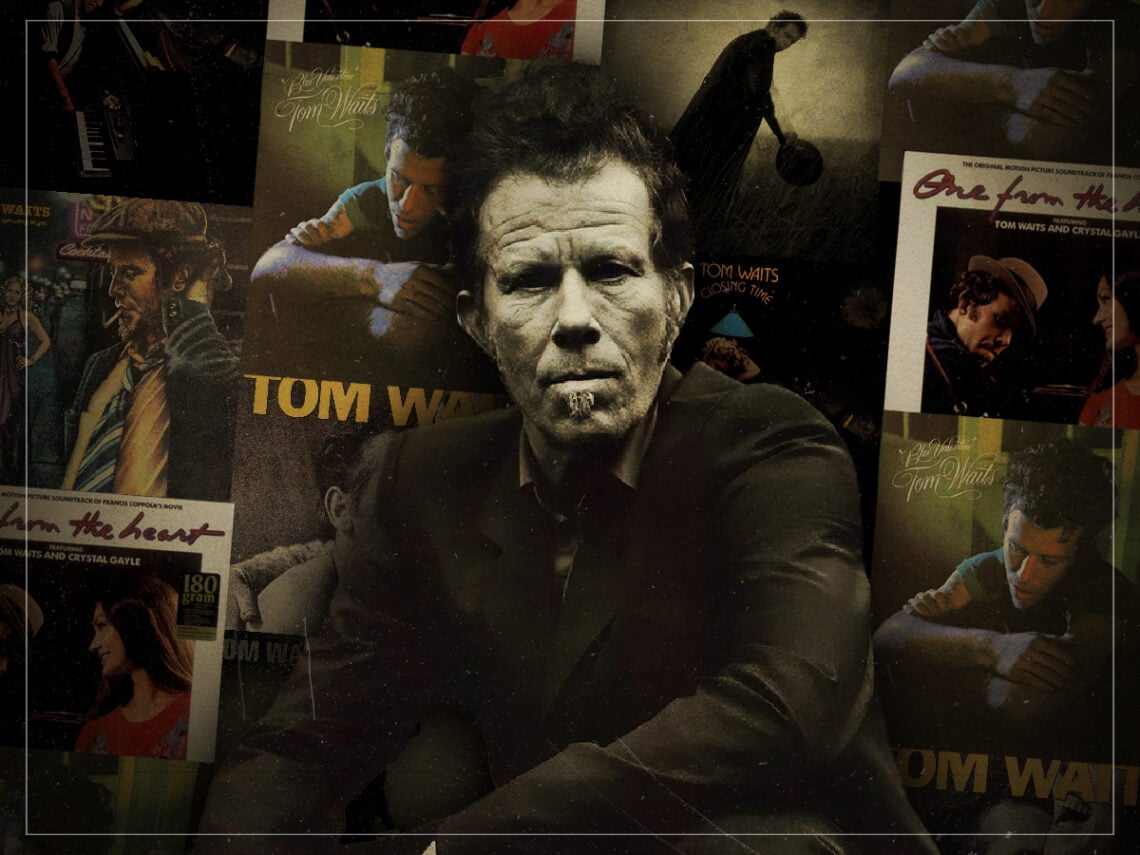
‘Big Time’: Has Tom Waits made more movies or albums?

Following the announcement that Tom Waits has lent his voice to the new animated movie Ray Gunn from The Incredibles director Brad Bird, the author of the ‘Every Tom Waits Song’ Substack series, Ray Padgett, quipped online that Waits will “do anything except record an album”.
In fact, this is the third film that has been announced so far this year that Waits is set to star in, as he has also teamed up with Irish director Martin McDonagh again for the upcoming Wild Horse Nine, and had previously been announced as part of the cast for the Travis Knight-directed stop-motion fantasy Wildwood. If Waits keeps on announcing movie roles at this rate, he’ll end up featuring in nine films this year, which might not seem like a huge number, but it’s the same number of albums that he has made in the last 41 years, going all the way back to one of his masterpieces, Rain Dogs.
Even if he just sticks with these three movies already announced for 2026, which, let’s face it, is the most likely event, well, that’s still almost as many as the number of albums he has made in the last 25 years. Though he’s best known as a singer who sometimes acts, perhaps it’s about time we started referring to him as an actor who also sings.
But as much as Tom Waits was born in the studio and on the screen (actually, if you believe the man himself, he was born in the backseat of a taxi-cab parked up in a hospital loading zone in California), he was born to star on the silver screen. There are not many musicians who are more interesting to look at and to watch, to listen to and to be mystified by than Tom Waits, whose magnetism, charisma and unique charm make him a perfect foil for any filmmaker wanting to step a little outside of the ordinary.
So, has Tom Waits made more films or albums?
Since his gorgeous 1973 debut Closing Time, Waits has released a further 16 studio albums and added three live releases on top, as well as the box-set release Orphans: Brawlers, Bawlers & Bastards, which is made up of off-cuts, outtakes and, well, brawlers, bawlers and bastards, and then there are the two soundtrack albums, which he wouldn’t have made if not for the movies they were attached to.
So, 17 albums proper, three live releases, two soundtracks and a collection of outtakes. Even if you (charitably) include the seven compilations that have been put out over the years to cover various portions of his career, that brings the total output of Waits’ recorded work to 30 releases.
In contrast, legendary musician and Rock and Roll Hall of Famer Tom Waits is on his way to half a century in the movies. By the time that Ray Gunn, Wild Horse Nine and Wildwood are released, he will have appeared in 42 films, give or take a couple of feature shorts and documentary appearances. Since he first appeared (and appeared is the right word, we’re not sure how much acting was required here) as a drunken piano-playing barfly named Mumbles in Sylvester Stallone’s 1978 directorial debut Paradise Alley, Waits has taken on roles in a wide range of fantastic films by some of our greatest ever directors.

In the 1980s and ’90s, he regularly worked with Francis Ford Coppola, first on One from the Heart, then on Rumble Fish and, best of all, on Bram Stoker’s Dracula, where Waits gave the definitive performance of the RM Renfield character, as well as with Jim Jarmusch (Down By Law, Coffee and Cigarettes, The Dead Don’t Die and Father Mother Sister Brother), Robert Altman (Shortcuts), Terry Gilliam (The Imaginarium of Doctor Parnassus, where he incredibly appropriately played the role of the Devil and worked alongside the man whose portrayal of the Joker in The Dark Knight was supposedly inspired by one of his own decades earlier interviews, Heath Ledger), Martin McDonagh (Seven Psychopaths), the Coen brothers (The Ballad of Buster Scruggs), Paul Thomas Anderson (Licorice Pizza), as well as featuring in Robert Redford’s cinematic swansong The Old Man & The Gun and making appearances in cult-classics like Ironweed, The Fisher King, Mystery Men and Wristcutters: A Love Story, as well as in his own mesmerisingly theatrical 1988 concert movie Big Time.
Waits’ movie-making was also the catalyst for his incredible stylistic overhaul, which happened around the mid-’80s, and the release of Swordfishtrombones, as he first met his wife and songwriting-partner, Kathleen Brennan, on the set of Paradise Alley. Brennan has been credited with helping Waits conceptualise and realise the phantasmagorical sound that has been a key feature of all his greatest works, and which we may never have heard without his foray into the world of films.
