


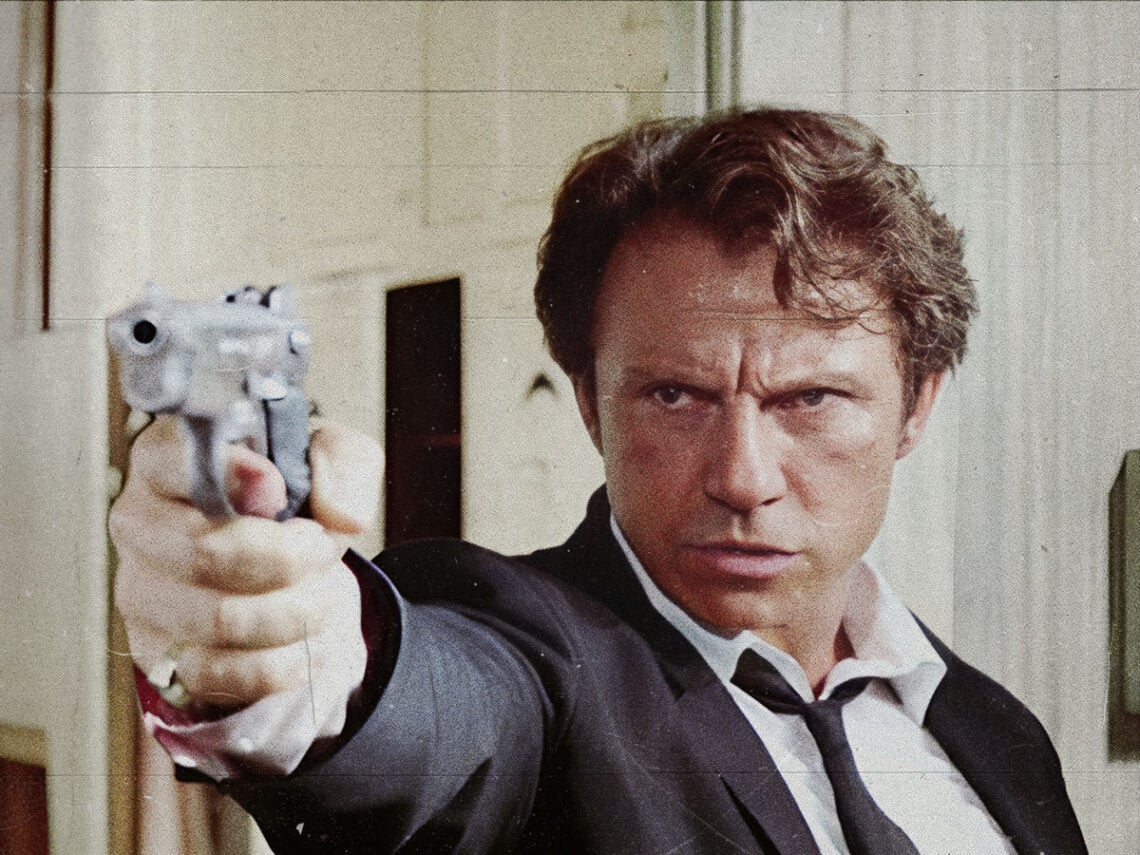
“It seems to have occurred that way”: is Harvey Keitel the real hero of Quentin Tarantino’s career?

For a filmmaker who’s become increasingly obsessed with their legacy to the point they’ve effectively painted their entire career into a corner, Quentin Tarantino is undoubtedly happy with how Reservoir Dogs tends to be remembered.
The former video store clerk burst onto the scene with his debut feature, which became the talk of the industry when it premiered at the Sundance Film Festival in 1992. It quickly gained traction as an underground favourite before ultimately becoming instrumental in permanently altering the landscape of American independent cinema.
While all of the above is entirely true, it’s a simplification. In fact, if it wasn’t for Harvey Keitel, then things may have turned out very differently for Tarantino. That’s not to suggest he wouldn’t have made it eventually when talent always has a way of breaking through and rising to the top, but the circumstances would have been markedly different.
Due to the financial and technological restrictions he faced as an everyday working man, Tarantino originally planned to shoot Reservoir Dogs in black-and-white on a 16mm camera on a budget of $30,000 with his friends filling the roles of cast and crew because that was about as far as he could stretch himself in terms of money and equipment.
Close buddy and soon-to-be regular collaborator Lawrence Bender inadvertently got the ball rolling when he shared Tarantino’s screenplay with his acting teacher, who then shared it with his wife, who happened to be a friend of Keitel’s. The actor was blown away by the ambition and singular vision displayed on the page by the upstart auteur and almost single-handedly turned Reservoir Dogs into what it became.
Tarantino could never have comprehended Keitel—whom he called “my favourite actor since I was 16 years old”—boarding his first feature, but it was the catalyst for everything that followed. He signed on as a co-producer to add some star power and industry clout to the project, which generated enough funding to secure a $1.5 million budget—not much by Hollywood standards, but still 50 times more than the writer and director initially planned.
It was Keitel who footed the bill for Tarantino and Bender to fly to New York, stay in a hotel for the duration, and hold casting calls. This resulted in Steve Buscemi, Michael Madsen, and Tim Roth signing on, all of whom became integral to the mythology and iconography of Reservoir Dogs.
“It seems to have occurred that way,” Keitel mused when reflecting to Empire on his role in jumpstarting Reservoir Dogs. “I’m always searching for an experience, and Quentin came along and provided it with this provocative piece of material.” Tarantino has always been confident in his own abilities, and he’d be entitled to believe that he’d have made it with or without his first feature’s patron saint, but his contributions can’t be denied or overlooked.
Reservoir Dogs was a small-scale indie flick in its finished form, but it would have been a lot smaller, a great deal rougher around the edges, and seen by a whole let less people if it wasn’t for Keitel taking an early shine to the script and deciding on the spot that it was a movie he wanted to be a part of.

Never Miss A Take
The Far Out Quentin Tarantino Newsletter
All the latest Quentin Tarantino content from the independent voice of culture.
Straight to your inbox.