


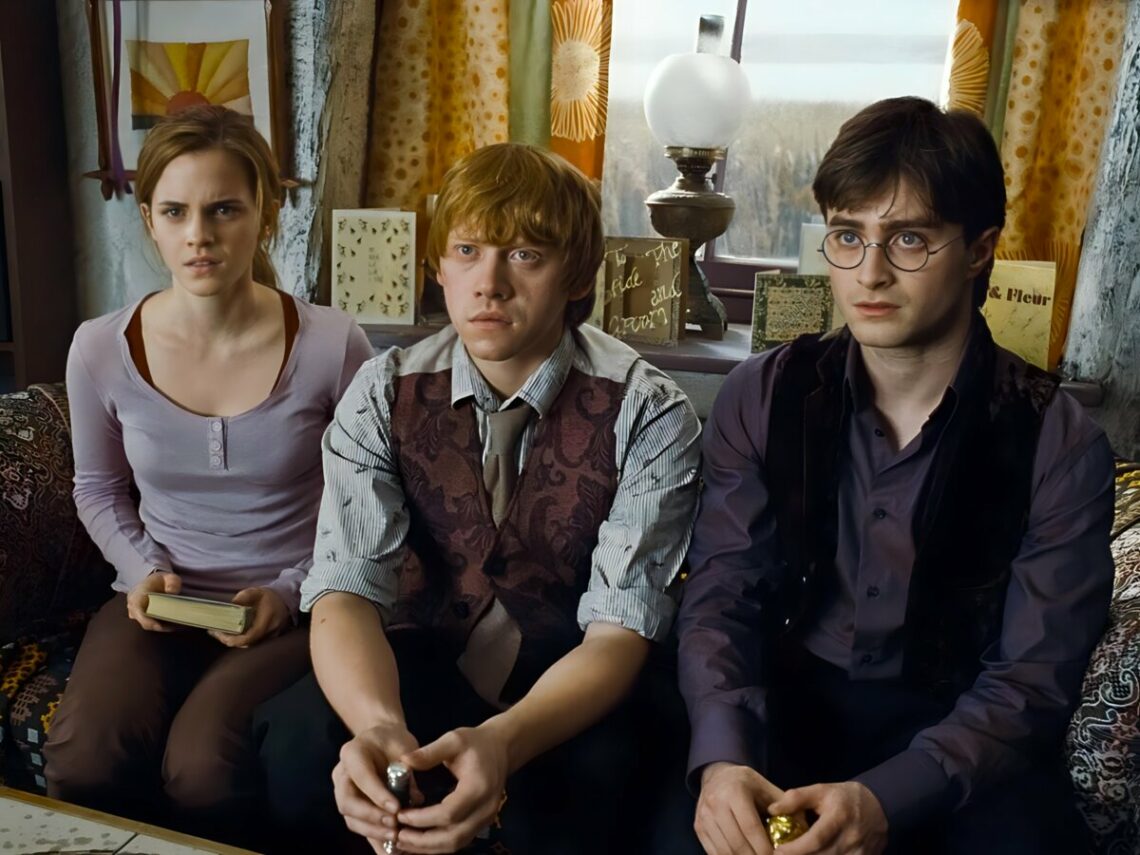
The ‘Harry Potter’ movie Daniel Radcliffe finds “hard to watch”

The success rate for child superstars carving out sustained cinema careers as adults is far from 100%, but Daniel Radcliffe accomplished it through the very simple means of doing the exact opposite of what everyone expected from the Harry Potter figurehead.
He was a grieving father in The Woman in Black, Allen Ginsberg in Kill Your Darlings, a farting corpse in Swiss Army Man, a federal agent undercover with Nazis in Imperium, a drug-running pilot in Beast of Burden, a stranded Israeli in Jungle, a South African political prisoner Escape from Pretoria, an office drone with guns bolted to his hands in Guns Akimbo, and most recently Al Yankovic.
Having already made enough money to keep him comfortable for life by the time he’d barely entered his teens, Radcliffe has opted to embark on a fascinating career path that’s seen him deliberately take on roles that are as challenging, complex, or occasionally deranged as possible.
He’d be the first one to admit his eight-film stint as ‘The Boy Who Lived’ was hardly defined by the dramatic range and depth of emotion on display, but one Harry Potter film in particular sticks out for Radcliffe as being difficult to watch for reasons that aren’t entirely down to his performance.
“In every movie up to the sixth one, you can see a big step forward in my acting. And then it stopped, or went backward maybe, in the sixth film,” he said to Playboy of Harry Potter and the Half-Blood Prince. “On the sixth, I remember watching it and thinking, ‘Wow, there’s been no growth.'”
Predecessor Order of the Phoenix had paired him with on and off-screen mentor Gary Oldman, resulting in a turn that Radcliffe “really enjoyed,” but he felt as though he’d dropped the ball in the adaptation for the penultimate novel in J.K. Rowling’s literary series.
“You’re watching a mistake you made every day for 11 months, that’s the way I saw it,” he continued. “I had the idea that Harry was like a soldier traumatised by war, and as a result of that, he shuts down emotionally. That’s not a bad idea, but it’s not the most interesting thing to watch for two and a half hours.”
The audience who’d been growing up with the franchise didn’t seem to mind, but Radcliffe felt the extra characterisation he tried to inject into his portrayal didn’t come across as intended. Instead, he found himself to be unemotional to the point of being wooden, which obviously wasn’t his intention.
With the greatest will in the world, though, the insane popularity of Harry Potter had very little to do with the acting abilities of the central trio, who eventually got the hang of their roles after the first couple of chapters featured some acting that was unconvincing to the point of being plain rough.
