


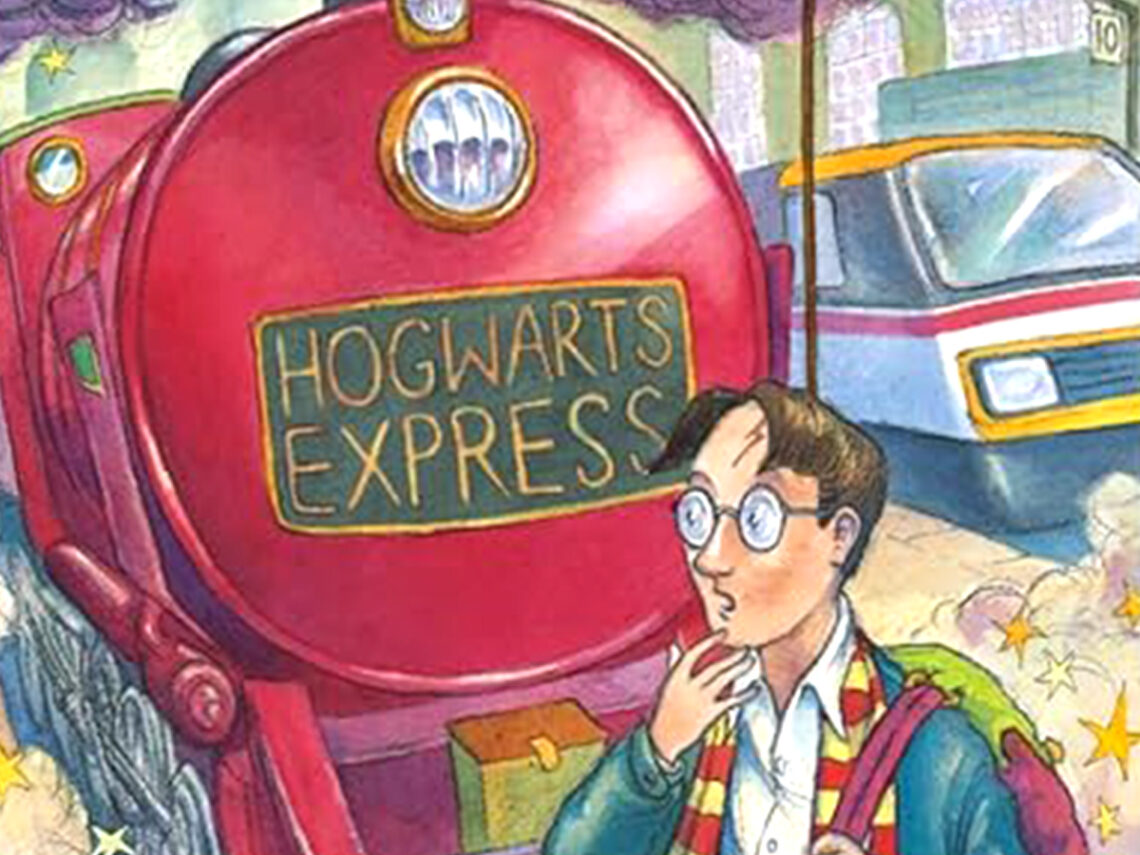
‘Harry Potter’ cover art sells for record price at auction

The original watercolour artwork for the cover of the first Harry Potter novel by J.K. Rowling The Philosopher’s Stone has been sold at auction, becoming the most expensive piece of Harry Potter memorabilia in the world.
The item has sold for more than three times the expected price at $1.9million at an auction in the United States, the painting has sent shockwaves through the auctioning, art and literary worlds. The painting had first been auctioned back in 2001, before the Harry Potter series had finished being written by Rowling.
Back then, it sold for just over $100,000. This year’s auction was expected to bring in around half a million dollars, but such expectations were far exceeded. “This is really the first visualisation of Harry and the wizarding world,” said Kalika Sands from Sotheby’s auction house.
The auction saw a four-way bidding war that went on for ten minutes, but the winner was not identified. Thomas Taylor is the person behind the artwork. He was just 23 years old when he created one of the most iconic pieces of fantasy literature art, a piece that saw a young wizard standing in front of a train that would take him to his new magical school.
Taylor was one of the first people to read the manuscript for Harry Potter and the Philosopher’s Stone, the first book in the series. It went on to birth an entire franchise of novels, movies and even a theme park.
Kalika Sands also spoke of the change in the cost of the artwork since it was first auctioned in 2001, when only four of the seven novels were released, and the first film had just come out in cinemas.
“In the intervening decades, it’s been extraordinary to see not just the conclusion of Harry’s story but also how the Harry Potter franchise has taken off, and in that time, new generations have come to appreciate Harry and his journey as well,” Sands noted.
On his website, Taylor wrote about how he first came to create artwork for publishers Bloomsbury while working in a children’s bookshop in Cambridge in the mid-1990s. He used concentrated watercolours and black pencils over the course of two days.
“People often ask why I wasn’t paralysed with the pressure of producing the cover art for one of the most famous books in the world,” Taylor wrote. “But these people forget that at the time, J.K. Rowling was as unknown as I was, and it must have seemed a fairly simple thing to marry up her text with my illustration style, such as it was.”
