


‘Happy Christmas’: The underrated mumblecore festive drama

Mumblecore isn’t for everyone, with perhaps the best signifier of that sentiment coming from the fact several of its most notable figures have wholeheartedly rejected the term. That didn’t prevent the subgenre from making a foray into the arena of holiday cheer, though, with Happy Christmas furthering the medium’s antithetical nature by releasing in July 2014.
One of the godfathers of mumblecore, the film was written, directed, produced, and edited by Joe Swanberg, even if he danced around his influence – and the label itself – in an interview with The Guardian: “We were making small, non-commercial movies without famous people in them,” he said. “And to some extent that word ‘mumblecore’ became like the famous person in the movie. The downside was that they could also dismiss the films.”
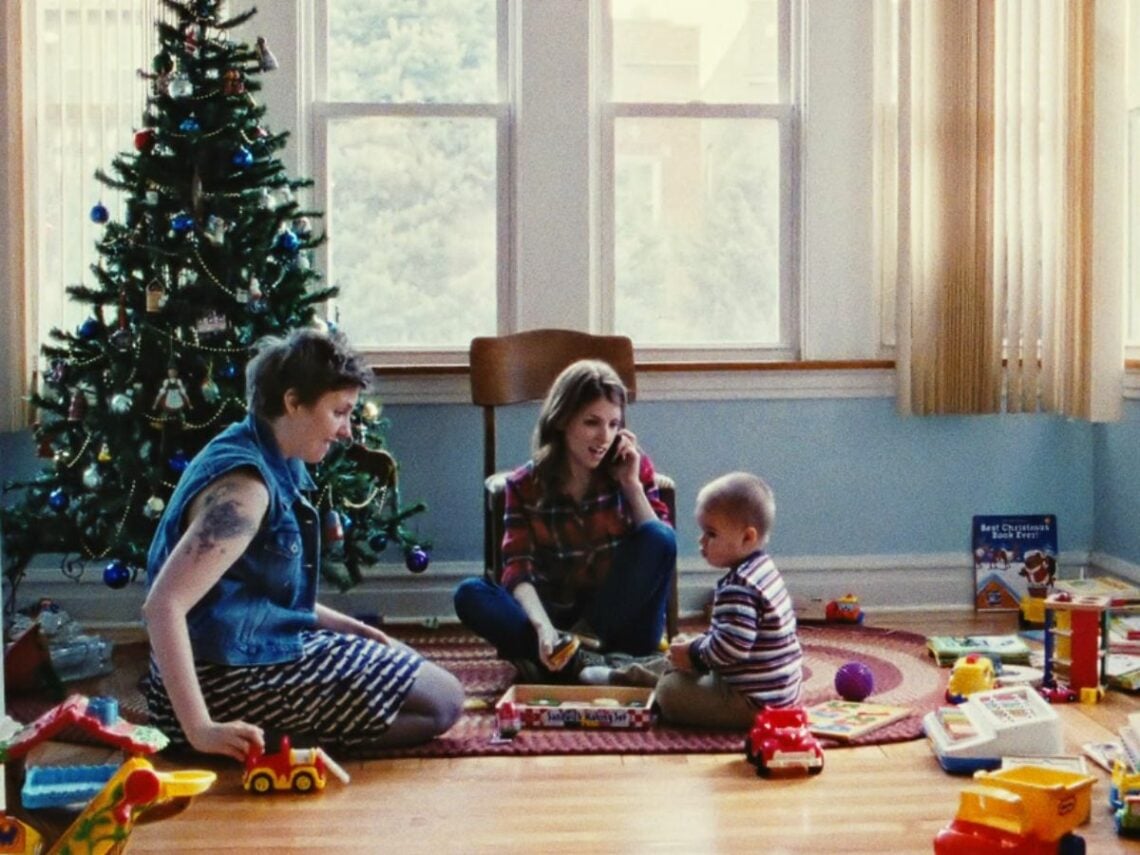
Nonetheless, Happy Christmas stars Anna Kenrick as Jenny, an irresponsible free spirit who lands in Chicago to move in with Swanberg’s Jeff, her older brother and an aspiring filmmaker who’s already stretched thin space-wise by sharing a roof with Melanie Lynskey’s wife Kelly and their infant son. With Lena Dunham’s high school friend also on the scene, the duo end up shaking up the personal and professional lives of novelist Kelly to their core.
Regardless of whether or not the key creatives approve of the term, mumblecore is largely defined by its improvisational stylings, shoestring budgets, focus on verbose character-driven exchanges over heavily plotted narratives, and a heavy emphasis on interpersonal dynamics. Made for $70,000 and with entirely improvised dialogue, Happy Christmas ticks all of the boxes mentioned above.
That being said, Swanberg explained to Collider that despite its seemingly free-flowing nature, the plot was meticulously laid out in advance: “This one was pretty well written ahead of time. The dialogue was all improvised, but the story was really heavily structured before we shot”. It’s become something of a seasonal cult favourite, but the director never harboured any such intentions for his career.
Underlining that he “actually didn’t want to make a Christmas movie,” practicality ended up turning his initial concept for a family-orientated story into a Yuletide tale. “It looked like we were going to end up shooting in December, and once that looked like the case, it was fun to add what I feel are the heightened family aspects of Christmas,” he continued. “There’s a lot of cultural pressure around specialness and seeing your family. I feel like everything gets jacked up a little bit because of all of these expectations of love and family bonding.”
Happy Christmas would premiere at the Cannes Film Festival and end up being shortlisted for the Grand Jury Prize in the ‘US Dramatic Competition’ category before winning plaudits for its naturalistic approach that wrapped an increasingly complex family drama around the iconography of the most wonderful time of year, to the extent it now finds itself being revisited by many as part of their annual Christmas viewing schedule.
