


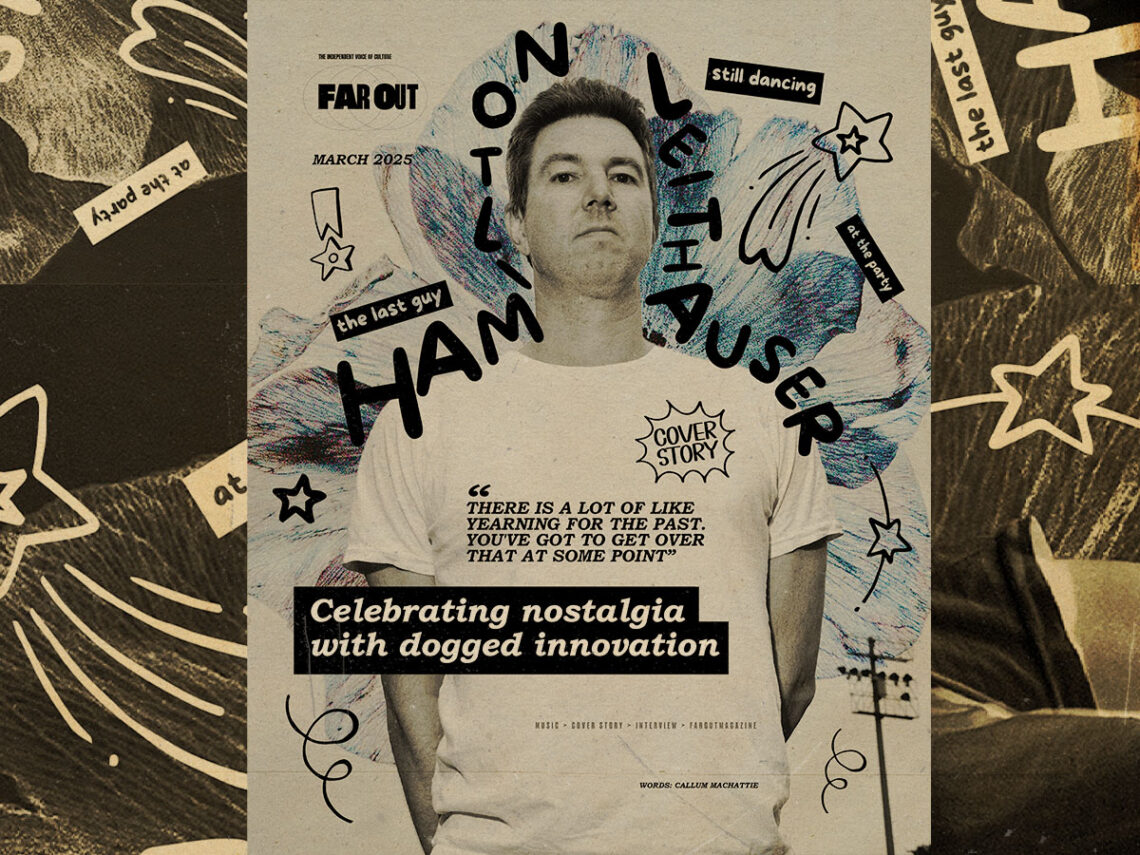
“Making the music I want to make”: Hamilton Leithauser celebrates nostalgia with dogged innovation

Some say you don’t want to be the last one left at a party. When everyone else has gone, and dust from the party poppers has well and truly risen, there’s something supposedly sad about the act defiantly pushing on, singing greatest hits with your eyes closed. But as Hamilton Leithauser keeps on dancing to the tune of his latest record, This Side of the Island, it’s apparent the party doesn’t ever end, as long as the music is good.
Embarking on a fifth solo album after such a glittering and culturally influential career with The Walkmen in a musical landscape already worryingly saturated with nostalgia porn is undoubtedly a daunting task. As Leithauser stared into his own well of creativity, his reflection must, at times, have been looking back at him through fragmented puddles with nowhere to plunge his bucket but the pools of rehashed ideas.
“My friend in LA told me it looked like I was wrestling a cat when I was playing electric guitar,” Hamilton told Far Out after admitting that it was this very instrument that sparked a fire of fresh interpretation. Perhaps the image of Hamilton wrestling a cat nods towards struggle, but from listening to This Side of The Island, it’s nothing less than a master craftsman working unique angles of a traditionally tired creative launch point.
The electric guitar was front and centre of his release campaign for this latest album, with lead single ‘Knockin’ Heart’ punching you in the face from the get-go. Welcoming you with a downstroking guitar rhythm fit for the streets of early 2000s New York, it’s a ferociously defiant start to an album that walks with the same noughties swagger but facing firmly forward.
But to move forward, Leithauser did indeed have to look back—to the narrow streets of Manhattan at a time when it turned into the millennium and wrapped its open, more experimental arms around Leithauser and his music contemporaries. It’s an era so deeply mythologised as of late, with the documentary Meet Me In The Bathroom chronicling the heady days of that community and the cultural footprint bands like The Strokes, Interpol, and Yeah Yeah Yeahs left.
And ‘Knockin’ Heart’ seems like a true product of those days. Its clean guitar rhythm is fit for a Chelsea boot-wearing indie club dweller but firmly thrust into the landscape of 2025. With Aaron Dressner on production, the pair have captured something both timeless and contemporary. “He put a sub-bass on the chorus,” Leithauser told me, in relation to the album’s lead single.

“So that when you’re in a car and that chorus hits, it’s bam! It hits you right in the chest”. A somewhat subtle style change in comparison to the rest of the record. Because if you were eagerly placing Leithauser’s record on the turntable hoping to hear a continuation of ‘Knockin’ Heart’, you’d be bitterly disappointed.
This Side of the Island is an odyssey of melodic playfulness that hides esoteric grooves just waiting to emerge like a sonic jack in the box. After the curtains lifted on what he may have thought was the last Walkmen show in 2013, the cushioning of feedback left with it. The brutal camaraderie that exists within close-knit bands, where an idea can be lovingly dismissed as no good, ultimately controls the quality of output that cements the sort of reputation held by a band like The Walkmen.
So when all that goes away, how does Leithauser tell if the reverberated wah-wah line in ‘Burn The Boats’ is a good idea or a figment of individual insanity? There is no knowing, but when you’re walking in the slipstream of something like ‘Knockin’ Heart’ with your aviators on, what’s happening in the periphery is completely irrelevant. Leithauser is clearly an artist operating with creative freedom, whereby the consequences of either outcome bear no importance to him.
“I’m definitely making the music I want to make, and I don’t have to compromise in any way with anybody,” he says. No matter what cracks of this record or in Leithauser’s persona you try to find, there seems to be little to no self-doubt. Whether it’s questioning if the individuality of solo artistry incites second-guessing or if it’s in the listening of the record itself – there’s an assurance in every forward step taken.
Textures are thrown at a wall, and not only are they sticking, but they align themselves like a Jackson Pollock classic. But perhaps where Leithauser treads bolder than he ever has before is his acceptance of his vocals.
“My voice can be kind of annoying, and I know that,” he admits with a wry smile. But that doesn’t stop him from letting them soar and performing with an unbridled sense of self-character, not trying to contort his vocal delivery to sound like any of his peers: “It’s important to not over-think it,” he adds, aware that’s a skill difficult to master in the insecure world of public performance.

He continues, “You try different approaches, you can change your sound, but in the end, you end up doing something that’s very… fakey.”
With an assured look in his eye and comfort in the knowledge that this record is a complete representation of self, he said: “With this record, I got to a spot where I was trying not to sound like myself and all of a sudden, I had this moment where I thought ‘what the hell am I doing? Just be me, just accept what my voice sounds like. Maybe not everybody’s going to like it, but I will be happy with my performance, and I was.”
The entire body of work wrestles with the future and past. Ultimately, this is a forward-facing record from Leithauser, who has broken free from the shackles fans are so desperate to place on musicians from iconic bands. He exists within the realms of freedom experimental artists are afforded, and the outcomes are equally interesting, for he has created a soundscape brimming with originality. But nevertheless, the overall sentiment of the record is rooted in deep nostalgia.
While he may have stepped away from the band environment, the record desperately tries to capture the essence of collaboration in a bottle. In ‘What Do I Think?’ we hear Leithauser sing “The kids today / They’ve got everything wrong / But that’s another story”, as he grapples with understanding a landscape that’s become increasingly divided and hostile somewhere that fosters disillusionment as the very act of empathetic activism or societal engagement feels powerless.
“We didn’t have phones, which was just so great,” he responded when I asked him about the true beauty of the New York scene he cut his teeth in. During our discussion, it became apparent that Hamilton views a world that is less cohesive and one broken apart by the distractions of digitisation.
“That’s the ultimate ‘everything was better back then’ line, but it really was,” he added, “Not everybody was on their fucking phone the entire time.”
So it’s no wonder that the entirety of this record feels like a futuristic longing for what has once passed. Be it in the lyricism of ‘Knockin’ Heart’ or the apathetic question of ‘What Do I Think?’. While the former explores those feelings in a more direct approach, musing over a lost lover, and the latter says farewell to the days of societal activism, all songs place Leithauser in the choppy depths of a changing society.
