


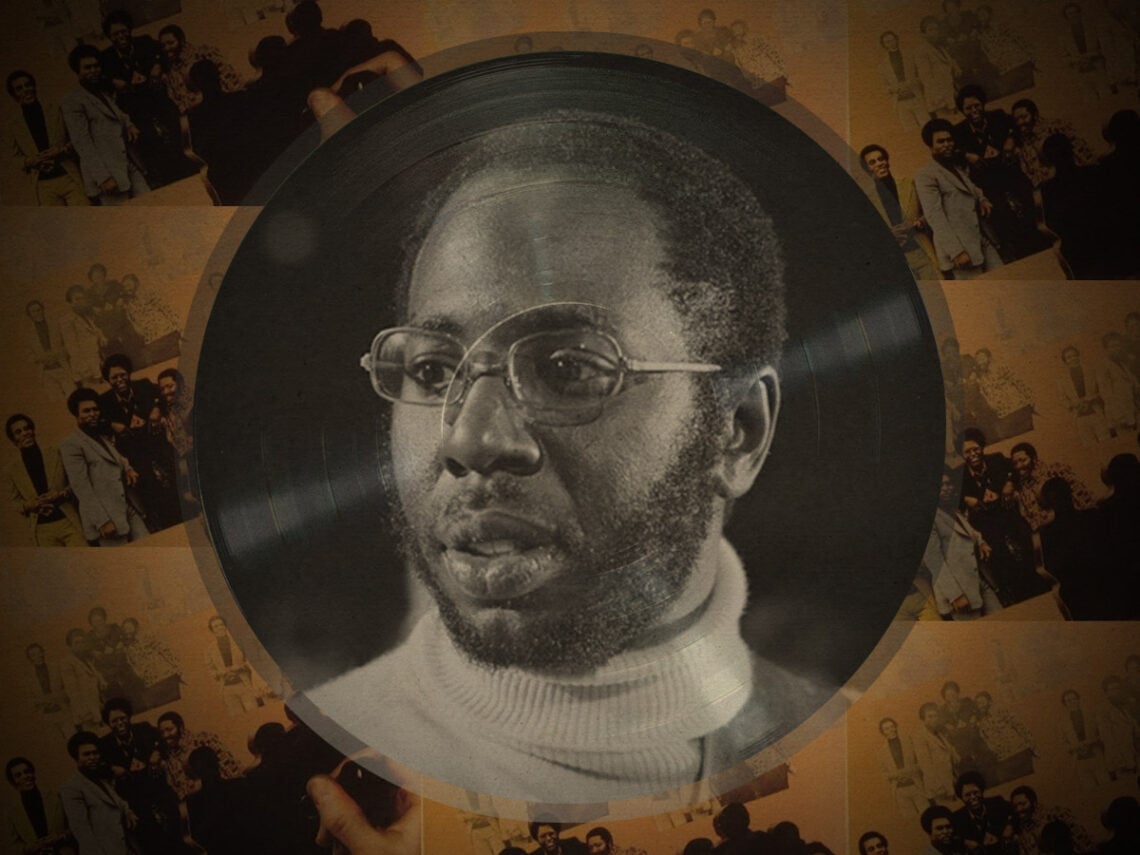
‘Gypsy Woman’: the incredible legacy of Curtis Mayfield’s first R&B masterpiece

Soul stars don’t come much more legendary than Curtis Mayfield, the endlessly multi-faceted talents of the Chicago-born master seeing him tackle everything from producing legendary blaxploitation soundtracks to being behind the mixing desk for a litany of northern soul classics. Arguably, though, his greatest single contribution to the genre arrived back in 1961.
Back then, soul music was still in its relative infancy. Of course, the origin of the genre stretches back as far as the parameters of blues and gospel will allow it, but in terms of soul music as we now recognise it, 1961 was a very different time. Motown had yet to fully exercise its grasp over the singles charts, Otis Redding wouldn’t release his debut single for another year, and the world was still very far away from bearing witness to the soulful mastery of Atlantic-era Aretha Franklin.
Without Curtis Mayfield, though, there is a chance none of that would have happened at all, such was the transformative, trailblazing power of his output. It was during the age of early R&B and doo-wop romanticism that Mayfield made his first flurries into the music realm, joining the ranks of The Rooster, who wisely chose to change their name to the Impressions after a short while together.
As important in the development of soul as the likes of Ray Charles, Sam Cooke, or Berry Gordy, The Impressions recorded a plethora of groundbreaking tracks during their extensive tenure together, but their finest hour was inarguably within the 1961 single ‘Gypsy Woman’.
Peaking at number 20 in the US singles charts of the day, the single marked an entirely new era both for Mayfield and The Impressions, being their inaugural track without Jerry Butler, who had left the band a year prior. On the face of the track, it wasn’t all that dissimilar from the rest of the doo-wop slanted R&B populating the charts of that time, but the power of ‘Gypsy Woman’ became increasingly evident with the passing of time.

For starters, it seems pretty unlikely that Curtis Mayfield himself would have gone on to achieve his position of soul excellence without the stepping stone of ‘Gypsy Woman’, even if his sonic stylings soon moved away from the realm of doo-wop. More than that, though, the 1961 single seemed to provide endless inspiration to a cacophony of future performers.
Joe Bataan, for example, used the basis of The Impressions’ track for his legendary 1967 cover of ‘Gypsy Woman’, transforming the song from an old-school R&B classic to an infectious Latin soul masterpiece. Upping the tempo and adding the kind of flavour that only the ‘King of Latin Soul’ could provide, Bataan essentially showed just how timeless a track ‘Gypsy Woman’ was, and he certainly wasn’t the only one to do so.
In the years that followed, fellow soul hero Bobby Womack recorded his own interpretation of the song, as did mod rock master Steve Marriott and a litany of other artists, including Santana. Each one of those recordings took ‘Gypsy Woman’ in entirely different directions – some more effective than others – but each one also reaffirmed the legendary nature of the song.
‘Gypsy Woman’, as a song, perhaps has the most extensive half-life of any Curtis Mayfield composition – there has even been some suggestion online that the song proved so popular with the Romany gypsy community that Mayfield travelled to Eastern Europe at some point to perform for those audiences, although, admittedly, research into that anecdote leads nowhere other than a few unsubstantiated rumours. Rumour or not, though, the 1961 single has certainly boasted a power which is both universal and beyond the confines of time.
Even today, the song still remains an inescapable classic as far as soulies are concerned; not bad for a song that Mayfield reportedly first wrote at the age of 12. The songwriter himself might have moved on to more expansive climbs in his later years, but the root of his career ultimately comes down to that first R&B masterpiece he recorded with The Impressions.
