


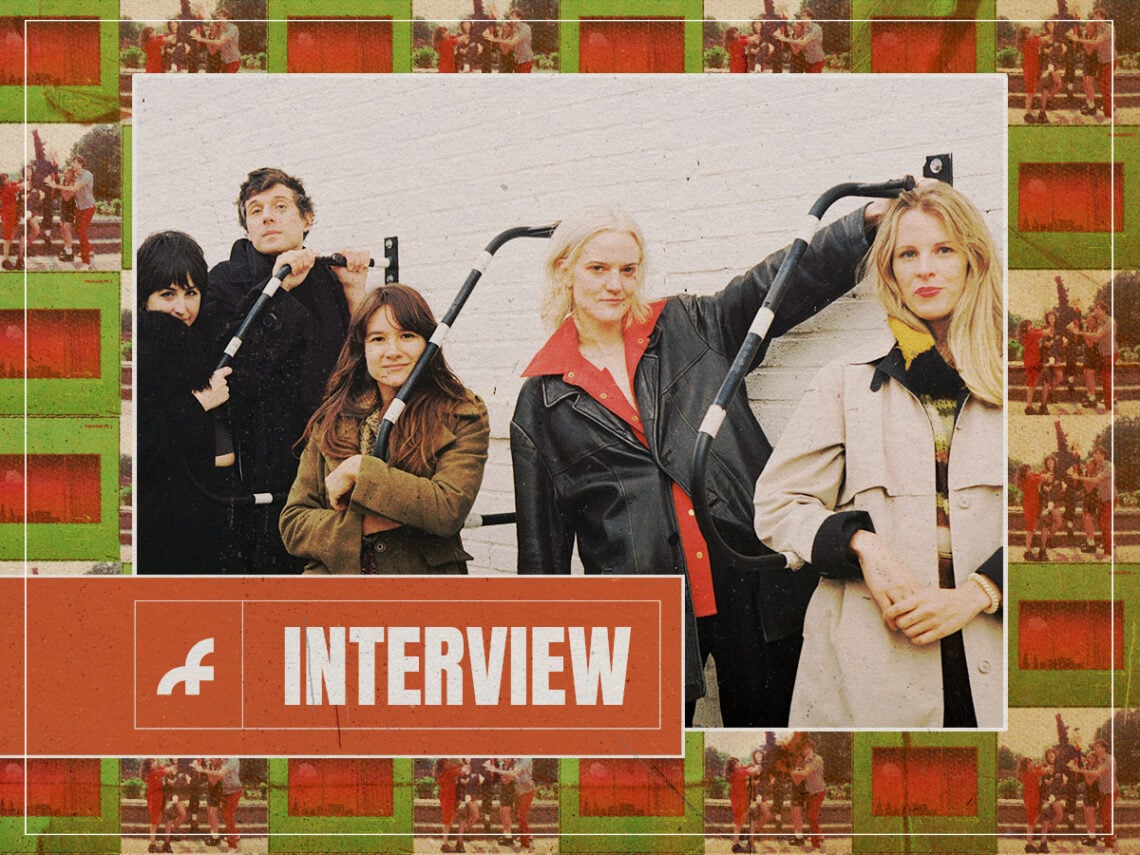
Gustaf’s Lydia Gammill on the benefits of limitation: “I try not to be like the American cereal aisle”

Within the modern age of music making, it seems as though more or less every boundary has been broken. For decades now, people have been able to create incredibly complex, polished material independently from a home computer in their bedrooms. While the advent of this technology has revolutionised the musical landscape, there is still something to be said for the innovation that boundaries bring about; something that Brooklyn post-punks Gustaf can certainly attest to.
First formed in 2018, the band came onto most people’s radars after the release of their debut record, Audio Drag for Ego Slobs – an adrenaline-fuelled exploration of DIY art punk. Now, three years later, the group has returned with their sophomore album, Package Pt. 2, which forms the natural progression of their distinctive sound. The driving force behind that sound is, of course, the unmistakable vocals and songwriting of lead singer Lydia Gammill – who was kind enough to meet with me virtually to discuss how this new project came about.
Usually, upon interviewing groups from the USA, our chats are preceded by the awkward exchange of “Where are you calling from?”, “Bradford…it’s near Leeds – just north of Manchester? No, not near London”. Thankfully, though, Gammill was all too familiar with the soot-stained stone of West Yorkshire. After all, the singer had only recently flown back to New York after supporting Leeds outfit Yard Act on their tour of the nation. The band seemed to have been adopted by the UK post-punk scene, with supporting groups like Yard Act, Idles, and Sleaford Mods. As Gammill attests, “It’s a big honour, but there’s some big shoes to fill.”
Many bands, in their infancy, are minimalist by necessity, but Gustaf started out with a specific desire to keep things as simple as possible. “The band started with a very strict concept and lineup, so we recruited everyone kind of on the fly. It was like, ‘We can’t make this too complicated. We’ve got to, like, sort of stick to a little system,’” explained Lydia.
It was that manifesto that led to the creation of the band’s first effort, which is a sort of unconventional concept album surrounding the idea of an ‘ego slob’. As the songwriter shared, an ego slob is “Someone who does a bad job of translating the outside world within the context of themselves. I think about a principal in a high school movie. He’s just, like, so angry. It’s kind of laughable, but also, exploring the subtext to that.”
Alas, it has been three years since the release of that first record. In the intervening years, Gustaf has managed to develop their sound into something more diverse than the intentional simplicity of Audio Drag. “This record feels like kind of a closing out of that chapter,” Lydia said, “What we wanted to do, ideally, was call back to the things that people like and recognise about the band, but also use it as an opportunity to keep pushing the sound outward.”

The record certainly succeeds in doing that, featuring the same energy and DIY ethos of their early work while expanding upon their sound to include influences of no wave, experimental and noise music. An undeniable influence on the fantastic basslines of the album are the fellow New Yorkers, ESG, as Gammill attested to, “I just love how simple but dynamic they are at the same time, and how one comes on shuffle, and you start walking a little bit differently.” On the whole, though, the band’s influences are as eclectic as the members themselves, “We’re friends with the Osees and Tara and Mel are big fans of noisier rock and roll. Vram is a great sort of classical pianist. We all really like minimal experimental techno and ambient music. So just trying to bring that all sort of together and then seeing where it goes.”
A stand-out track on the album is ‘Here Hair’, an emotionally charged epic featuring a constantly changing tempo and existential lyrics. Despite its brilliance, it is something of an unexpected effort from the band, completely different to anything they have attempted before. Reportedly, the groundbreaking song was actually written and recorded years ago, with Lydia revealing, “That track we originally recorded with Carlos Hernandez for the first record, and we cut it because we were like, ‘let’s just keep it a tight ten tracks’ and it was sort of like the outlier.”
Adding, “It was a fun one for the band to record as well, just because it was so unexpected.”
So, have the self-imposed boundaries of the ‘ego slob’ era of Gustaf finally been broken down? Not quite. While their new record embraces many different themes and styles and feels incredibly polished thanks to the production of Erin Tonkon, the band still maintains that minimalism breeds innovation. “I do love boundaries and restraints when it comes to making things,” the songwriter shared, “because if everything’s on the table, then it’s too much to think about.”
Expanding upon Gustaf’s method of songwriting, she continued, “My metaphor that I think about is that a German friend stayed with me, and she was blown away by the cereal aisle in our grocery store because she was just like, ‘How can you have so many cereals? This is too many things to look at.’ So I try not to be like the American cereal aisle.”
In many ways, Package Pt. 2 is an American cereal aisle full of vibrant colours and eclectic influences but with an underlying feeling of unease. It can be difficult to make sense of the record upon initial listening, but the record seems to reveal more and more of itself as you listen in deeper. Lydia hopes that listeners will find “some sense of catharsis, in some way,” from the record. From our conversation, it seems as though the new album brought a sense of catharsis for the band as well, closing out their ‘ego slob’ era and bringing in the new age of Gustaf.
This new period of the band comes with added confidence, too, bolstered by the band’s recent tour of the UK, culminating in a sold-out headline show at London’s Shacklewell Arms. The gig acted as something of an awakening for the band, who are used to doing support slots for well-established groups, who commented, “We’re like, ‘Uh oh, everyone here is here to specifically see us.” In contrast, during the early days of the group, the band were far too eager to let their sound be tampered with by outsiders; “We had a lot of producers come up and be like, ‘I know how your band should sound. I know what we should do,’ and I was like, ‘Tell me what we should do. I don’t know.’”
The newfound success and confidence of Gustaf is only likely to continue with the advent of Package Pt. 2, which affirms their ability to create complex and infectious art punk under the guise of minimalism and experimentation. The group no longer needs overzealous producers to control their sound; they have perfected it on their own.

Never Miss A Beat
The Far Out Post-Punk Newsletter
All the latest Post-Punk content from the independent voice of culture.
Straight to your inbox.