


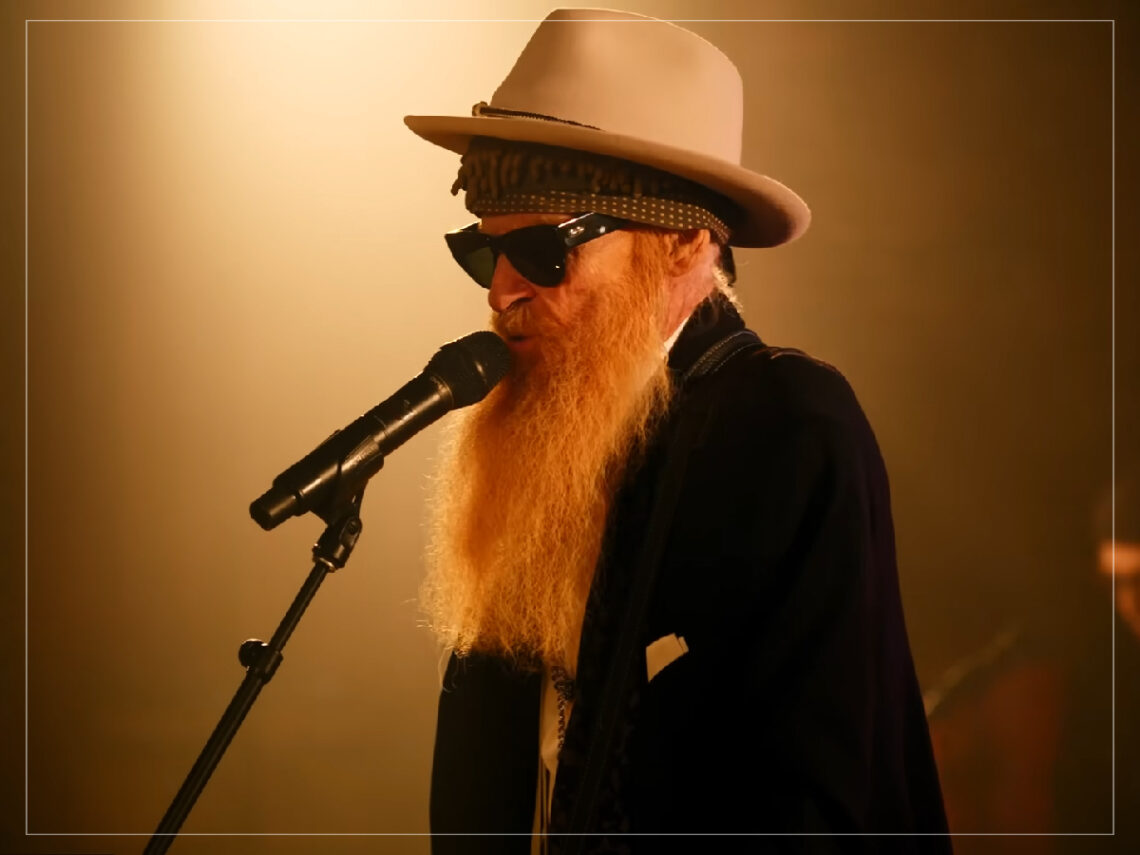
The guitarist Billy Gibbons said still hadn’t been touched: “The internal DNA”

I’ve always said that the blues are a genre which will outlive all others, and let me explain why.
It all goes back to the birth of romanticism within music… Johann Sebastian Bach spoke about how, when someone is playing music, they should feel the emotions that they are trying to convey within the song – he wrote about the importance of portraying genuine emotion within your music in his Essay on the True Art of Play Keyboard Instruments (1753, 1762).
“A musician cannot move others unless he too is moved… In languishing, sad passages, the performer must languish and grow sad,” he noted. “Similarly, in lively, joyous passages, the executant must again put himself into the appropriate mood.”
Classical music was the first time that such an approach to music had been taken, but it was perfected thanks to the blues. When you listen to a lot of blues musicians, there is no escaping the fact that a great deal of them are able to tap into the emotion that runs through their songs beautifully. Despite so many of those tracks being decades old, they still resonate with listeners in the modern age, and they will continue to resonate no matter when people listen.
Trends come and go, but there is no expiry date on a broken heart, and the blues are the sonic embodiment of as much. You don’t even need to know the words to songs to have the emotion conveyed to you because of how effectively these blues artists were able to channel their emotion through guitar licks and solos. The timelessness of this talent means that the blues is a genre of music that people will still be connecting with and peeling the layers back of for centuries to come.
Billy Gibbons has spoken about his affinity for the blues and how complicated the sound is despite being so simple. The best artists can perform and only play a couple of notes, but still break your heart within those notes. There is a science to it, and one that Gibbons has spent his entire life attempting to fully understand.
“Well, the blues may only be three chords, but the complexity is fascinating,” said Gibbons. “I’ve listened to those old blues records forever. And I can still learn something from these guys. These giants.”


It’s this talent that means that even though a lot of artists have had their songs covered, the covers don’t come anywhere near the original, because the way they play the notes is entirely unique to that player. This is music with its own unique fingerprint, and it’s pretty special to listen to.
Billy Gibbons once spoke about the blues musician Robert Johnson and said that he was a great example of one of these artists. While so many of his great songs have been covered by other musicians, Gibbons stands by the fact that these songs don’t come anywhere close to the Johnson originals.
“But as many times as a Robert Johnson number has been covered and rerecorded and reinterpreted, no one has yet recaptured what guitar players would refer to as that internal DNA of Robert Johnson,” he said, concluding, “You can get the same guitar, you can probably go back to the same hotel room, but delivering it like RJ did in 1936 – forget about it. It’s not going to happen.”
