


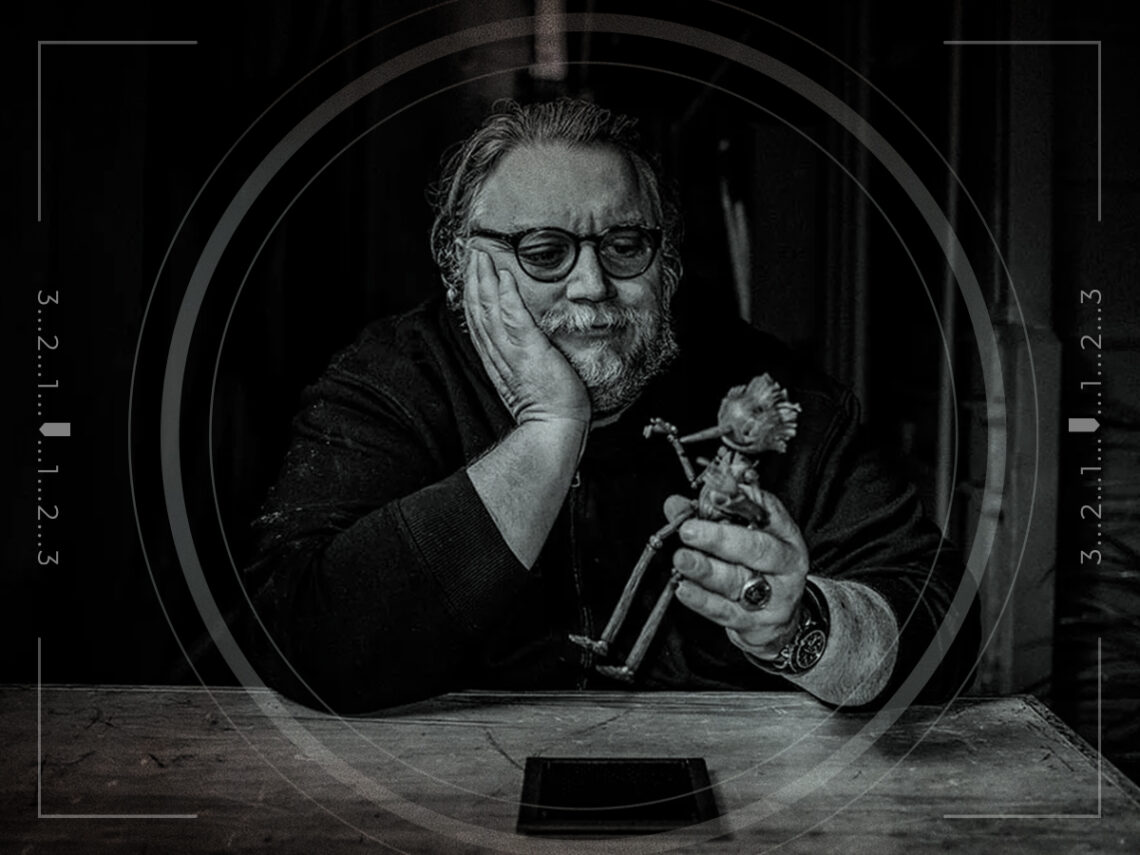
Guillermo del Toro’s least favourite thing about animated movies: “Oh, I hate that shit”

Movies have defined Guillermo del Toro‘s life in a very profound way. At eight years old, the Mexican auteur made his first short films with a Super 8 camera, enlisting his Planet of the Apes action figures and family members as his cast. At this age, his crowning achievement was a bizarre film that told the tale of a serial-killing potato who disposed of his mum and siblings before meeting its demise under the wheel of a car.
However, movies weren’t the only thing that got Del Toro’s creative juices flowing. As he grew up, he became something of a Renaissance man, with a penchant for classic literature, comic books, and animation, almost all of which dealt in some way with his preoccupations: monsters, Gothic storytelling, fairytales, insects, and dark fantasy.
As his filmmaking career took off in the late 1990s and 2000s, all of Del Toro’s loves found their way into his productions. Pretty much every one of his films has featured monsters and/or insects of some sort; his love of Gothic literature spawned Crimson Peak; he adapted his favourite comic book with Hellboy, and infused its sequel, The Golden Army, with his fondness for dark fantasy and fairytales.
Interestingly, though, while many of his films included obvious animated influences, and he gave his blessing for two animated Hellboy spinoff movies, Del Toro wasn’t able to fully embrace his love for animation until the 2010s. When he took on a gig as an animation producer at DreamWorks, which he somehow managed to do alongside his directing work, he received a crash course in the medium he’d always loved.
The director’s fingerprints were all over DreamWorks animated efforts like Rise of the Guardians, How to Train Your Dragon, Puss in Boots, and Kung Fu Panda. While he learned the ins and outs of how animated movies were made – “I produce to learn, and I’m not being facetious” – the animators called on him to help shape their movie narratives as powerfully as possible. “He sort of reminded us that it’s a movie, not just a collection of sequences and scenes,” Rise of the Guardians director Peter Ramsey told IndieWire, “which you can sometimes get caught up in when doing animation.”
Del Toro’s time at DreamWorks included the creation of the Tales of Arcadia franchise for Netflix, an interconnected series of three shows and a movie, before he decided he finally had the tools to make one of his dream projects: a stop-motion animated version of Pinocchio. Naturally, given Del Toro’s predilections, the movie was a far cry from any previous version of the story, with a particular focus on making it darker, more adult, and injecting more realism.
Now, saying his Pinocchio was ‘realistic’ may sound far-fetched, but what Del Toro meant by ‘realism’ differed from what many audiences think when they hear the term. Fascinatingly, it’s all tied into the director’s least favourite thing about mainstream animated movies, which he encountered many times while working at DreamWorks. You see, the man doesn’t think people act realistically in most animated movies, instead having their behaviour boiled down to antics and unnatural facial expressions. To him, this is “teenage rom-com, almost emoji-style behaviour” and has no place in animation.
“If I see a character raising his fucking eyebrow, or crossing his arms, having a sassy pose—oh, I hate that shit,” Del Toro raged to The Hollywood Reporter. “Why does everything act as if they’re in a sitcom? I think it is emotional pornography”.
In many of the most popular animated films of today, Del Toro bemoaned, “All the families are happy and sassy and quick, everyone has a one-liner”. This doesn’t line up with his real-life experience, and he believes it’s a shame that animation has been reduced to such caricature-ish depictions of human beings just because it’s largely viewed as kids’ stuff in the West. “My dad was boring,” Del Toro insisted, “I was boring. Everybody in my family was boring. We had no one-liners. We’re all fucked up. That’s what I want to see animated. I would love to see real life in animation.”
Ultimately, the Shape of Water director began his crusade to introduce real life to animation with Pinocchio, as paradoxical as that sounds, and it’s likely to be a huge part of his future. “There are a couple more live-action movies I want to do, but not many,” he admitted in 2023, “After that, I only want to do animation. That’s the plan.”
