


The 10 most visually insane animated movies

As Guillermo Del Toro recently said, “animation is a medium – not a genre”, and I wholeheartedly agree with that sentiment. With animated movies being around for almost a century, it’s baffling to see the birth of animation from Steamboat Mickey all the way to the huge blockbusters that dominate the box office today.
The stories that can be told through animation have no boundaries and that’s what makes the medium hugely appealing. Take a film like Monsters Inc, for example. Had the Pete Docter-helmed project been made live-action, it would have been terrifying – potentially leaning on the goofy. Instead, we have a sombre tale of responsibility, and that’s the power of animation.
Animation is vitally important to millions of people all over the world, and without it, we would not be able to express a niche, unique type of story that cannot be told truly with the use of actors. In 2002, the Academy began recognising animated features for the artistic expression they bring and began awarding filmmakers for their ambitions to use the medium to tell their stories. With recognition like this, classic directors like Martin Scorsese (Hugo), Steven Spielberg (BFG, The Adventures of Tintin) and Wes Anderson (Isle of Dogs, Fantastic Mr Fox) began thinking there may be something in this which only drove the medium forward. Regardless, whether it be because of your favourite children’s TV series or your favourite serialised, violent anime, animation has a place near and dear in our hearts and for good reason.
Below, we have chosen these films for their design, the animation style and the way they look and feel – not necessarily just their storytelling ability.
The 10 most visually insane animated movies:
Toy Story (John Lasseter, 1995)
Where would we be if Toy Story hadn’t hit our screens in 1995? It is by far one of the most innovative films by in the fact that it completely revolutionised computer-animated 3D long-form storytelling. Toy Story, with its fantastic script and iconic characters, firmly demonstrated that this, indeed, is the future of animation. It’s hard to picture Woody and Buzz Lightyear in the early days of creation as their costumes, look, and voices are all so firmly imprinted in popular culture.
Toy Story is the heartbreaking story of Andy getting a new toy for his birthday, a Buzz Lightyear space toy, and slowly becoming disinterested in Woody – his old favourite toy. The film echoes themes of abandonment and loss even though we are seeing these through the eye of a cowboy doll.
Without Toy Story, we wouldn’t have had the ingenuity of Pixar, who braved their last cash reserves into a feature-length release. With Pixar, we have a studio that, in my opinion, has continued to lead the way in animation and storytelling.
Akira (Katsuhiro Otomo, 1988)
Akira is known for introducing Japanese anime to a wider Western audience. Debuting in 1988, the film is a groundbreaking, visually pleasing masterpiece. Akira is a prime example of universal-loving, overseas cinema which catches on like fire worldwide.
Akira is set in neo-Tokyo, the year 2019, where it is almost a wasteland with bike gangs and crime raging rampant. The colours as the bikes ride around the city as well as the hand-drawn/painted cityscapes of neo-Tokyo is encaptivating. Whether displaying the abandonment of the city, the skyscrapers or the destruction of the city, we are definitely treated to top-tier world-building. Akira is a fast-paced, apocalyptic thriller that never fails to engage you from the first revving of the engine.
Coraline (Henry Selick, 2009)
From viewing this list, it’s clear stop-motion leads the way for visually insane animation. In my mind, stop-motion is potentially one of the most engrossing simply because of the sheer amount of effort gone into building the world by hand. Coraline is no exception.
Coraline is a young girl who stumbles into another world through a passage in her house – a world where everyone creepily has buttons for eyes. This terrifying aspect is dealt with effectively with its stop motion style, something that can still linger in the minds of children but in live action would’ve come across far too frightening.
Fantastic Mr Fox (Wes Anderson, 2009)
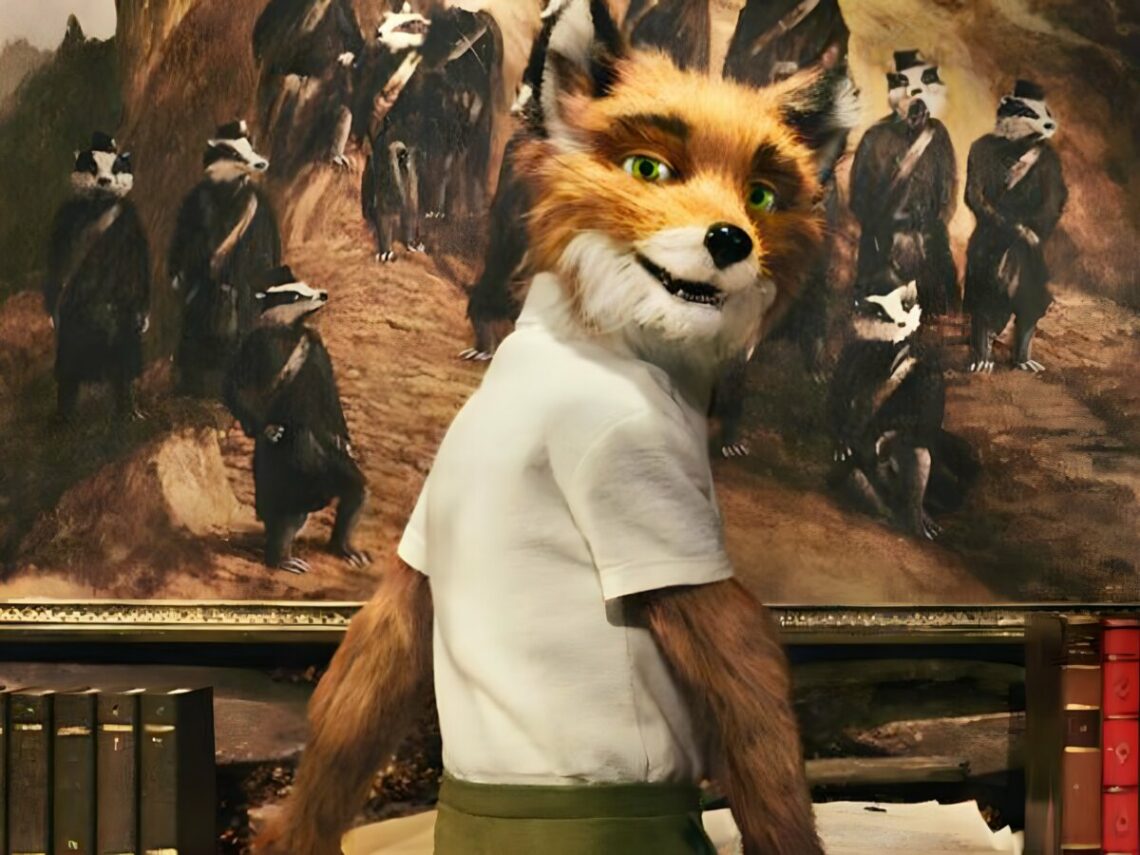
Potentially my personal favourite inclusion on this list, you can’t deny the luscious sets and sound design that went into creating the jaw-dropping stop-motion land of Fantastic Mr Fox. Wes Anderson’s tale of the cunning, dashing Mr Fox, voiced by none other than George Clooney, who is forced to retire from his thieving ways while also needing to balance his family life. Fantastic Mr Fox serves equally as a family favourite but also appeases Anderson’s dedicated fanbase. Despite Anderson ditching actors for puppets, he is still able to convey his style and make it very much integral to the film. The dialogue, the way the camera pans, and the look exchanges between the characters help this bunch of characters become some of Anderson’s most loved.
Anderson also strongly uses colour here to allow the film to be extremely aesthetically pleasing. The autumnal colours of yellow, reds, browns and oranges are used to help build his world – alongside reflecting that Mr Fox is on the brink of the autumn of his own life. Anderson uses this palette of colours throughout the skies, the trees and the underground home of the Foxes. From this film onwards, Anderson has become well known for his use of colour to help stylistically direct a movie.
Guillermo Del Toro’s Pinocchio (Guillermo Del Toro, 2022)
It would be ridiculous after including Del Toro’s support of the medium as the opening of this piece not to include his most recent film, the brilliant stop-motion retelling of Pinocchio. With a Netflix Original, you are susceptible to some hits and misses but this one definitely hit, and one made even better by the live-action failure by Disney earlier in the year.
The well-known tale of the boy who is brought to life by his maker, a children’s Frankenstein if you will, is told with a unique, gothic style akin to Del Toro’s many other works. The project was also co-directed by Mark Gustafson, who worked on Fantastic Mr Fox. This new look of Pinocchio is something we have not seen before – and it helps this film keep an original, new retelling which is set over the backdrop of Mussolini’s Italy during the Second World War. From the set design to the characters and the interactions between them on screen, this film is masterful.
Howl’s Moving Castle (Hayao Miyazaki, 2005)
I knew when composing this list I would have to choose one of the bubblegum delights that Studio Ghibli has made over its 40 years of churning out classics. Ghibli has helped push quirky Japanese culture into mainstream viewing, with hits like Spirited Away often remaining as staples in the discussion of cinema’s very best. I toiled between Howl’s Moving Castle and Spirited Away but opted for Howl’s.
The paintings and backdrops of the luscious meadows, medieval towns and the aforementioned captivating and unique moving castle all take your breath away. It is done even more so with the sudden tonal shifts of the animation as it switches the raging war between the two kingdoms, with Miyazaki blatantly showing his distaste for the Iraq war, which was in full swing at the time, and the serene beauty of the Wastelands.
The Mitchells vs the Machines (Michael Rianda, 2021)
Another Netflix Original on this list – yes, you heard that right!
The Mitchells vs the Machines tells a story of a family who are forced to handle a robot invasion during a family holiday to drop their oldest daughter off at college. In this film, there are plenty of universal themes, mainly focusing on the idea of family’s importance, but the film really shines with its gorgeous fight sequences with the robots. With it being a Sony Animation picture, we see a similar style to that of Into the Spider-Verse – of course, its impact on animation in its following years are not up for debate. When we are exposed to the human world, we see a beautiful hand-painted/hand-drawn world like a comic book. When we get to see the world of robots and the chaos they’re causing, we see gorgeous CGI – the visual natures of these contrasts to help show the difference between the worlds and the stakes.
At the heart of this, though, we have a very real story of father and daughter bonding. It’s a remarkable film, one that will no doubt succumb you to its emotional whims, but one that should definitely be included on this list for its beauty.
Puss in Boots: The Last Wish (Joel Crawford, 2022)
This isn’t recency bias or a meme, I swear. With Letterboxd fanboys raging about the film for months on end, the whole world prepared themselves to have been completely duped. After the poor reception of the first effort and the slow death of the Shrek movies, we all expected Puss in Boots: The Last Wish to be the final nail in the coffin.
This film has single-handedly re-birthed life into a dead franchise. The film’s look undoubtedly takes inspiration from a style similar to Into the Spiderverse – using 3D characters in the forefront and 2D backgrounds – alongside subtle anime influences. Puss in Boots: The Last Wish is such a surprising triumph.
Spider-Man: Into the Spider-Verse (Bob Persichetti, Peter Ramsey, Rodney Rothman, 2018)
Sony was coming hot off the success of its third incarnation of the loveable web-slinger. To capitalise on the Spider-Man mania we are still probably in, they released this small animated film about a little-known version of Spider-Man called Miles Morales, who has rapidly become a strong fan favourite. The film cleverly pokes fun at the amount of ‘Spider-Men’ we’ve had pushed out through its studio system and it shines a light on the hundreds of versions we’ve had through Marvel’s history that we may not have realised.
This film potentially stands out as the biggest surprise on this list. Whether you’re in love with the soundtrack, its unique and gorgeous art, the characters, or even just Miles, you’ll struggle to find haters for Into the Spider-Verse.
Coco (Lee Unkrich, 2017)
I just needed to include another Pixar on this list as I fought earlier on in this article about the studio’s importance in driving animation forward. While there are several contenders, you cannot deny the insane visuals of Coco. Coco is about a young boy, Miguel, who is desperate to be a musician and often squabbles with his family about his dreams of becoming one. He accidentally enters the Land of the Dead (an afterlife inspired by ancient Mexican folklore) and in his adventure, he begins to discover his true family history. The purples and oranges, the friendly look of the skeletons, and the world of the Land of the Dead all make this film one of Pixar’s most striking films.
Lee Unkrich cleverly uses lighting to help show the bright colours of the world Miguel has found himself in. Unkrich also transforms Mexico into such a rich atmosphere of vibrancy and colour, only further shone by a background of classical Mexican music. This joyous celebration of Mexican culture is felt from the first frame and makes this a stunning and unique Pixar fairy tale.
