


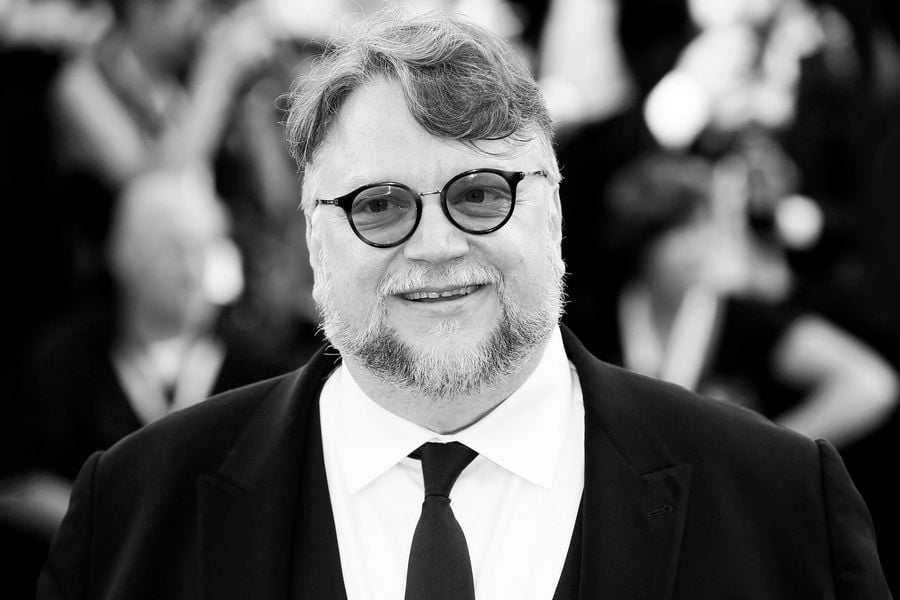
Guillermo del Toro’s favourite Stanley Kubrick movies: “I like the Kubrick that nobody else likes”

Guillermo del Toro is one of the greatest world-builders in cinema. Creating dark, twisted stories where the humans are the monsters and the fantastical creatures and their human defenders are the heroes, he’s found legions of fans and become one of the most critically acclaimed directors in the business.
Early movies like The Devil’s Backbone and Pan’s Labyrinth introduced his unmistakable visual style to international audiences, with the latter earning him six Academy Award nominations. Since then, he’s acquired five more nominations and won Best Director and Best Picture for 2018’s The Shape of Water, and Best Animated Feature for 2023’s Guillermo del Toro’s Pinocchio.
Del Toro has been heavily influenced by a wide range of artists and movies, including the original 1931 version of Frankenstein, the work of Charlie Chaplin, and the writing of Jorge Luis Borges. But like countless other filmmakers working today, he has also been inspired by the late great Stanley Kubrick.
Speaking to Little White Lies in 2015 for the release of his gothic ghost movie Crimson Peak, he explained that his favourite Kubrick films aren’t the ones that most people would choose. Sure, the director is probably most well-known for 2001: A Space Odyssey and The Shining, but del Toro reveres two completely different ones. “I like the Kubrick that nobody likes,” he said. “I love Eyes Wide Shut and Barry Lyndon.”
When they were released, Barry Lyndon (1975) and Eyes Wide Shut (1999) were not greeted with the rapturous praise that many of Kubrick’s other movies were. At over three hours long, Barry Lyndon is unabashedly slow-paced and takes its time with artistic touches. Scenes in the film often end with a slow panning out, a device that leaves a lingering sense of isolation but also extends that exorbitant running time beyond what some critics could endure.
Del Toro says that the “painterly effect” of the candlelit interior scenes in the film directly inspired the cinematography in Crimson Peak, and that the slow pacing film is one of his favourite things about the whole movie. “I think the sense of space and time that Barry Lyndon exhibits is unique,” he said, “And I did a detailed study [of] the fabrics and the colour [for Crimson Peak].”
As far as Eyes Wide Shut goes, it was simply a victim of false marketing. Starring Tom Cruise and Nicole Kidman as a married couple (the actors were married in real life at the time and their relationship was one of the most highly-publicised in the world), it centres on Cruise’s character who, reeling from his wife’s revelation of an imagined affair, wanders through New York at night and finds himself in a masked orgy held by a shadowy cult.
Billed as an X-rated exposé on Cruise and Kidman’s intimate life, it was, in fact, an illusive, psychological thriller that was more cerebral than corporeal. It mystified critics and audiences and has only recently been re-evaluated.
It’s easy to see how the use of lighting and sumptuous colour to evoke emotion in both films would appeal to del Toro and influence his style. Crimson Peak is perhaps the most obvious example of how he translated Kubrick’s most elusive, hallucinatory touches in Barry Lyndon and Eyes Wide Shut to his own work, but the director has created a “painterly effect” in one way or another in all of his films, from the underground feast in Pan’s Labyrinth to the stop-motion forest in Pinocchio.
