


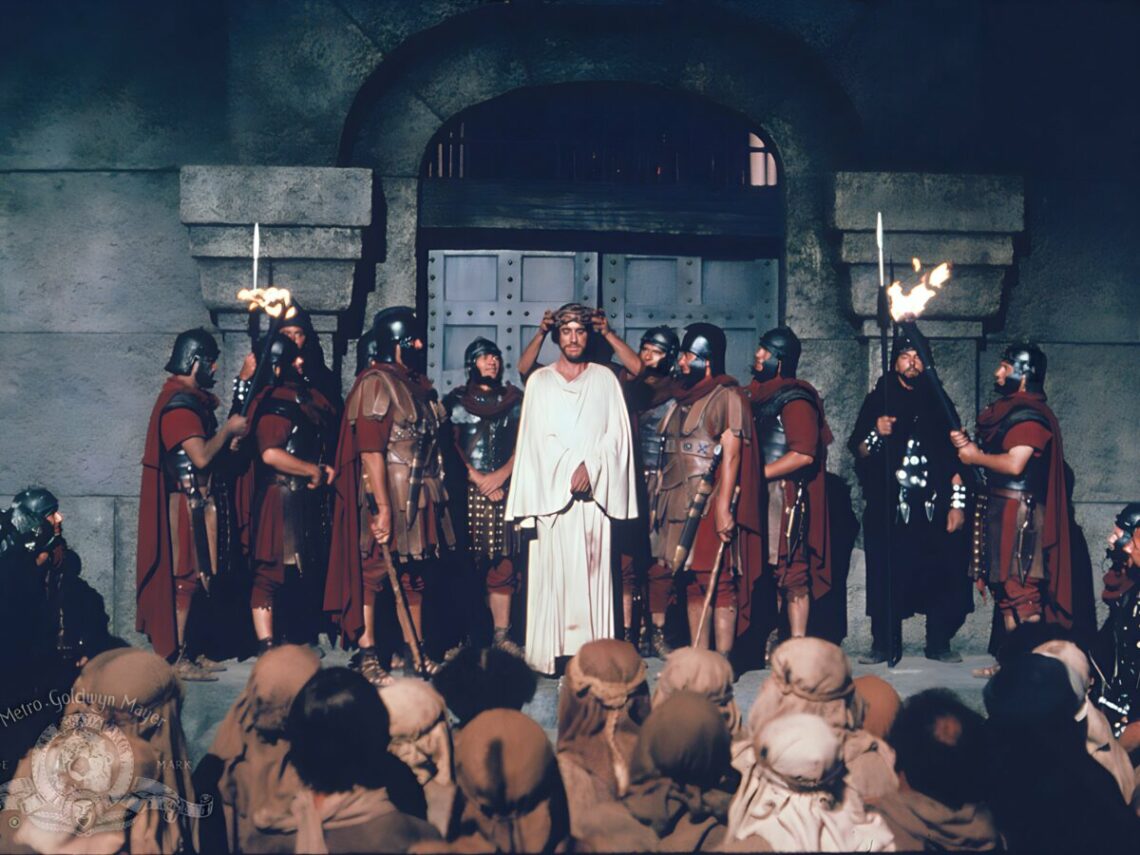
The stonkingly bad biblical epic that’ll take up most of your Easter

Hollywood has been responsible for many a blasphemous debasement of the Holy Bible down the years. We can point to Charlton Heston and Yul Brynner facing off like WWE wrestlers in The Ten Commandments or Mel Gibson spectacularly overegging his passion for The Passion of the Christ.
But no biblical epic has done quite as much of a disservice to the good name of Jesus Christ as the sprawling, yawning behemoth of a picture George Stevens put out into the world in 1965. Stretching over 200 minutes with more cameo appearances than a washed-up politician, Stevens’ epic makes late-era Quentin Tarantino look like a model of self-discipline.
The film in question is humbly entitled The Greatest Story Ever Told, and it had a budget to match. $20million to be specific, which in 1965 was no small investment. To put that in perspective, the 1963 movie Cleopatra, starring Elizabeth Taylor, often held up as the greatest budgeting disaster in cinema history, cost only $11m more to make. And a chunk of that extra money went to Taylor herself.
Unsurprisingly, The Greatest Story Ever Told made significant losses at the box office. But fans of biblical films longer than the book itself needn’t fear. Television was on hand to pick up the mess and serve it to us every Easter for eternity.
And what a treat they’re serving! As Josh Brolin’s studio fixer tells assorted religious leaders in the Coen Brothers satire Hail, Caesar!: “The story of the Christ… it’s a swell story. A story told before, yes. But we like to flatter ourselves that it’s never been told before with this kind of distinction and panache.” He could have been describing this very movie.
The definitive Christ on camera?
The Greatest Story Ever Told is so spectacular as to relegate biblical hero par excellence Charlton Heston to the secondary role of prophesising the coming of its main character. While Heston plays John the Baptist, instead, we see Swedish-French actor Max van Sydow assume the role of Jesus Christ like a man who believes he was born to play it.
There are too many golden moments in van Sydow’s performance to mention here, but let’s pick out a couple.
Firstly, we have the scene where Jesus revives Lazarus from the dead. After gently pulling back the stone to the dead man’s tomb and softly speaking his name, he utters the instruction “Come forth!” in a bombastic bellow that echoes for several seconds around a Galilean valley. We then get to enjoy two full minutes of various onlookers falling back in amazement as choral music swells to such a crescendo it makes a Star Wars lightsaber fight sound like the comfort of a British Airways commercial.
And it’d be a sin to leave out Mary Magdalene’s finest hour, as depicted by Shakespearean stage actor Joanna Dunham. Von Sydow picks up a rock and hams up the line, “Let he without sin cast the first stone”, like his life depends on it. He then takes his sweet time, seemingly offering the stone to every single person in the congregation surrounding him and Magdalene, who lies stricken with womanhood on the floor.
The climax to end all climaxes
Finally, we reach the climax of the film: the crucifixion of Jesus. The technical process of Roman soldiers erecting the crucifixes takes up an excruciating two and a half minutes of screen time, mostly via a jarring long-distance perspective, which makes absolutely no sense. The scene is shot against the backdrop of gathering storm clouds as if the theatre of the action itself weren’t enough.
After speaking many of the most famous lines of the New Testament in quick succession, a quivering von Sydow regally declares, “Father… to thy hand I commit… my spirit.” His face continues to shake before Stevens opts for a painfully obvious freeze frame (like someone’s pressed pause on an old family video) to signify life departing his body.
Thunder, lightning and a heavy downpour then arrive right on cue. And suddenly, out of nowhere, the camera cuts from Jesus on the cross to none other than John Wayne, dressed as a Roman centurion.
Here, we arrive at probably the film’s finest moment. It must be said that Wayne and Stevens surely deliver one of the greatest moments of comic mistiming in cinematic history. Tommy Wiseau, eat your heart out.
As though drugged up on valium and himself freshly resurrected from the dead, Wayne redefines the word deadpan as he says, “Truly this man was the son of God.” Lightning duly cracks over an adjacent Roman fortress and thus ends a cameo as extraordinary as it is bizarre.
A touch too far?
John Wayne is just one of over 30 completely superfluous cameos peppered throughout the film. Others include easy-listening crooner Pat Boone, screen legend Shelley Winters, and Murder, She Wrote’s Angela Lansbury. Talk about going too far.
Comedian Jamie Farr describes how he was hired for the film despite being “known for comedy”. The production team apparently hadn’t decided which role he would play until days before shooting, despite giving him a guarantee of six months’ pay for his minuscule screen time.
So, if you’re already feeling bloated from lunch, not to mention all that chocolate, on Easter Sunday, why not go one step further? Whack on the most overblown, fantastically bonkers Easter movie ever made. Clear your next three and a half hours, settle in, and enjoy the story of Christ as told by everyone in Hollywood and their mum. The greatest story ever told this badly.

Never Miss A Tale
The Far Out John Wayne Newsletter
All the latest stories about John Wayne from the independent voice of culture.
Straight to your inbox.