


‘Big River’: the greatest song Kris Kristofferson ever heard

Kris Kristofferson knew a thing or two about great songs and about great songwriting.
Not only did he write some of the most brilliant and beautiful lyrics that anyone has ever penned in songs like ‘Sunday Morning Coming Down’, ‘Loving Her Was Easier Than Anything I’ll Ever Do Again’ and ‘Help Me Make It Through the Night’, but he was also instrumental in bringing the works of John Prine to a wider audience, as well as singers like Janis Joplin and Rita Coolidge, and was a fierce champion of his fellow songwriters throughout his entire life.
And once he’d made it through, his fellow songwriters would champion him throughout his whole life as well, but it took more than just great writing for Kristofferson to get his foot in the door of the Nashville country scene.
Though Kristofferson always wanted to be a writer or a singer, his father wanted him to follow in his footsteps and lead a military life. Both men would get their wish, in a way. Having graduated with honours in Literature from Pomona College in California, Kristofferson was awarded a scholarship to continue his studies in Merton College at Oxford University. While on this side of the pond, he tried to put his literary talents to good use and started writing and singing songs, even signing with British rock and roll impresario Larry Parnes, though his musical career didn’t get off the ground before. Following his graduation from Oxford, Kristofferson returned to the States, although it wouldn’t be long before he was heading back this way across the Atlantic again.
Having joined the US Army, Kristofferson completed a course in helicopter pilot training and soon found himself shipped out and stationed in West Germany. While abroad, he again continued to write music, and it surely wouldn’t have been lost on him that two of his musical heroes, Elvis Presley and Johnny Cash, had been stationed in the same country when serving in the US army themselves.
And it was the training he received in the army which helped Kristofferson introduce himself to Johnny Cash, as well. Having discharged from the army, Kristofferson put all his energy into making it in the music business and took up a job as a janitor at Columbia Records’ studio space in Nashville, where, as he worked, he watched as Bob Dylan cut Blonde on Blonde in 1966. Occasionally, he’d run into Johnny Cash in the studios, and also his wife, June Carter. When he did, he’d ask her to take his demos to her husband to listen to. Though she did, it became clear to Kristofferson that his hero hadn’t actually gotten around to ever listening to them, so he decided to take matters into his own hands.
The story goes that, after a few weeks of rebuttals from the king and queen of country, Kristofferson landed a US Army helicopter in Johnny Cash’s garden to really get his attention. Unamused, Cash supposedly ordered Kristofferson to fly away, but he refused until Cash had listened to at least one song, which he did. Upon hearing ‘Sunday Morning Coming Down’, Cash was convinced by both the talent and show of bravado before him, and not only went on to record his own version of the now legendary song but ended up becoming lifelong friends and Highwaymen bandmembers with Kristofferson.
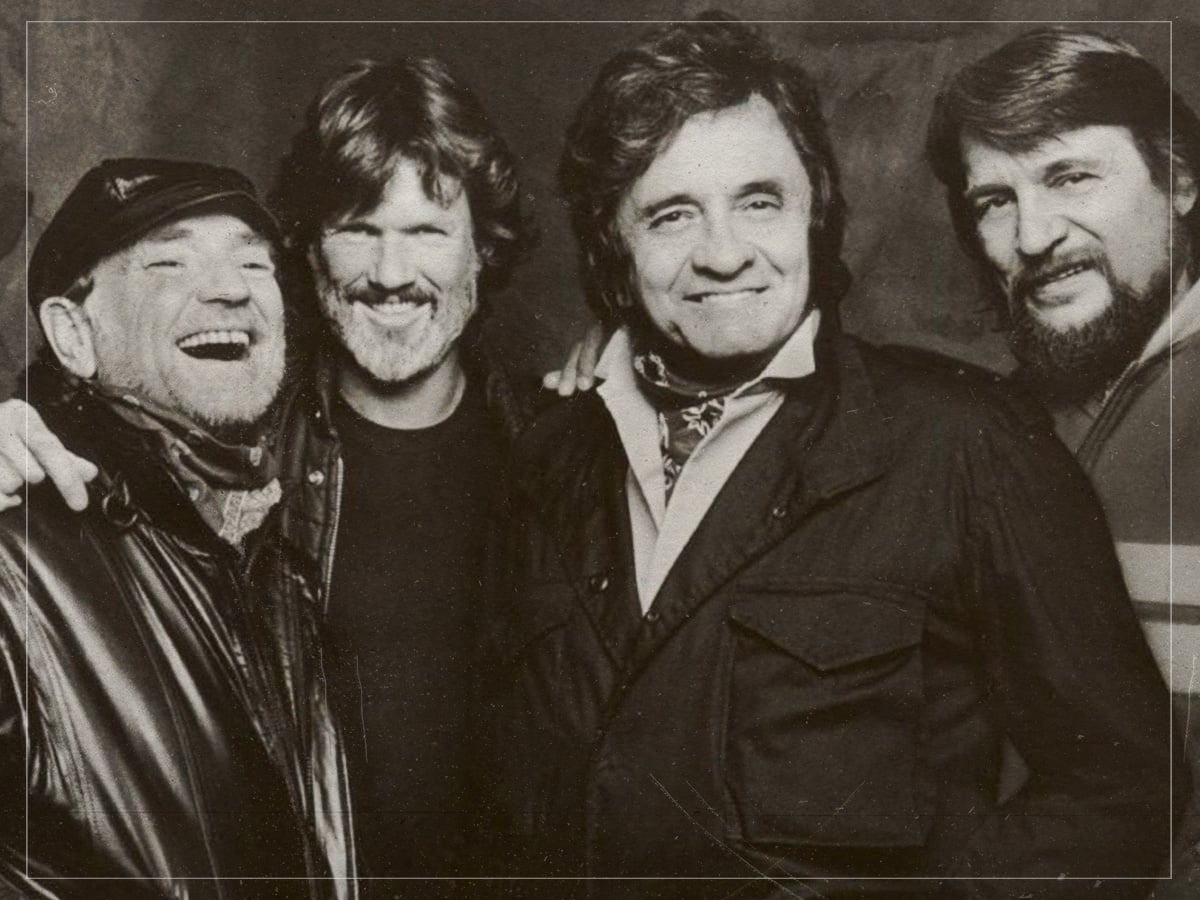
Though Kristofferson surely had a crazy streak and believed in his own talents, he wouldn’t have gone to all that effort to get his music in front of just anybody. This was Johnny Cash, after all. And though Cash fell in love with ‘Sunday Morning Coming Down’, it was nothing on the reverence that Kristofferson held his songs in.
Years later, when the Highwaymen were being interviewed together, each member was asked in turn what he thought the greatest country song ever written was. With Johnny Cash sitting directly by his side, Kristofferson said without hesitation that the song that he had often thought “may be the best song, country or otherwise”, was Cash’s 1958 hit ‘Big River’.
In truth, he could have picked any number of Johnny Cash songs and still come up with the right answer: ‘Folsom Prison Blues’, ‘Guess Things Happen That Way’, ‘I Walk the Line’, ‘Five Feet High and Rising’, ‘I Still Miss Someone’, ‘Train of Love’, but ‘Big River’ is such a monumental feat of song that it’s hard to disagree with him at all.
A masterclass in lyrical ingenuity, ‘Big River’ balances the braggadocious might of Cash’s outlaw attitude with the delicacy and fragility of a broken heart in mind-blowing lyrics like: “Now I taught the weeping willow how to cry, and I showed the clouds how to cover up a clear blue sky. But the tears that I cried for that woman are gonna flood you, Big River, then I’m gonna sit right here until I die.”
It was the sumptuous second verse that Kristofferson picked out in the interview, the one about meeting her accidentally in St Paul, Minnesota and “cavorting in Davenport”, as his personal favourite, but, just like he could have picked any Johnny Cash song, you could equally highlight any verse from ‘Big River’ to explain why the song is so great.
Just like Johnny Cash, the song is so of the South; it’s so of the land and the earth and air and, especially, of the Big Muddy, that it feels like it has always existed, and like it’s always playing in the back of your mind, somewhere. It’s always been a part of the world, and it’s always rolled along and flowed on down the line. No matter where you are in the world, whether you find yourself on the trail in Memphis or battering down in Baton Rouge or else a million miles away in another land entirely, this song takes you on a whirlwind tour of everywhere you need to be.
Just be careful that you don’t get caught up when that Big River bursts its banks.
