


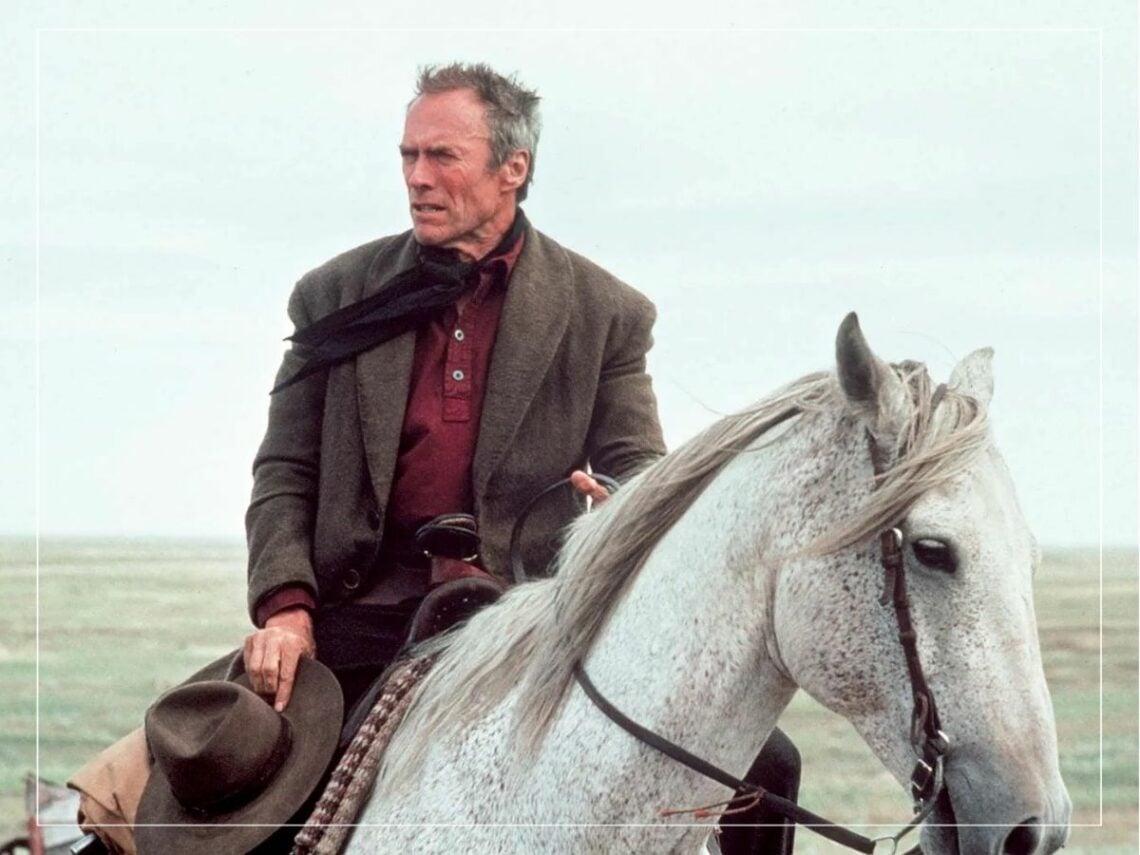
‘Unforgiven’: The greatest Clint Eastwood shoot-out of all time

As one of the two most iconic figures in the history of the western genre alongside John Wayne, Clint Eastwood has been in his fair share of cinematic shootouts. However, only one of them carries a meaning that extends far beyond the corners of the silver screen, which is just part of why it’s the greatest.
For many, Unforgiven is Eastwood’s magnum opus on both sides of the camera. A swansong to the medium that made him a star, the narrative reflects just as much on his persona as it does the dying embers of the Wild West, with William Munny the closest thing to an onscreen surrogate the leading man and director has ever played.
The deserving recipient of four Academy Awards, including ‘Best Picture’ and ‘Best Director’, on the surface, it’s a straightforward tale of the never-ending battle between good and evil. Munny has turned his back on the life of a remorseless killer, but events transpire that force him to realise the only way to save himself is to bring that part of himself back to the surface one more time to erase Gene Hackman’s Bill Daggett from existence after he tortured and murdered Morgan Freeman’s Ned Logan.
Having been beaten to within an inch of his life the last time he touched down in the town of Big Whiskey, Munny rides back into the saloon armed with a bellyful of booze, a double-barrelled shotgun, and a thirst for vengeance no amount of alcohol is ever going to quench.
A masterclass is shot composition, framing, pacing, and tension; it’s not only one of the more overtly stylish sequences Eastwood has ever directed, but it’s one that evokes decades’ worth of his previous credits, ties a bow around his association with the genre that made him who he is, and reiterates that there’s only so long anyone can outrun the sins of the past before they need to be confronted head-on.
It also helps that it carries a bountiful amount of memorable one-liners, with Eastwood nonchalantly blowing unarmed barkeep Skinny Dubois away before deadpanning, “Well, he should have armed himself if he’s going to decorate his saloon with my friend.”
Munny embraces the chaos he’s created and the mythology that earned him his reputation in the first place, admitting his previous sins to Daggett right before he commits plenty more. “That’s right. I’ve killed women and children. I’ve killed just about everything that walks or crawled at one time or another,” he ominously intones. “And I’m here to kill you, Little Bill, for what you did to Ned.”
If there was ever a scene that distilled Eastwood down to his very essence, then it’s Unforgiven‘s climactic saloon shootout. The hero overcoming the villains in a blood-soaked and bullet-riddled showdown is about as cliched as it gets in the western, but in addition to the excitement and dynamism of the way the scene is filmed, it’s almost meta-fictional in the way it serves as the star’s last stand in more ways than one.
Like he tells Little Bill, “Deserve’s got nothing to do with it.” In Munny’s eyes, death is the only solution to the problem at hand, even if he knows there won’t be a spot in heaven for him if he goes through with it. That spiritual addendum to a brutal showdown ends Unforgiven on an oxymoronically elegiac note, allowing Eastwood to walk away from the western one last time with his head held high.

Never Miss A Tale
The Far Out Clint Eastwood Newsletter
All the latest stories about Clint Eastwood from the independent voice of culture.
Straight to your inbox.