


Gratuitous sax and senseless violins: 10 songs sung from the perspective of evil characters

People often underestimate just what lyrics are capable of. If you give someone a simple chord progression and ask them to put words to it, they will usually look towards each corner of their brain to find something relatable that they can write about. This could be love, loss, or general frustrations with the day-to-day, but regardless, it tends to be easy to connect with as a writer and is, therefore, easy to connect with as a listener, too. But words can do a lot more than that.
Not all musicians go down that route. While some people are keen on singing songs that are extensions of who they are, others like to delve into the world of fiction. Sometimes, being conceptual with music means going down an escapist route, as artists often create otherworldly and mythical landscapes like Led Zeppelin do with ‘Immigrant Song,’ or Kate Bush does with ‘Wuthering Heights’. In other instances, people challenge themselves to act against instinct and, in doing so, embody evil characters and write songs accordingly.
We, as consumers, seem to have a strange soft spot for the villain and revel in temporarily joining them on their dark escapades. That’s why works like The Collector, A Clockwork Orange and American Psycho are so widely enjoyed. As such, many of these songs that momentarily allow listeners to enter the mind of someone far removed from being human are incredibly popular. That being said, some songs are seen to have gone too far, as the imagery and themes are too graphic and horrible for people to stomach, no matter how much creative license an artist is given.
This list will look at some of the songs sung from the villains’ point of view. Those that were well received and are still considered classics today, and others that were shunned by listeners who deemed the words a step too far into the world of malicious intent and apathy. What are your thoughts?
10 songs sung from a villain’s point of view:
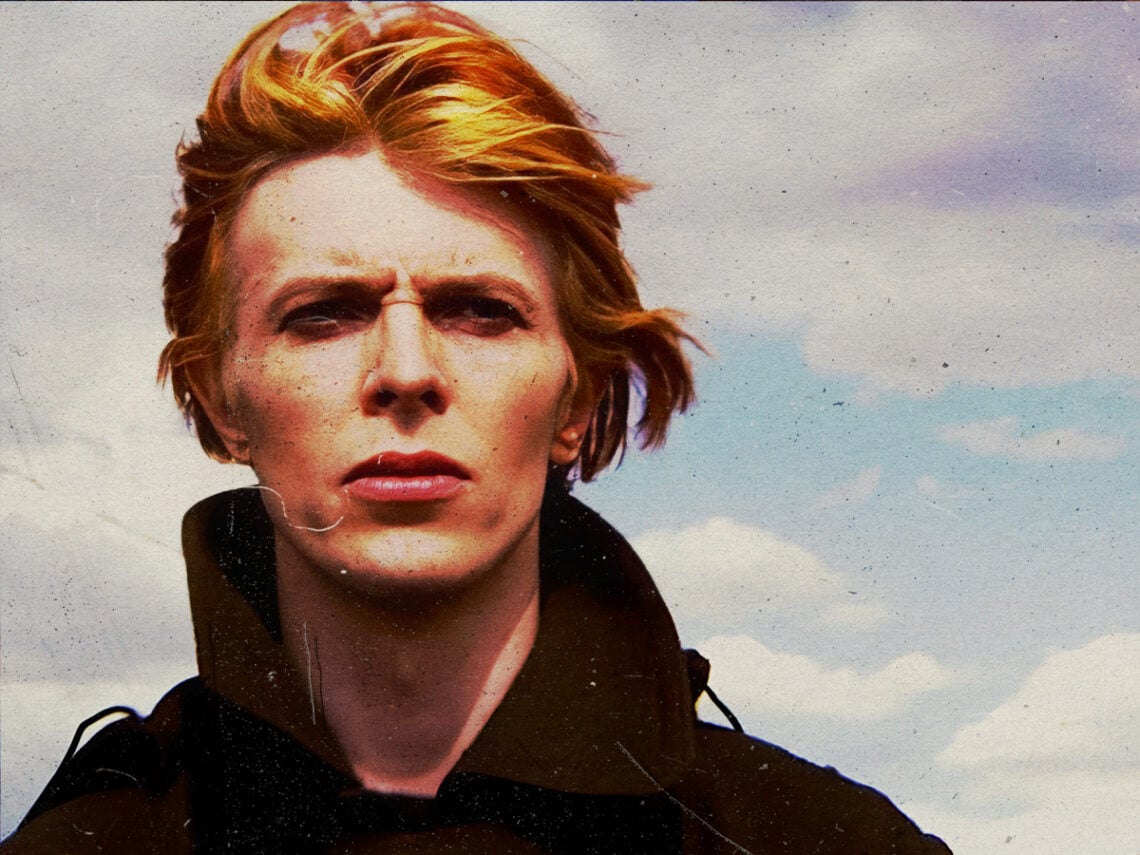
‘Scary Monsters (And Super Creeps)’ – David Bowie
Never afraid to shake off the shackles of pop culture, David Bowie was always happy to push himself into unknown areas. ‘Scary Monsters (And Super Creeps)’ is a fantastic example as he brings the notion of bewildering psychosis to the fore. The song itself focuses on a woman’s descent into madness, and with Bowie’s vocal feeling particularly imposing, the track has a dystopian quality that is hard to achieve without sounding cheap.
The track thunders ahead and brings a closeness that can feel both encompassing and claustrophobic. While the subject of psychosis may be the focal point, in truth, it is our narrator who is the real evil here, as he gently boasts of being the corruptible force in her life. While he may share the odd worry about his actions in the lyrics, the sinful protagonist is undoubtedly evil.
‘In Germany Before The War’ – Randy Newman
First things first, get the image of Randy Newman out of your brain. Pretend he isn’t the lovable songwriter who gave us that classic Toy Story tune and simply lock into the wholly worrying verbiage at play in his song ‘In Germany Before The War’. Capturing the image of a nation about to enter one of its darkest periods, Newman set the track in 1934 and the foreboding sense of dread that prevails in hindsight.
The track was initially inspired by Fritz Lang’s M from 1931 and the serial child killer Hans Beckert, who resides within the story. However, considering the context of the title and Newman’s half-Jewish heritage, there is every chance that he is infiltrating the mind of Adolf Hitler with this song. What is for sure, though, is that the protagonist here is deeply disturbed and has seemingly committed a murder.
‘Killing For Company’ – Swans
Some of the additions to our list are shrouded in mystery. They are simply hints at the evil world the narrator of the song sees. But, the Swans track ‘Killing For Company’ feels like the kind of song Buffalo Bill would sing at karaoke. When the opening lines are “I couldn’t stop myself”, and there are constant references to kissing skin, the lolloping music only adds to a sense of unwelcome dread.
Portraying the terrifying vision of a serial killer speaking to his recently slain victim, looking up to the sky and making satanic promises, the band manage to capture the perfect balance of power and potency. There’s a brutality to the vulnerability that is truly terrifying.
‘Constable’ – The Peep Tempel
A small-town police officer isn’t the first port of call when thinking of true evil. But there’s something gently terrifying about the protagonist of The Peep Tempel‘s brooding masterpiece ‘Constable’. Setting the scene of a plucky young officer trying to make ends meet, things soon turn sour as the opportunity for crooked behaviour presents itself.
Within a few verses, our charming constable is now divorced and happily presiding over a kingdom of broken promises, rotten enforcement, and the unique set of circumstances that sees police officers go off the rails. ‘Constable’ may not be explicit about the crimes at hand, but there’s a sense that the only reason for that is that our officer has hidden them from us.
‘Every Breath You Take’ – The Police
More has probably been written about the unnerving presence of The Police‘s protagonist in ‘Every Breath You Take’ than any other song on our list. While the track was quickly assimilated into the pop chart, beneath the smoky exterior and unstoppable groove, the lyrics sung by Sting showcased a truly menacing narrator at the heart of the story.
What may have seemed like a simple love song is actually a track focused on the obsession of a stalker. As he silently walks behind his victim, watching her every inhalation and exhalation, the brooding sense of fear creeps closer and closer to its target, repeating, “I’ll be watching you” in a tone that far belies its worrying sense of dread.
‘Nebraska’ – Bruce Springsteen
When writing the album Nebraska, Bruce Springsteen admitted that the synth-punk band Suicide somewhat inspired him. That would explain why he decided to dive into such heavy concepts when writing it, exploring different villains’ points of view and creating the darkest narrative that The Boss has ever set to lyrics.
The song ‘Nebraska’ is one of the darkest on the album, as Springsteen writes from the point of view of Charles Starkweather. Starkweather and his girlfriend, Carli Ann Fugate, were responsible for the murder of 11 people over eight days as they embarked on a violent killing spree in 1958. The song goes through Starkweather meeting Fugate and the two of them going on their bloody honeymoon period.
‘Behind Blue Eyes’ – The Who
While some people might think this track is criminal because it was eventually covered by Limp Bizkit, the original song also has somewhat sinister undertones, as it was supposed to be Jumbo (the bad guy’s) big number in Pete Townshend’s Lighthouse Project. The project was eventually cut short and became The Who’s Who’s Next, but make no mistake, this track has a villain’s narrative.
Pete Townshend was famed for his ability to weave narrative throughout his music, so it’s not surprising to see a track by The Who on this list; however, it is surprising that it takes the form of what is an incredibly sweet-sounding and tranquil track. This all plays into the story that would have unfolded had The Lighthouse Project come to fruition. As Townshend said, the track is supposed to depict Jumbo as someone who was “Forced into a position of being a villain”.
‘Dance With The Devil’ – Immortal Technique
When you ask someone to think of a song with a malicious narrative behind it, chances are, their first thought will be the infamous Immortal Technique tune, ‘Dance With The Devil’. This ten-minute horror-driven odyssey is arguably one of the most upsetting and stomach-turning songs ever written. It divides opinion in its imagery, with some claiming the visceral reaction is a testament to how well-written it is, while others think it goes too far and is simply grotesque.
The track follows William, who wants to become a hustler and earn respect on the street. He ends up taking part in a gang initiation on top of a roof, where he is forced to beat and sexually abuse a woman with a t-shirt covering her face. He does it, and after removes the t-shirt, revealing the woman is his Mum. William jumps off the roof and kills himself, and the gang kills his mother. The song’s narrator reveals he was one of the gang members that day and is worried that the devil still follows him because of his actions.
‘Psycho Killer’ – Talking Heads
‘Psycho Killer’ was a song featured on Talking Heads‘ debut album and is still considered a classic. Very few people will hear that initial bassline and won’t be immediately tempted to get up and start dancing. The infectious nature of its melody means we often overlook the sinister lyricism, but it’s right in the title.
When it was first released, fans thought it referenced the Son of Sam serial killings. The band always insisted that that wasn’t the case and there were no historical events to which the song is a homage; instead, they just wanted to write from a villain’s point of view. David Byrne said, “I imagined Alice Cooper doing a Randy Newman-type ballad. Both the Joker and Hannibal Lecter were much more fascinating than the good guys. Everybody sort of roots for the bad guys in movies.”
‘Run For Your Life’ – Clipping
Clipping is a cult king when it comes to concept albums and narrative-driven pieces of music. This noise-heavy, industrial, experimental rap outfit is responsible for dabbling in the worlds of sci-fi and horror in their music. Plenty of tracks from their albums There Existed an Addiction to Blood and Visions of Bodies Being Burned could make this list, but ‘Run For Your Life’ puts the listener into the mind of evil more than any other track the group has made.
The song transports you into the brain of a killer as he walks down the street; the only beat is provided by his footsteps and the occasional sound coming from cars that drive by. He raps about people he has killed and those he intends to kill on his long journey and gets more and more sinister with every second. It’s one of the most transportive songs ever recorded and plays into the album’s narrative incredibly well.
