


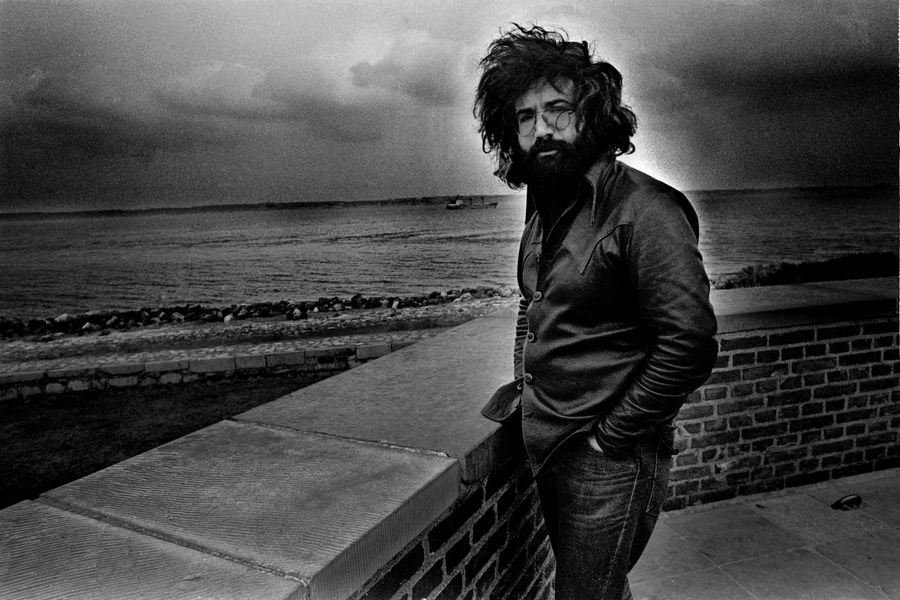
Grateful Dead’s Jerry Garcia and his theory about Deadheads

Jerry Garcia was fully aware of Deadheads. The guitarist had been seen as a larger-than-life figure across the American rock scene since the Warlocks officially changed their name to the Grateful Dead in 1965. With his distinctive look and lively approach to guitar playing, Garcia began to cultivate devotees as the Dead became one of the most successful rock bands in the world. “Deadheads”, or “Dead Freaks” as they were known in the early days, began to build Garcia up as something more than just a musician.
But that would come later: in 1980, the Dead were beginning a transition. After graduating from clubs and ballrooms to stadiums and arenas throughout the 1970s, the Dead entered into a strange kind of time loop starting in the 1980s. While the rest of pop culture viewed them as a dinosaur band of the 1960s, the Dead were actually gaining a more devoted following than ever. A bigger subsect of fans began following the band on tour, crisscrossing the United States in order to see the Grateful Dead play as much as possible.
“Well, it’s obviously very important to them. And more than that, it’s giving them an adventure,” Garcia observed about the most devoted Deadheads in a 1980 interview with Relix. “They have stories to tell. Like, ‘Remember that time we had to go all the way to Colorado, and we had to hitchhike the last 400 miles because the VW broke down in Kansas.’ Or something like that. Y’know what I mean? That’s giving them a whole common group of experiences which they can talk about.”
“For a lot of people, going to Grateful Dead concerts is like bumping into a bunch of old friends. There’s a vast network of Deadheads,” Garcia revealed. “They’re kind of like people who have come to know and recognize each other, and it’s like support. Sometimes a person can find a ride across the country with a Deadhead, or stay over at somebody’s house, or any of that. So, that seems to function pretty well for them.”
Garcia wasn’t ignorant about how much focus was on him, either. “I have a feeling [the audience] probably know as much about me as I know about myself. Maybe more. They may be in a better position to be able to see,” Garcia claimed. “I might reveal more than I know. It’s difficult for me to know something like that. But when people write us letters, I don’t get the sense they’re missing the mark.”
“They know who they’re talking to. So that makes me feel good since our only tool of communication is our music and what we do,” Garcia adds. “And when they speak to what they conceive of as the Grateful Dead consciousness, they’re usually not wrong.”
But there was one question that remained: could you be too devoted to the Grateful Dead? “Oh, for sure,” Garcia says. “I know I have (laughs). So, I’m sure it’s possible. But our commitment to the idea is as deep as the most crazed Deadheads. So I don’t feel as though we’re burning anybody on that level. We continue to do what we’re doing.”
