


The Grateful Dead album that forced out their producer: “We drove them mad”

For a while, it seemed like the Grateful Dead were a law unto themselves, so when the rambling mess of brilliance known as ‘the Dead’ signed to Warner Bros Records in 1967, it was a surprising move, to say the least.
Warner Bros was the home to Frank Sinatra and Trini Lopez; they were the lounge singer’s label of choice, and it left them wholly out of step with the emerging counterculture, let alone ht eofuc sed efforts of the wild movement of the San Francisco rock scene.
But label president Joe Smith saw bands like Jefferson Airplane and Moby Grape getting swept up by rival companies, so he made a drastic move in order to lock down one of the city’s biggest bands. Surely, a group that had such spiritual beginnings would be a comparatively peaceful outfit. He’d be wrong.
It’s fair to say that Smith didn’t exactly know what he was getting into. As perhaps the most experimental and most rowdy band in San Francisco, the Dead brought with them a pool of acid, a family of hangers-ons, and a wild list of demands with. Staff engineer David Hassinger was assigned to the band, and with the help of a tight deadline and a handful of amphetamines, the band’s debut album was recorded mostly without incident.
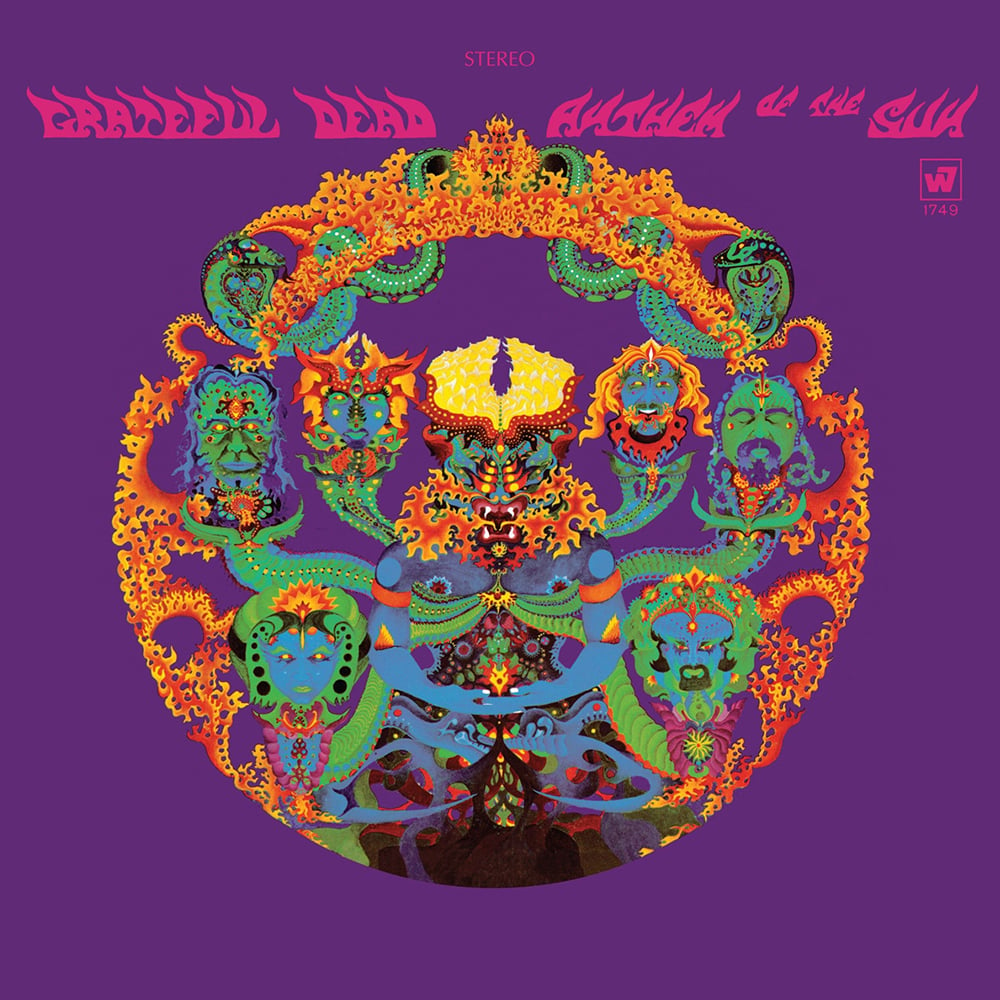
Debut records are often completed as such. More often than not, a group has their songs laid out for the first record before they are even signed. So when they hit the studio, they know what is about to go down. It was during the recording of their follow-up, Anthem of the Sun, that things went off the rails.
“We were the last thing the record company wanted to see,” Mickey Hart recalled in the documentary Long Strange Trip. “Oh man, we drove them mad. They would send us letters saying things like, ‘You’re over budget here, over time. You guys are crazy.’ And then we would grade them and send it back to them.” A condescending retort for a group who seemed to be more intent on creating chaos than selling records, an MO which would ironically create one of the most devoted fanbases in the rock world.
Whereas the band’s debut took a single month to record, Anthem of the Sun had its sessions stretched out to seven months. Seven long months for those who work in the studio, subjected to the wild rawness of the group untethered. Looking to capture the sound of the band’s live shows, the Dead took an innovative approach to recording, sequencing, and mixing. Essentially a collage of live shows and studio overdubs, Anthem of the Sun continuously weaves in and out of different performances and unrelated experiments.
Along the way, the Dead became more insistent on having a hands-on approach to the album’s production. Hassinger had already experienced some conflicts with the band in the studio, but with the highly experimental nature of Anthem of the Sun, Hassinger was pushed to his breaking point. One infamous idea from Bob Weir was enough to cause Hassinger to resign from the project.
“One day, Bob Weir said, ‘I have an idea. We go out on a hot, smoggy day in Los Angeles and we record 30 minutes of heavy air. And then, we go to the desert and do 30 minutes of clear air, and we mix it, and that can be like a rhythm track,'” Smith shared. There is a certain poetry to Weir’s comments, but it is hard to imagine just how frustrating working with such an artist would be for a studio engineer. “They always claimed that I would never understand their music until I turned on,” Smith recalled. “One time I did the laughing gas with them, whatever that gas is called.”
The relatively straight-laced Hassinger wasn’t on board, so he left the album’s production. Despite being listed as the album’s producer in the liner notes, the actual sequencing and editing of the album was mainly handled by Jerry Garcia, Phil Lesh, and soundman Dan Healy. The Grateful Dead continued their psychedelic experimentation with 1969’s Aoxomoxoa, with the band themselves being listed as the sole producer of that album.
Check out ‘Born Cross Eyed’ down below.
