



Six Degrees of Separation: How ‘God Only Knows’ led to ‘Born Slippy .NUXX’ and four other masterpieces

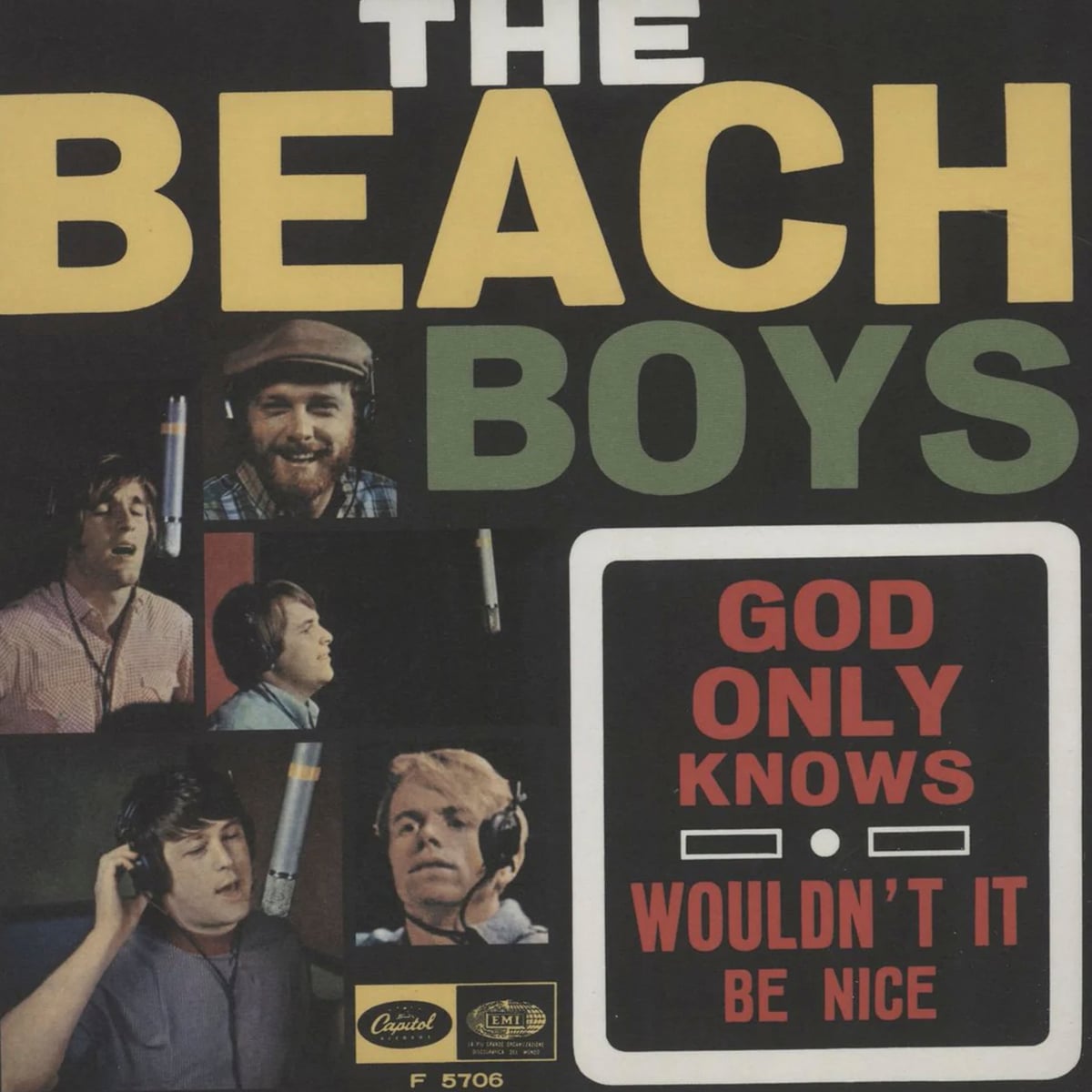
Brian Wilson is tearing his hair out in his mansion on the hills of Laurel Canyon. He’s gone to the effort of filling his living room with sand, plonking his grand piano in the middle of it, and attempting to channel god, primarily through the use of LSD. But still, his lofty ambition eludes him.
The task he has set himself is not an easy one. “I’m gonna make the greatest album,” he passionately proclaimed to his wife. “The greatest rock album ever made!” While it might have been a struggle, in time, Paul McCartney would profess that’s exactly what Wilson ended up achieving. He’s not alone in this either. Pete Townshend would even claim Wilson’s feat went beyond rock.
To this day, Pet Sounds remains perhaps the most peer-celebrated achievement in pop. Its pinnacle is undoubtedly ‘God Only Knows’. This key-less masterpiece is the realisation of the modernist belief that technology could unlock new heights in art, which up until that point had purely been a philosophical ideal in the world of sound. Then, ‘God Only Knows’ came along, and The Beach Boys used studio layering to create a previously impossible piece of music which soared to biblical heights.
Plenty of artists were astounded, but few delved into the ideological implications of how a song could amount to a proverbial ton of feathers. ‘God Only Knows’ might have been as sweet as a summer breeze, but it hit the world like a hurricane. Lou Reed took note. He would later cite the track among his 100 favourite songs of all time, but made it clear that it wasn’t the sentimentality that wooed him.
“Will none of the powers that be realise what Brian Wilson did with the chords,” Reed pleaded. “Deftly taking from all sources, old rock, Four Freshman, he got in his records a beautiful hybrid sound.” At the time, Reed was working on his own radical hybrid, and after a stilting stint as a songwriter for hire, he was looking to break away from the typical four chords of pop.
The bulk of the Velvet Underground’s endeavours on this front had been to inject their sound with angularity and grime. They talked about the dark underbelly of druggy New York, and starkly dissonant viola solos wailed in their mix. If it wasn’t for the rare praise that Reed afforded The Beach Boys, you could even be mistaken for thinking that the Velvet Underground set out with the aim to be the exact inverse of the Californian band.
But then came ‘Sunday Morning’. This pillow-propped ditty plunged into the same plashy depths of introspection that ‘God Only Knows’ had plundered. Yet, both songs shared a definite realism. Wilson’s love song/ode to god specifically states, “I may not always love you”, and the dreaminess of the melody in that moment only adds to the bittersweet disjointment of life. Reed, listening on, realised softness can be radical.
So, for his band’s next non-hit, he reached for a celesta and looked to emulate the lullaby sound that Wilson had mustered. MGM were badgering the group for a single to ‘save’ their rejected debut album at the 11th hour, so Reed tried his hand at radical softness.
While aurally the chiming results of ‘God Only Knows’ and ‘Sunday Morning’ are almost identical, in actual fact, The Beach Boys achieved their own celesta-adjacent sound by innovatively layering a tack piano, accordion, harpsichord and horns. Reed wasn’t quite as fussy, and his rudimentary take on rebellious tenderness has proven just as timeless, even if the song failed to chart entirely upon release.
However, while sales of their records might have been floundering, the Velvet Underground had cultivated one keen listener who was similarly fascinated with how pop could now carry a hefty punch. “My manager brought back an album [from the US], it was just a plastic demo of [The Velvet Underground’s] very first album in 1965-ish,” David Bowie recalled in an interview with PBS.
He continued, “He was particularly pleased because [Andy] Warhol had signed the sticker in the middle, I still have it by the way. He said, ‘I don’t know why he’s doing music, this music is as bad as his painting,’ and I thought, ‘I’m gonna like this.’ I’d never heard anything quite like it, it was a revelation to me.”
Bowie was drawn into this subversive and artful world, but perhaps above all, he admired its relation to pop. Speaking about John Lennon, he once said, “I just thought he was the very best of what could be done with rock ‘n’ roll,” because of the way he would “rifle the avant-garde and look for ideas that were so on the outside” of the mainstream “and then apply them in a functional manner” to pop “and make it work.”
That’s what was best about the Velvet Underground, too. If you squint your ears, you could even club ‘Sunday Morning’ in with The Carpenters. So, Bowie set out to match this strange mix of sweetness, melody, acerbic bite, and avant-gardism. It took him a while, but he eventually succeeded.
In fact, his success was such that by the time he began working on Low in 1976, he endeavoured to make studio innovation the driving force of the record. To assist him on this pursuit, he brought in Brian Eno. What they assembled was revolutionary in its own right, but it did share some of the touchstones pioneered back in 1966.
Wilson’s work on Pet Sounds was almost anti-rock in its constitution. Rather than capturing a live performance, he assembled ‘God Only Knows’ piece by piece, layering instruments, vocals, and textures in a manner akin to a musical take on William Burroughs’ cut-up technique. Eno would later take this approach and make it explicit, treating tape-tampering, layering, and non-linear assembly as compositional tools. It was now, as Mark Pendergast would write, an ambient century.
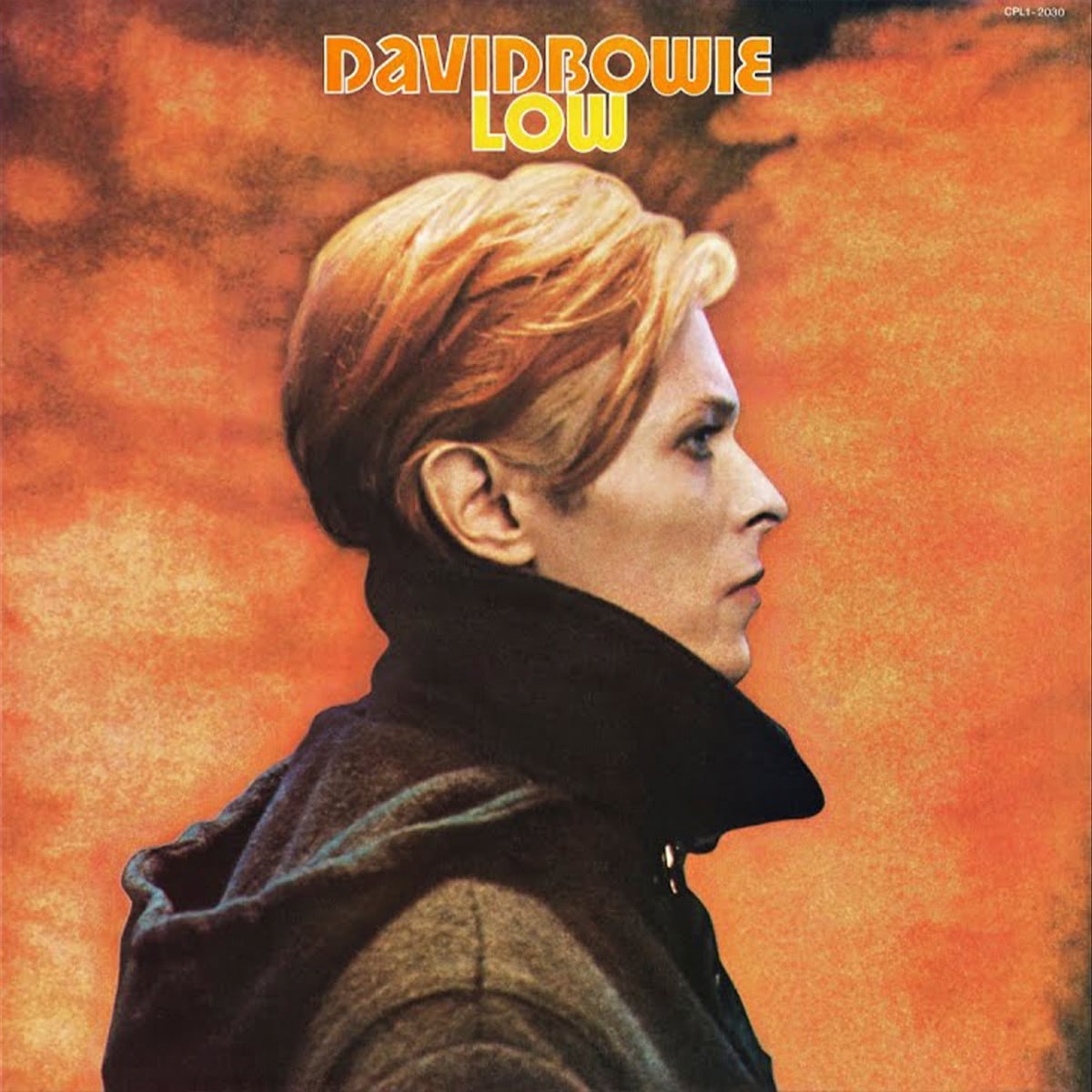
When Bowie brought Eno in for Low, their signature collaboration on ‘Sound and Vision’ carried forward both Wilson’s studio ethos – pop constructed as modular, experimental architecture, building cathedralesque pop, rich with emotional reward – and Reed’s introspective softness to create a middle-ground between ‘God Only Knows’ and ‘Sunday Morning’ dragged a decade into the future.
Yet, there was something else in the mix. The track had a digitised element that incorporated another of Bowie’s key influences: Kraftwerk. Among many other things, there’s something distinctly European about ‘Sound and Vision’. Or at least that’s how plenty of American critics described it back in the ‘70s.
While that might be vague, the description is elucidated when you consider the diminished chords and non-diatonic touches that pull ‘Sound and Vision’ away from trusty C Major to peculiar territory. This makes for a route through the track far more akin to the cobbled side streets of the EU than the power chord highways of the States.
This was discreetly intentional. Above all, Bowie praised Kraftwerk for their “singular determination to stand apart from stereotypical American chord sequences.” So, in response to Bowie cottoning on to their quirky musicality and popifying it, Kraftwerk decided to push things even further. For their next single, ‘Trans-Europe Express’, they would, ironically, go beyond even strange European chord sequences and come up with something altogether inhuman.
If this can be seen as a response to Low with the Germans further advancing their ‘machine music’ ethos, then it was around this time that different songs began engaging in a far more direct dialogue with the advent of sampling. Thanks to the in-built digital capabilities on the Fairlight CMI (first rolled out in 1979), tracks could now perform a more unapologetic form of the plagiarism that has always been part of pop. Enter ‘Planet Rock’ by Afrika Bambaataa.
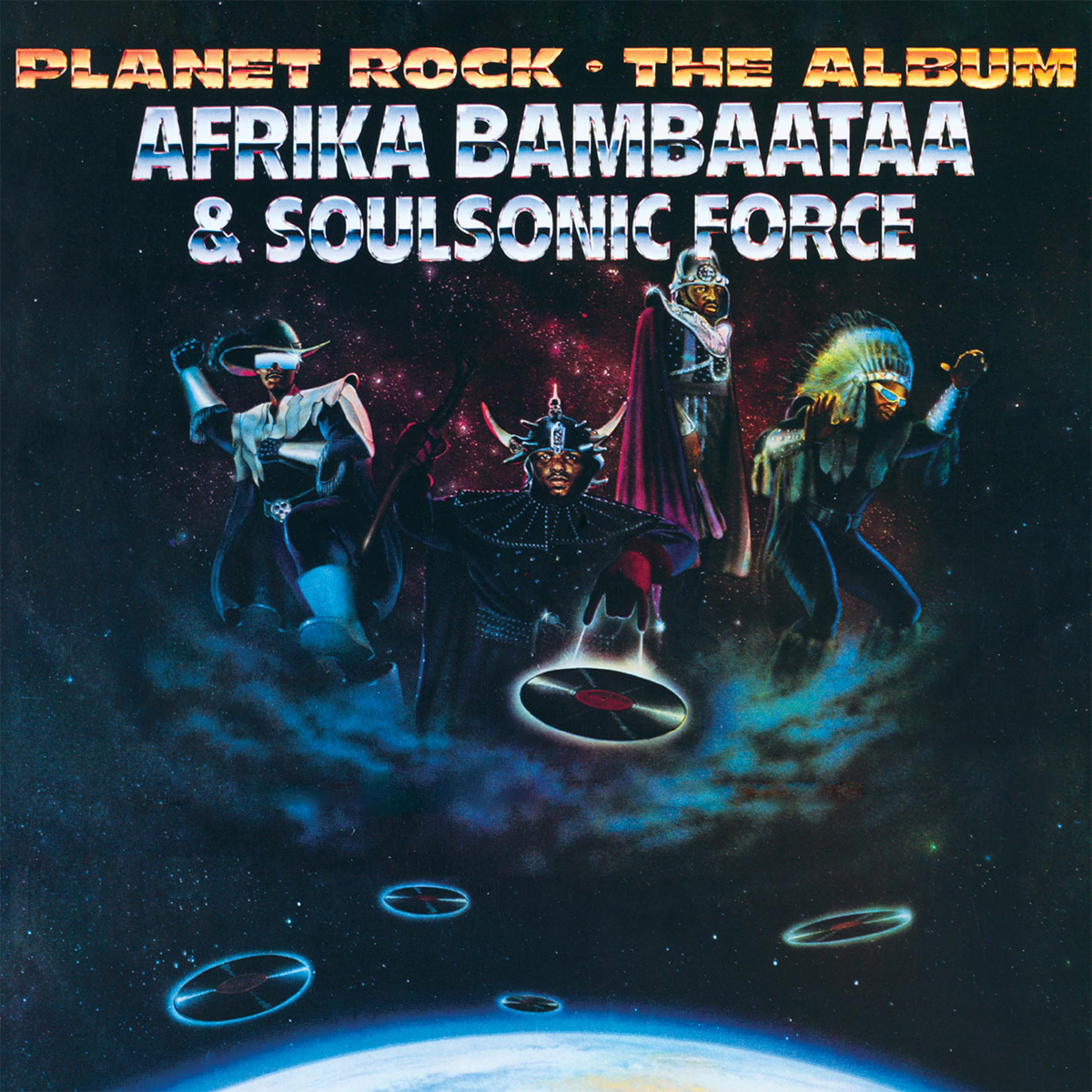
Bambaataa was noticing that a ‘scene’ was beginning to reach a fever pitch in New York City. As he dug through the crates one day, looking for something fresh that would turn the simmering collectivism surrounding the emerging hip hop wave into a rolling boil, he came across ‘Trans-Europe Express’. Without any prior knowledge of Kratwerk, he made the wise decision to give it a spin.
“I started noticing the block parties. And they would put this record on. You would just hear ‘Trans-Europe Express, Trans-Europe Express’. People would hear this music, and they would turn and walk towards the park like zombies in The Walking Dead,” Darryl McDaniels of Run DMC would explain regarding this alien, revolutionary sound suddenly influencing black music. It was often Bambaataa playing it. He would spin it at “every party” that he DJ’d.
Eventually, in a manner not dissimilar from Wilson’s pop assemblage techniques, Bambaataa would splice the groovy track and make something new out of its jigsaw pieces: ‘Planet Rock’. Planet proving to be a pivotal word. If Kratwerk’s goal was to create “robot rock”, then Bambaataa wanted to retain the undoubtedly groovy sound, but humanise it. Times were hard in New York during this dilapidated era, and blasting ‘Planet Rock’ at block parties brought people together in the best possible way.
If these get-togethers were all about escaping hardship in a delirious trance, then the house and techno movements that followed in Detroit looked to mimic that experience more so than the music that was played during these primitive raves.
DJs deciphered that hours of dancing required looped grooves rather than quick-fire hits. The music of these emerging subcultures was, therefore, a reverse engineering exercise of the desired end result. Pioneers like Frankie Knuckles translated the internal logic of block parties into functional compositions, allowing people to lose themselves in energised repetitions.
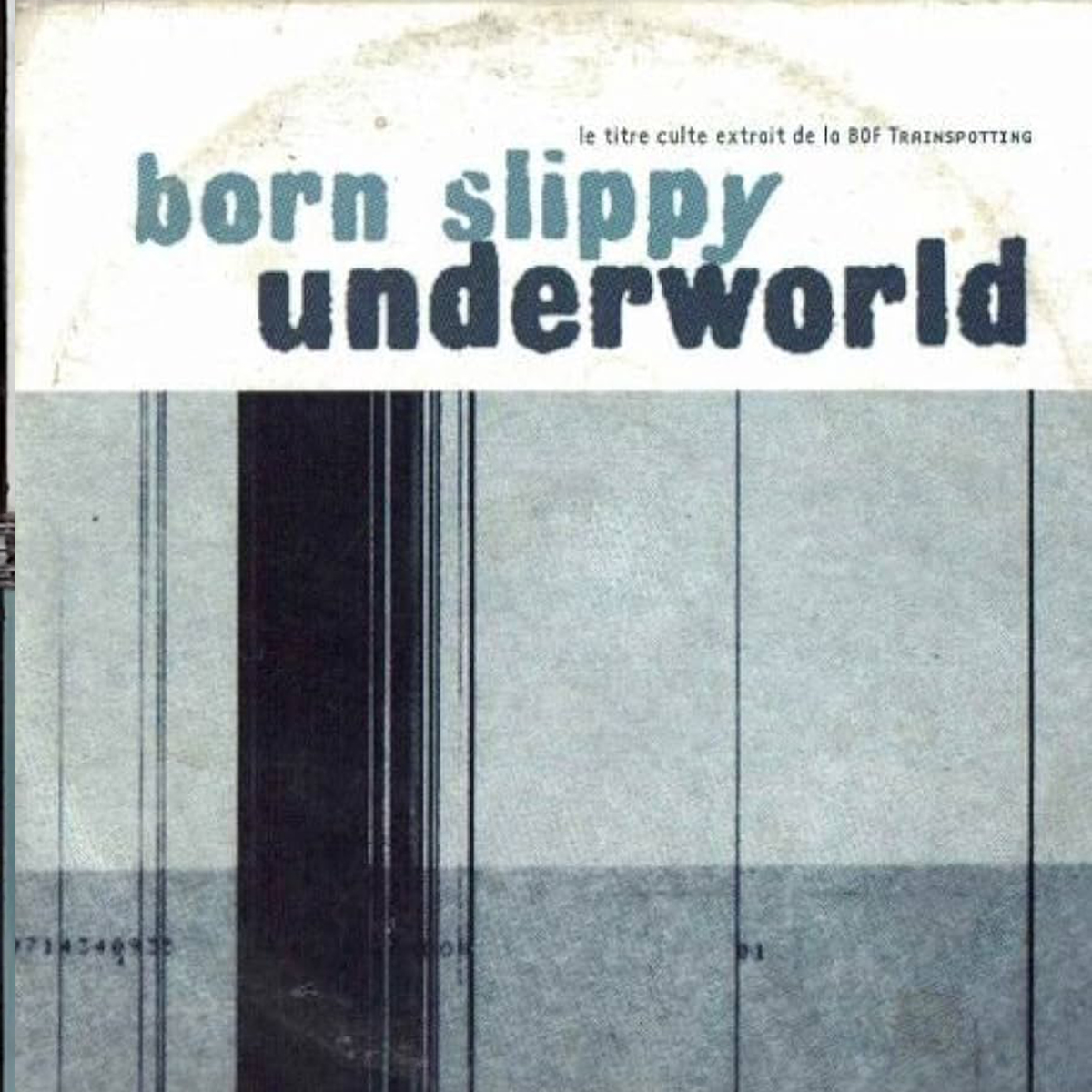
By the time these raves hit the UK, the likes of Underworld looked to embolden them with European melodicism. They traded the cheap synths of ‘Malaise-era’ America for a more opulent ‘God Only Knows’-like production, creating looping electronic symphonies, but from the bare, machinic bones of a mere duo with a bit of cutting-edge kit.
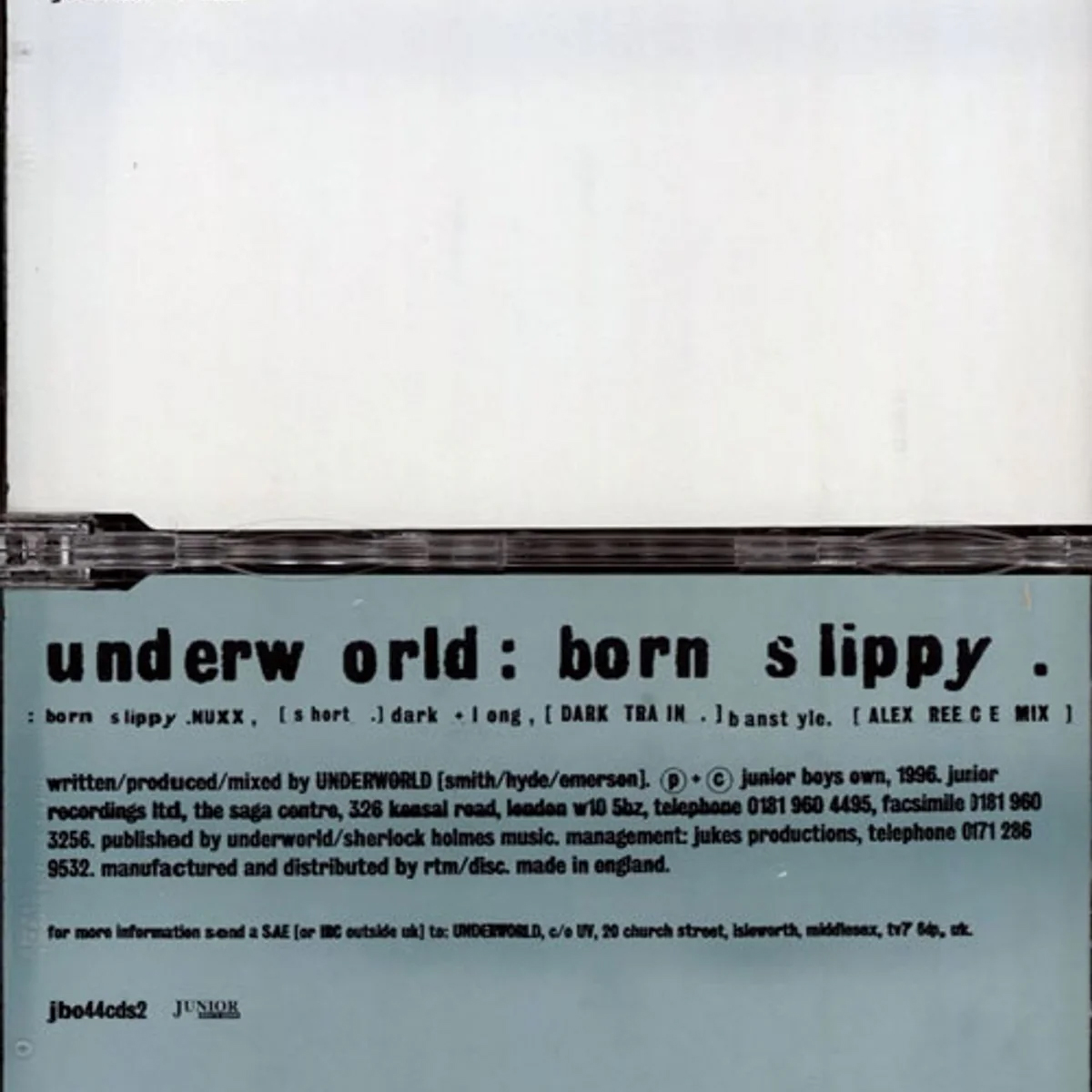
As one half of Underworld, Rick Smith, recalled, when looking at the inspirations that gave rise to ‘Born Slippy .NUXX’, Kratfewrk “was it, man. It was all over for me at that point. I’ve always loved electronic music and repetitive beats and sound design… And that moment when Kraftwerk came into my life, oh my God, I can still taste it in my mouth.”
That taste may well be an illicit substance. Each of these songs, in some way, is linked to the psychedelic expansion of consciousness that pervaded counterculture (and its pitfalls). You have the strident idealism of the acid-test age with Wilson, the comedown indicted by the withdrawn Reed, the isolation of addiction explored in Bowie’s blue world, Kraftwerk’s alienation from reality, the collective dissociation of block parties, and the blissful buzz of Underworld.
In many ways, ‘Born Slippy .NUXX’ is not just a simple step up the chain from ‘Planet Rock’, but a culmination of this whole journey. In its welter lies the euphoria of ‘God Only Knows’ and its expansive modernist vision. There’s the psychedelic detachment of ‘Sunday Morning’, encouraging the listener to float off into a world of their own making. There’s the entrancing rhythm of ‘Sound and Vision’, the forward-motion futurism of ‘Trans-Europe Express’, and the dawn of rave culture in the dancing collectivism of ‘Planet Rock’.
So, ‘Born Slippy .NUXX’ is a song that stands on the shoulders of 30 years of musical innovation. Little wonder it made a legion of ravers feel like they were riding the wave of that high, hopping and skipping to the peak of Everest before the house lights came back on. In some ways, it’s the furthest we ever came from ‘God Only Knows’. In other ways, it’s the perfect embodiment of what Wilson was envisioning as he pulled his hair out in his mansion on the hills of Laurel Canyon.
