


The God-like musician who convinced Bob Dylan to be a singer: “Nobody was going to be my boss”

There are some musicians who just seem like it was their destiny to enter the arts. As though it was prognosticated and woven into cultural place by some mystic figures of fate, Bob Dylan went on to change the world without so much of a second thought.
And strangely, if the original vagabond wandered into your careers office as a boy and said he would do just that, you’d probably not even be moved to offer a more realistic alternative and simply take his forthright word for it.
There were many artists who helped to inspire him when he was young; When he heard Hank Williams as a boy he said, “I became aware that in Hank’s recorded songs were the archetype rules of poetic songwriting. The architectural forms are like marble pillars.” However, there was one artist above all others that made Bob Dylan certain he was going to follow in his hero’s footsteps and become a musician.
Across the many decades of Dylan’s career, he has paid tribute to countless other songwriters in his field, and most of them make sense. He routinely celebrated The Beatles for their mass appeal, he called Leonard Cohen a visionary and would often find himself lavishing praise on the Canadian. Other stars like Randy Newman, Warren Zevon and even the Eagles have all been bestowed a gilded compliment from the freewheelin’ troubador.
Upon the ten-year anniversary of Elvis Presley’s death in 1987, Bob Dylan told US magazine: “When I first heard Elvis’ voice, I just knew that I wasn’t going to work for anybody; and nobody was going to be my boss. He is the deity supreme of rock ‘n’ roll religion as it exists in today’s form. Hearing him for the first time was like busting out of jail,” he said.
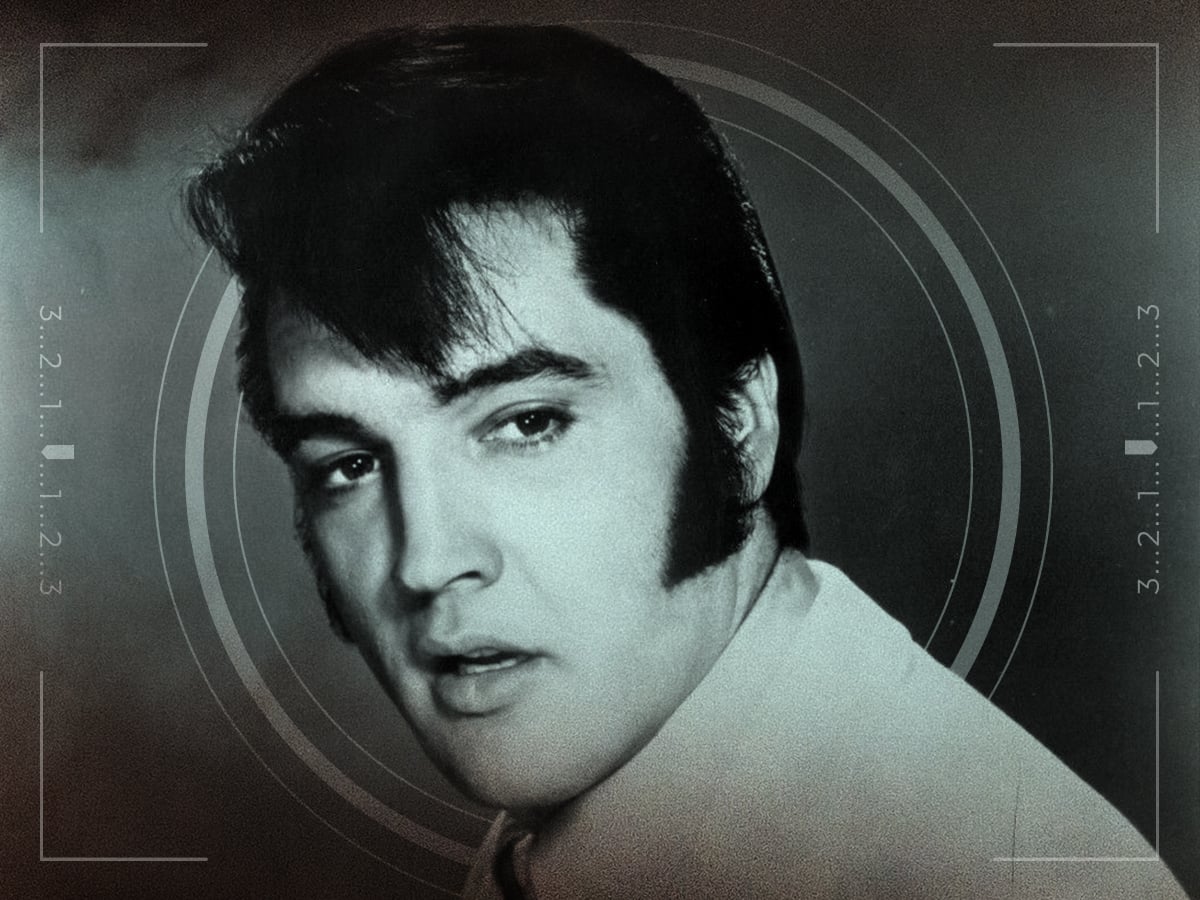
Elvis helped to break the shackles of stilted conservative civility with his swivelling hips and sent young heads into a tailspin. Dylan might not have had the snake hips, but he had his own revolution in tow and Elvis imparted the possibility of espousing it. As Dylan concluded: “I think for a long time that freedom to me was Elvis singing ‘Blue Moon of Kentucky’. I thank God for Elvis.”
For most artists of Dylan’s age, this was a very real and very natural reaction. The star had seemingly not only transcended the nature of music, but had formed a whole range of genres in his wake. Elvis may now be considered a little tired, perhaps even a little vulgar in that shimmering fake gold kind of way, but there can be no doubt that his impact on music was monumental. If nothing else, his arrival was like an earthquake that, after it ripped through the world, rubbing together tectonic plates of culture and youthful desire, left behind fields of fertile ground ready for the wildflowers of pop music to begin emerging.
In later years, Dylan would muse with an air of awestruck perplexity: “Yeah, Elvis Presley, I liked Elvis Presley. Elvis Presley recorded a song of mine. That’s the one recording I treasure the most…it was called ‘Tomorrow Is A Long Time’. I wrote it but never recorded it.” Rock ‘n’ roll is a funny old thing and suddenly Dylan found himself shaping the wave that Elvis set in motion.
And such is the lineage of American rock, Bruce Springsteen would then go on to apply the same notion of music lifting a veil to Dylan himself. As ‘The Boss’ once wrote: “The first time I heard Bob Dylan, I was in the car with my mother listening to WMCA, and on came that snare shot that sounded like somebody’d kicked open the door to your mind … The way that Elvis freed your body, Dylan freed your mind, and showed us that because the music was physical did not mean it was anti-intellect.”
Continuing: “He had the vision and talent to make a pop song so that it contained the whole world. He invented a new way a pop singer could sound, broke through the limitations of what a recording could achieve, and he changed the face of rock’n’roll for ever and ever.” Music is a liberating force and the continued ripple of inspiration that Elvis snarled into existence is still gathering thanks to folks like Dylan.

Never Miss A Tale
The Far Out Bob Dylan Newsletter
All the latest stories about Bob Dylan from the independent voice of culture.
Straight to your inbox.