


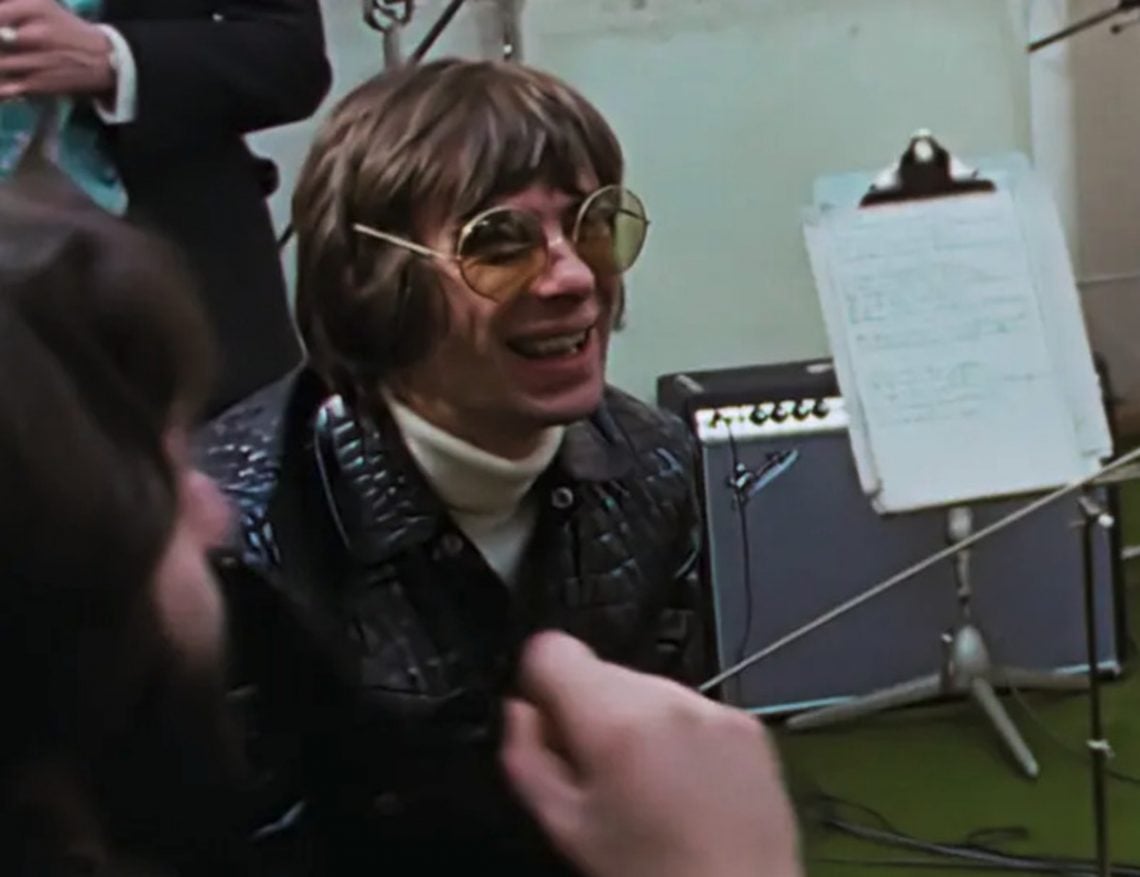
Understanding how Glyn Johns created the Led Zeppelin drum sound for John Bonham

When Led Zeppelin were recording, there was one distinct figure in charge: Jimmy Page. As the band leader, guitarist, arranger, and producer, Page’s decision-making reigned supreme in the studio. Assembled around him were some of the most talented engineers and recording wizards of the time, including Eddie Kramer, Chris Huston, Terry Manning, and Keith Harwood. But if there was one man who helped shape the sound of Led Zeppelin in their earliest days, it was Glyn Johns.
Johns had already logged time with some of the biggest names in British rock, including The Rolling Stones and the Small Faces, by the time he got the call to engineer for Zeppelin. Page and Johns were childhood friends, and Johns’ unique approach to capturing rock music would later make him a favourite among the biggest names in the genre, including The Beatles (during the Get Back sessions), The Who, Joe Cocker, and the Eagles.
When Johns arrived at Olympic Studios in London, he was confronted with perhaps the loudest drummer in the entire world: John Bonham. Drum recording had only just come into its own, with monster percussionists like Keith Moon and Carmine Appice only just getting the most out of their Herculean hits. Johns needed to capture the might of Bonham without blowing out his microphones, and his solution came in the form of simplifying the process to the barest of setups.
“It was a complete accident,” Johns revealed in his memoir Sound Man. “I usually use three or four mics on drums. One over the top, one on the floor tom-tom, one on the bass drum, and one on the snare, which I very rarely use. Because we were always limited to the number of tracks available back in those days, drums would always be recorded on one track, and depending on the session, sometimes with the bass mixed with them.”
“We had finished a basic track and had decided to overdub an acoustic guitar on it,” he added. “I took one of the Neumann U67s that I had been using on the drums to use on the guitar, and having finished the overdub, I put it back on the drums in order to start the next basic track. When I lifted the faders to listen to the drums, I found that I had inadvertently left the mic assigned to the track I had been using for the overdub, which I had placed to the far left of the stereo. As the other drum mic was in the middle, it spread the sound to the left.”
Johns added: “So I wondered what would happen if I put them left and right, and made the small adjustment of pointing the floor tom-tom mic at the snare, making the two mics equidistant from it. The result sounded enormous, with the completely different perspective that stereo brings. It is completely unnatural to have the drums spread across the entire stereo picture, so I panned each track half left and half right, ending up with the technique I have used ever since.”
The mixing technique became Johns’ sonic signature, but he makes sure to give credit to Bonham for helping shape the sound. “There is no question that if I had not been working with John Bonham and the extraordinary sound he was giving me, I would not have spotted it,” Johns claims. “A prerequisite to this working is that you must have a drummer who gives you a good sound, as well as a pair of Neumann U67s or 47s, or Telefunken 251s.”
You can hear Johns’ revolutionary drum sound on ‘Good Times Bad Times’ down below.

Never Miss A Beat
The Far Out Led Zeppelin Newsletter
All the latest stories about Led Zeppelin from the independent voice of culture.
Straight to your inbox.