


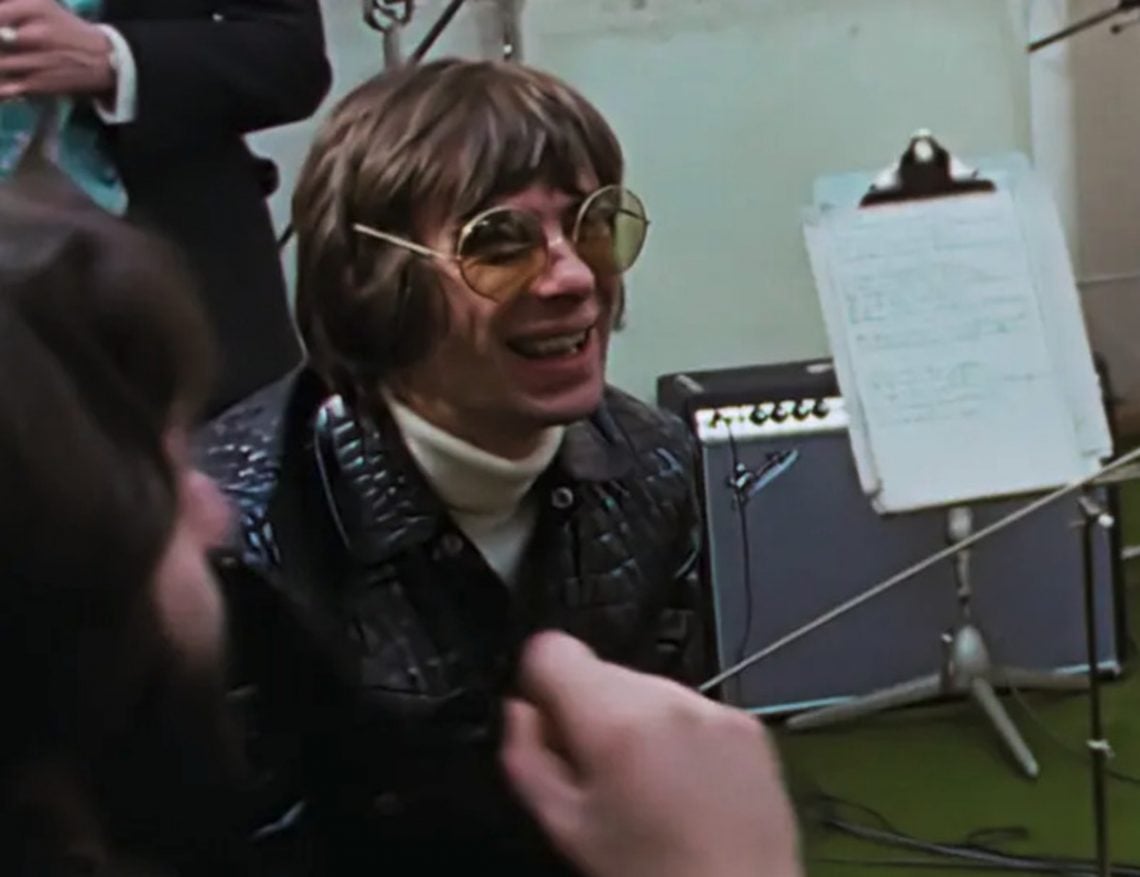
Glyn Johns on the “awkward position” he was in during The Beatles’ ‘Get Back’

Anyone who has watched The Beatles: Get Back will notice the prominence of legendary record producer Glyn Johns. Before his classic work with Led Zeppelin and The Who, Johns was making a name for himself as a studio engineer, having logged time with The Rolling Stones and the Small Faces. Johns initially agreed to take on the sessions, assuming that The Beatles would use their longtime producer, George Martin.
“I had been retained originally as an engineer and was quite happy with that, even when I realised that George Martin was not producing,” Johns wrote in his memoir Sound Man. “He did come to Twickenham a couple of times to check us out. He had arranged for the gear to be loaned for the recording at Saville Row and turned up on the day we did the filming on the roof but had nothing to do with the production of the music.”
Indeed, there was no designated producer for the Get Back sessions. Johns was the closest thing, manning the recording console while The Beatles jammed on songs and threw around ideas. Johns wasn’t specifically designated the role of producer, but he was told that Martin was specifically not being used in that capacity for the album.
“A couple of days into the project, I asked Paul where George Martin was, only to be told that they had decided not to use him,” John writes. “By the time we moved to Savile Row, George, realising I was in an awkward position, was kind enough to take me to lunch in order to put my mind at rest, saying I was doing a great job, everything was fine, and I was not stepping on his toes in any way. What a gentleman he is.”
Johns was initially asked to assemble a version of the album’s sessions to be used as the final mix. Johns’ first version was created between March and May of 1969 and included a number of differences from the final album. This version of the album had the original title of Get Back and included an instrumental jam called ‘Rocker’, a snippet of The Drifters’ ‘Save the Last Dance for Me’, Lennon’s ‘Don’t Let Me Down’, and a four-minute edit of ‘Dig It’. Johns’ first version retained the raw and ragged nature of the album’s recording.
“Having delivered the mixed master of my version of Let It Be, I approached each member of the band separately, asking if I could have a production credit on the album when it was released,” Johns wrote. “I made it quite clear that I was only asking for that and not a royalty. Paul, George, and Ringo had no objection to my request by John was suspicious and could not understand why I was not asking for a royalty.”
“I explained that I felt, because of their stature, the sales of the album would not be affected by my involvement one way or another, so a credit would be a fair settlement for what I had done, as by association, it could only be positive for my career in the future,” Johns claims. “I never got an answer from John.”
Johns’ first mix was rejected, but after Michael Lindsay-Hogg assembled his cut of the Let It Be documentary, Johns was approached again to assemble the album, this time with a requirement to mirror the songs that appeared in Lindsay-Hogg’s film. Johns removed McCartney’s ‘Teddy Boy’ and added Lennon’s ‘Across the Universe’, which necessitated a trip to the studio with Lennon.
“Once the film had been credited to [Allen] Klein’s specifications, John and Paul asked me to change some of the material on my version of the album,” Johns said. “This included going back in with John to redo his vocal on ‘Across the Universe’, a track that had been recorded in 1968. This was to be my last experience working with him. He was in a very strange mood.”
“I put him in the vocal booth in the mix room at Olympic and ran the multitrack tape to get a recording level on his voice and to let him warm up and get into what he was doing,” Johns wrote. “After one run-through, I suggested that we should take it. Whereupon he went ballistic, saying that he would never sing it like that again, asking why the hell I had not taken it the first time he sang it.”
“I explained that it would not have been possible as I needed to get a level on his voice,” Johns adds. “He begrudgingly sang it again and left in a huff. He had been around the recording process long enough to know that what he was complaining about was ridiculous, so I put it down to him being under the influence of some substance. It was a sad way to finish after what had been a really pleasant working relationship up to that point.”
Ultimately, Johns would only be credited as an engineer and mixer on the final version of Let It Be, and he doesn’t hold back his opinion on who was eventually credited as the album’s producer. “As it turned out, none of this mattered, as in the end, after the group broke up, John gave the tapes to Phil Spector, who puked all over them, turning the album into the most syrupy load of bullshit I have ever heard,” Johns concludes. “My master tape, perhaps quite rightly, ended up on a shelf in the tape store at EMI. At least my version of the single of ‘Get Back’ / ‘Don’t Let Me Down’ had been released in April 1969.”
You can check out that single down below.

Never Miss A Beat
The Far Out Beatles Newsletter
All the latest stories about The Beatles from the independent voice of culture.
Straight to your inbox.