


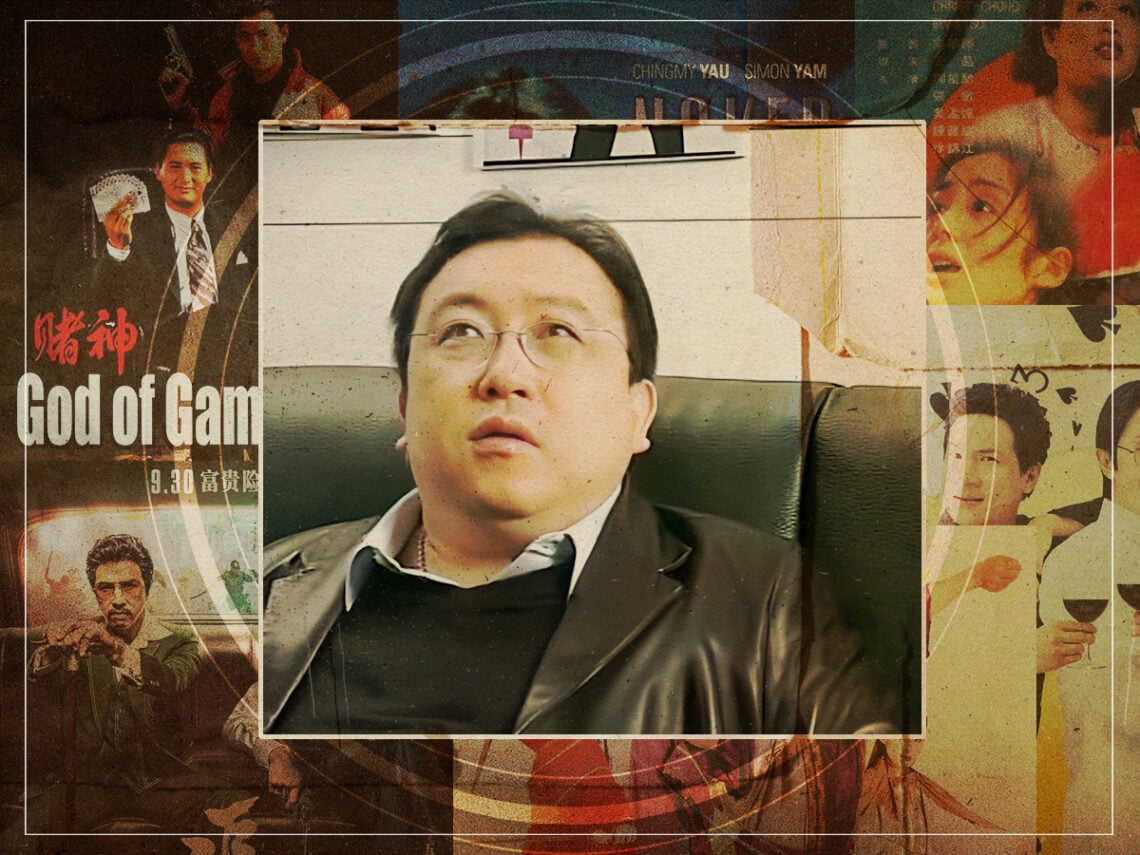
Underappreciated Maverick: the glorious cinematic ‘trash’ of Wong Jing

Churning out a never-ending stream of cheap and cheerful genre films eventually saw Roger Corman become celebrated as one of the most important and influential figures in modern cinema. While he was definitely one of a kind, if he had an equivalent on the other side of the world, then it would have been difficult to look past Wong Jing.
Much like Corman, the Hong Kong native evolved a brand unto himself by becoming synonymous with B-tier movies that critics and purists regularly looked down upon and turned their noses up at, but audiences couldn’t get enough of. Furthering the comparison, Wong also had a helping hand in elevating the careers of more than a few future superstars.
Chow Yun-fat had already starred in Ringo Lam’s City on Fire and John Woo’s A Better Tomorrow at the time. However, it was Wong’s God of Gamblers that broke box office records in Hong Kong when it was released in 1989, with Stephen Chow, another regular collaborator of the filmmaker’s, while stunt gurus Yuen Woo-Ping and Corey Yuen worked with him frequently.
The amnesiac comedy proved so successful that it ended up launching a sprawling franchise comprised of eight sequels and five spinoffs, with Wong having never met a movie he couldn’t squeeze every last penny out of. The quantity often outweighed the quality, but when it came to mounting the trashiest and most deranged productions in all of Hong Kong, his name alone was a guarantee that something bizarre was destined to go down.
As a writer, producer, director, and occasional actor, Wong prided himself on having his finger on the pulse of what audiences wanted to see. His rapid work rate allowed him to turn his films around incredibly quickly, so whenever there was a craze or fad sweeping through the nation, he was always ready and armed with a spiritual successor that could capitalise.
His methods can’t be faulted in terms of ticket sales alone, regardless of how derivative much of his work tended to be. Beyond God of Gamblers being run into the ground, 1995’s High Risk was basically Die Hard with Bruce Willis being swapped out for Jet Li and the caveat that Wong used the entire movie as a means to fire shots at Jackie Chan after their negative experience working together on City Hunter, never mind the success of his breakthrough feature turning him into the leading light of gambling-centric action cinema. A niche accolade, sure, but one he effortlessly mastered.
There were inevitably many critics of Wong’s approach to the sacred art of cinema, but he didn’t care in the slightest. In fact, he viewed it as such a badge of honour that he went out of his way to parody many of Hong Kong’s most popular and respected auteurs in his own inimitable way.
Last Hero in China mocked Tsui Hark’s historical saga Once Upon a Time in China. Boys Are Easy needled John Woo’s heroic bloodshed and latent homoeroticism with its triple-pronged love story that finds gangsters, sex workers, social workers, virgins, and doctors all falling head over heels for each other. Not even Wong Kar-wai was safe after the fantastical genie caper Whatever You Want and the buddy comedy Those Were the Days both boasted a character named Wong Jing-wai.
A good-natured sort, Wong also had a habit of poking fun at himself in his movies, whether it was having a character in a fictional feature say they’d fast-forward eight of his films or making cameos as assorted sleazeballs. Regardless of whether it was action, comedy, gangsters, gambling, erotic thrillers, farce, slapstick, period pieces, crime stories, or anything else that took his fancy on any given day, he’s earned his spot as one of Hong Kong’s most underappreciated mavericks. Many would decry his output as trash, but he’d probably say that was his intention and take it as a compliment.
