


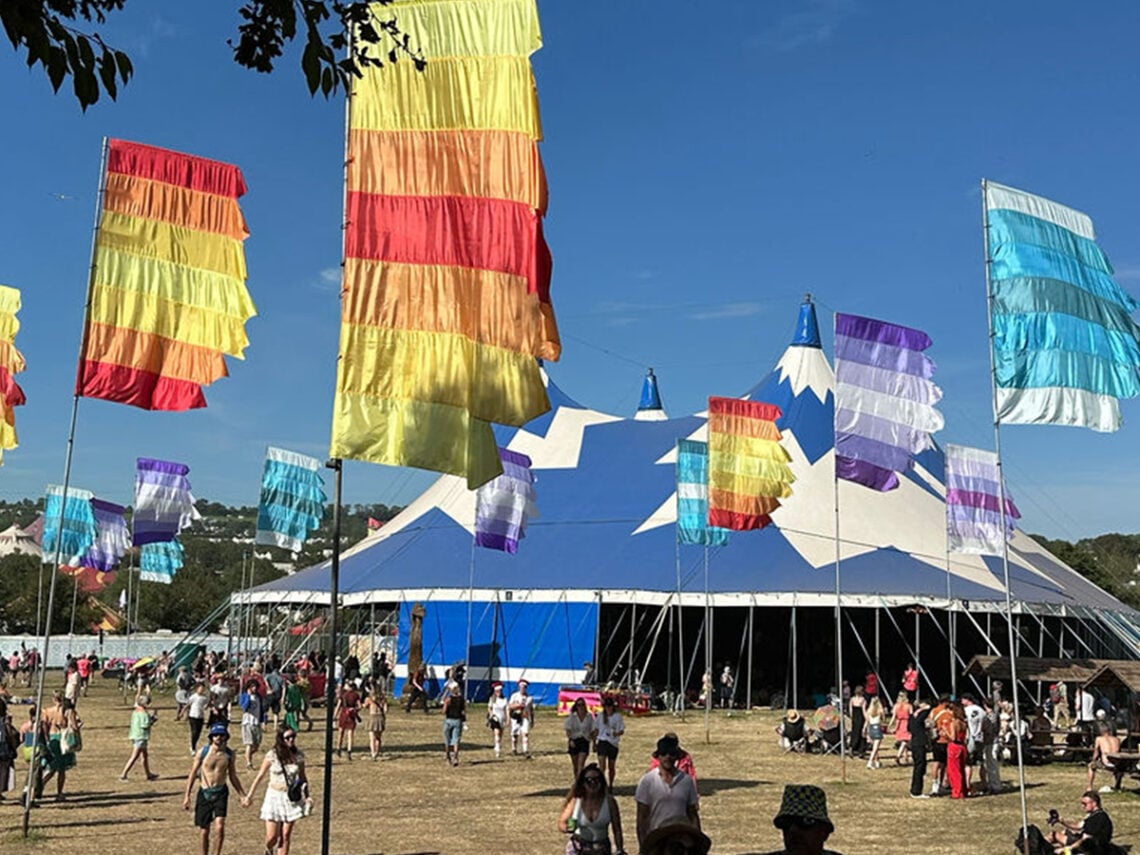
Glastonbury 2025: How many people sneak into the festival?

The official licensed capacity for Glastonbury stands at 210,000 people. That’s more than the entire population of Salt Lake City, Utah. It’s roughly the same as the population of Norwich, and it’s just a few short of matching the island nation of Samoa. In short, it is a temporary city, plonked on a permanent farm, consisting mainly of tents and the highfalutin ideal of creating a fancy-dressed utopia.
This startling attendance figure places it as the “largest green-field music and performing arts festival in the world”. There are almost as many characters in that title as there are at Worthy Farm, which gives you a hint that it is, indeed, not the most attended festival in the world. However, many of those who beat it cook the books a little, counting attendance figures spread over whole weekends despite limiting numbers on site at any one time.
That’s where Glastonbury proves unique. It is very much a plain old field, and existing infrastructure is non-existent. So, accommodating 210,000 people (semi) comfortably is a mighty feat. It’s even mightier considering that the actual attendance figure far exceeds the official capacity. As anyone who has ever attended Glastonbury will attest, 210,000 would be the correct headcount if you were employing the old school one-two-miss-a-few-99-100 technique.
Year after year, scores of people sneak in without a ticket. This is not something that Michael Eavis and his fellow organisers have ever denied. Back in 2000, the festival recognised that the farm played host to a whopping 250,000 despite only 100,000 tickets being sold due to a frankly terrifying gatecrashing frenzy. Since that marred year, security has stepped up tenfold, but it is estimated that 10,000 – 20,000 still make it in without a ticket.
How do people sneak into Glastonbury?
Well, first and foremost, it’s a farm. There might be a new 4m fence, heat-sensing drones, watchtowers, dogs, and a hefty security presence, but manning a 7.8km perimeter in a watertight fashion is almost physically impossible, especially given the willpower of the people. No private security firm in the land could possibly hope to get between a cosmic scouser and a raving mushroom high. The gatecrashers have the sacred volition of the Big Beat Manifesto in their favour.
It seems even MI5 would have a tricky job on their hands: imagine the headache of uttering over a walkie-talkie, ‘We’re looking for a young man in a bucket hat, shorts and walking boots’. It’s harder still keeping the crowd down to 210,000, given that many of those who inflate the number don’t even ‘sneak in’ at all. Every year, if you make it to Worthy Farm early enough, you’ll get chatting to a ticketless punter at the bar who simply rode through the gate riding shotgun on a friend’s tractor.

The festival is, after all, a monumental event in a rather small village, so it works hard to keep the close-knit locals onboard. Much of the local community is employed in various ways by the farm, and a fair few blind eyes and free passes seemingly go along with it.
Then there’s the fabled tunnels, which sound very much like signature Glastonbury bullshit and have never once been detected or come up with a well reasoned response to any number of questions that can poke holes into the claim. However, telescopic ladders have been known to be deployed in the dead of night by unblinking athletic types.
For the more cerebral chancer, there’s also a favoured technique that involves using a carrier bag to remove the wristband of a fully paid-up punter, then a quick trip to the car park allows that flash of fabric to be rolled onto someone else’s wrist and voilà, you’ve just got a mate in for free. Savvier still, there’s also a black market of fake wristbands that also do the rounds for around £50, and while there’s no guarantee that they’ll work, if you pick a gate being manned by a yawning volunteer, then you’ll likely be given the go-ahead.
There’s also high vis hijinks and a few other tales of folks effectively having the event built around their hideout, but none of this is advisable. There are simply too many people at Glastonbury, and it is becoming problematic. With the festival only making a pre-tax profit of around £5.9million in 2024, it can’t really viably drop the official attendance without significantly raising ticket prices, so it’s the fact that roughly one in 11 are there through covert means that it has to crack down on.
That might not necessarily fit in with the freewheeling Woodstock-idealism of the festival, and wagging a finger at fellows in tutus scurrying under fences might draw the ire of many, but in the famed words of the fictional Mark Corrigan, “If there isn’t room here for people who stand against everything you believe in, then what sort of a hippy free-for-all is this?”
