


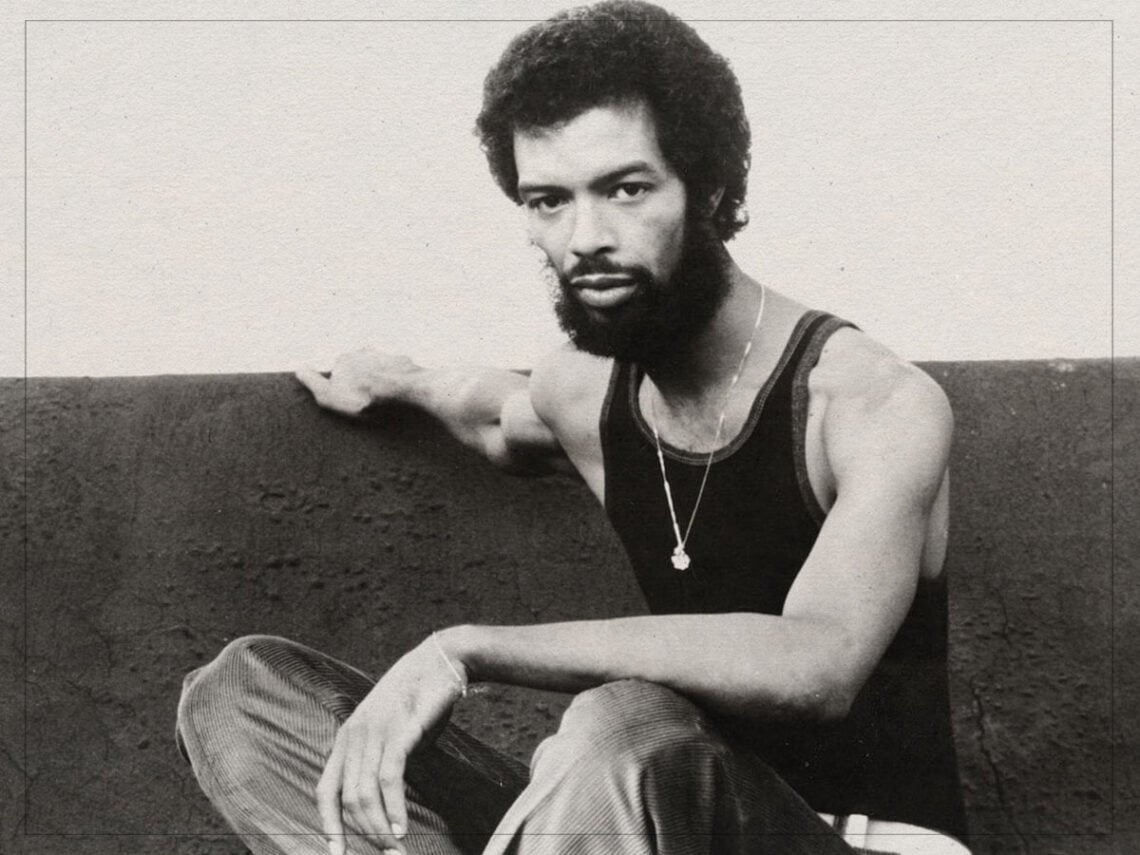
“A blessing from the spirits”: Gil Scott-Heron and his unlikely ties to Glasgow and Celtic

Football and music have always shared a particularly close bond, whether it’s in Robert Plant’s adoration of Wolves, Rod Stewart’s infamous drunken FA Cup draw, or Chelsea’s adoption of the reggae classic ‘Liquidator’. Even still, you might not expect the Chicago-born, New York-raised poet and activist Gil Scott-Heron to have much to do with the ‘beautiful game’.
About as close as Gil Scott-Heron’s illustrious career ever came to the world of sports was during his high school years, when he reportedly played starting centre on the school’s basketball team during his senior year. When his career in poetry, music, and writing came about, though, that fleeting basketball career was largely abandoned in favour of penning politically-conscious calls for resistance or gritty crime novels set in the seedy underbelly of New York City.
Virtually all of his exploits, in fact, were invariably tied to those concrete jungles of New York and Chicago; Heron’s native surroundings and all the issues, stories, and wasted potential of those areas. His defining moment in ‘The Revolution Will Not Be Televised’, while boasting a universal power for the civil rights movement, was overwhelmingly Americanised in its content, as was ‘Whitey On The Moon’ and the majority of his other work. After all, great writers tend to write about what they know.
Nevertheless, Scott-Heron, like many great writers and artists, shares an unlikely connection with the city of Glasgow. Namely, the poet’s father, Gil Heron, was once a professional footballer for Celtic Football Club, seeing him trade the gritty, industrial streets of Chicago for the similarly gritty, industrial streets of Parkhead back in 1951, which, incidentally, also made Heron’s father the very first Black footballer to play for Celtic.
Born in Kingston, Jamaica, back in the 1920s, while the Caribbean nation was still under British colonial rule, Heron began his football career in post-war Detroit, playing for now long-defunct Detroit Wolverines (so long-defunct, in fact, that an online search for the club renders no results).
Despite its modern obscurity, Heron reportedly did well enough in Detroit to earn a transfer to Chicago Sparta in 1949, before making the leap over the Atlantic to Glasgow in 1951, while his infant son was gearing up for his second birthday.
While Heron was certainly no Tommy Gemmell or Billy McNeill, making only a handful of appearances in green and white hoops over the course of that admittedly uneventful 1951-52 season, he seemingly did enough to earn the enduring respect of Celtic fans in later decades. So much so that, whenever Gil Scott-Heron visited the Scottish city, he was inevitably inundated with questions about his father’s footballing career.
“There you go again,” the poet once joked, “Once again overshadowed by a parent”. Still, Scott-Heron seemed to appreciate this unlikely connection between his Chicago roots and Celtic Park. During one visit to the city, he shared, “My father still keeps up with what Celtic are doing. You Scottish folk always mention that my dad played for Celtic. It’s a blessing from the spirits.”
Following his spell at Celtic, Heron stayed in Scotland, playing a season at Third Lanark before a decent spell at Kidderminster Harriers and, eventually, returning to Detroit. Perhaps if Gil Scott-Heron had followed in his father’s footsteps, he might have made it into the Lisbon Lions side – only adding to the poetry of that fateful day in 1967.
Either way, the legendary political poet never shied away from discussing his connection to Celtic.
