


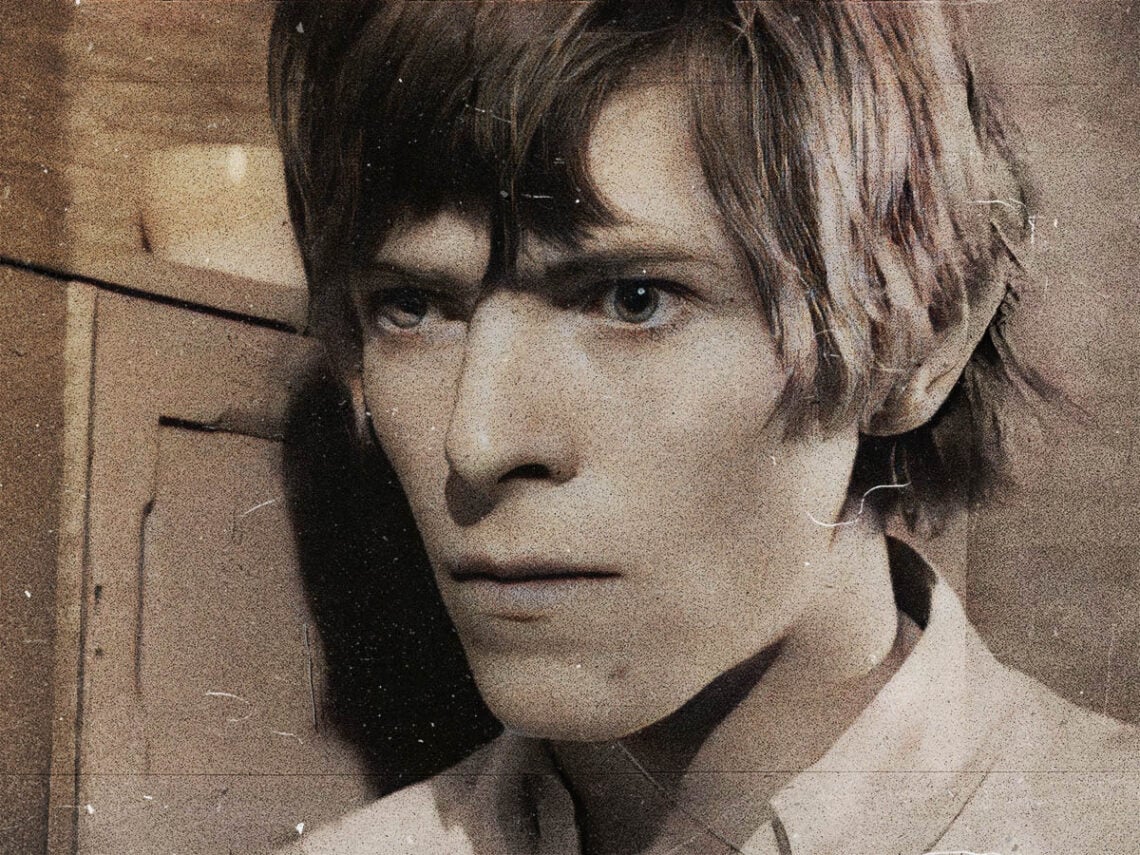
The German expressionist film that heavily influenced David Bowie

Music was fast developing in the 1960s, and many artists took it upon themselves to become performers – not merely presenting their songs live but dressing up, embodying a distinctive persona and acting wildly on stage.
The decade saw artists like Jim Morrison and Iggy Pop shocking audiences with their reckless and often illegal on-stage behaviour, such as allegedly exposing their genitals or, in Pop’s case, even cutting themselves with glass. After struggling to find success during the latter half of the decade, David Bowie truly found the acclaim he was chasing in the early ‘70s with the album The Rise and Fall of Ziggy Stardust and the Spiders from Mars.
Embodying the androgynous character Ziggy Stardust, a sexually free alien who succumbs to his fame, Bowie found widespread success. This persona allowed him to transform into something else, once stating, “I always had a repulsive need to be something more than human. I felt very puny as a human. I thought, ‘Fuck that. I want to be a superhuman.’”
Following the success of Ziggy Stardust, whom he retired in 1973, Bowie went on to create various other personas, such as The Thin White Duke and Halloween Jack. Bowie’s music was informed by performance, by acting as someone else, essentially becoming both a singer and actor when he stepped on stage.
Unsurprisingly, Bowie was a tremendous cinephile, taking significant inspiration from the big screen when writing music and picking out costumes for his personas. He even starred in several movies throughout his career, such as The Man Who Fell to Earth, Labyrinth and Twin Peaks: Fire Walk With Me.
One of the most significant sources of inspiration for Bowie was German Expressionist cinema. He was enthralled by the darkness conveyed in the stories told by German Expressionist filmmakers active between the 1910s and 1930s. These directors were reacting to the aftershock of war and, later on, the imminent rise of fascism, using shadowy lighting to create a distinctively potent atmosphere.
Bowie particularly loved The Cabinet of Dr. Caligari by Robert Wiene, which remains one of the movement’s most highly celebrated works. The film was made in 1920 and possesses a surreal, unsettling style with artificial set design, often slanted and uncanny. The movie tells the tale of Dr. Caligari, who uses a somnambulist named Cesare, who wears striking black makeup around his eyes and on his lips, to kill people on his behalf.
The iconic film is dark and violent (although these scenes are very tame in terms of today’s standards), which, paired with its unconventional, atmospheric set design, drew Bowie straight in. In 2001, he told Uncut that he was inspired to move to Germany, where he lived during his most creative streak in the late ’70s because it’s “where Metropolis and [The Cabinet of Dr] Caligari had originated.”
He first saw the movie when he was 14 and found it absolutely fascinating. It inspired his preoccupation with deconstructing identity and persona, as well as encouraging him to think innovatively. Bowie added, specifically addressing German Expressionism, “It was an art form that mirrored life not by event but by mood. This was where I felt my work was going.”
