


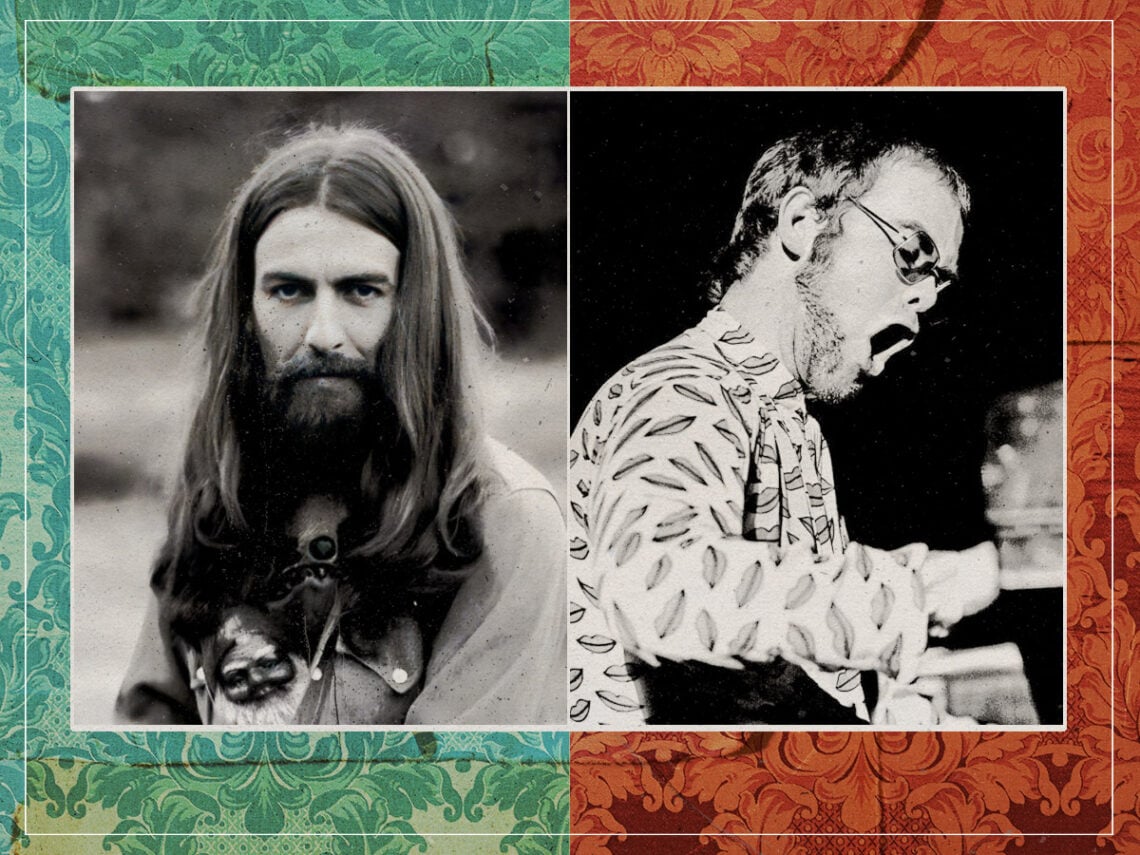
The reason George Harrison pitied Elton John: “Ultimately, it means so little”

While The Beatles ran into difficulties due to the astronomical scale of their success, the band members were fortunate to have each other for moral support. Despite the glitz and glamour of celebrity, it can be an incredibly lonely place. However, the Fab Four’s relationship was built on solid ground, alleviating their concerns about being surrounded by people without their best interests.
Fame is a double-edged sword. On the one hand, it can be the key to unlocking everything a person has ever desired, providing access to places most can only dream of entering. However, simultaneously, fame can often cost those in the spotlight their privacy and prevent them from living an everyday life, as The Beatles guitarist George Harrison discovered the hard way.
From a young age, Harrison was obsessed with mastering his instrument and didn’t join a band to become a famous rock star. When The Beatles emerged as the biggest band on the planet, his life changed forever. While the creative process was always a thrill, the guitarist soon sought a deeper source of fulfilment, a path that ultimately led the musician down a spiritual journey in later life.
Once he encountered religion, Harrison had meaning and could escape the vacuous nature of a celebrity existence. As he learned on his path of discovery, money and fame don’t compensate for the important things in life. In the decade after The Beatles split, Harrison’s life became quieter as the tabloid pages were filled with new musical superstars. Rather than resent being pushed to the sidelines, Harrison embraced this new position and didn’t feel an ounce of jealousy for those in the limelight.
As the 1970s advanced, Elton John enjoyed a similar rise to The Beatles, becoming more successful than he ever imagined possible. For a period, everything he touched turned into a hit record. However, unlike the Fab Four, Elton is a lone wolf who has to deal with his newfound fame alone. He may have worked collaboratively with Bernie Taupin in the studio, but Elton was by himself on stage.

Becoming world-famous is a problematic and unnatural adjustment for any person, which made Harrison sympathise with John. He knew first-hand about the mistakes that can be made while attempting to cope with the strange, new reality and saw Elton making similar errors.
Speaking to India Today during an interview in 1976, Harrison said: “It was such a strain having to live up to people’s conceptions of The Beatles and not be able to do what I really wanted to do. I’m not knocking it, man; I’ve done it all: got drunk, fooled around, done crazy things and had a great time. But that’s not where it’s at. It’s OK for a while, but finally, you want something deeper. I think that we all ought to increase our God-consciousness and try and find a purpose in life.”
He added: “Now that the initial ‘love generation’ fad is over, there is a more genuine recognition of the need for a spiritual fulfilment. Look at Elton John: he’s the only one who’s come near to the Beatles, and I feel so sorry for him. All that fame and all that money, and ultimately, it means so little.”
Harrison was right to fear for Elton, who was struggling with drug addiction at the height of his fame. For two decades, Elton struggled with substance abuse, which made him lose sight of himself and almost put his career at risk. As his career was flying, few people felt sorry for the singer. However, Harrison knew that he was struggling, so he reached out to issue him a stern warning regarding his behaviour.
“It’s very hard to put into words. He was very forthright, and he actually administered quite a few tellings-off to me about my drug problem,” Elton later recalled to Rolling Stone about the uncomfortable conversation he had with Harrison.
The singer continued: “I think he was the kind of sage of the Beatles. He was the youngest member. But as people said, he was very spiritual and very serious about his religious beliefs. It wasn’t just a five-minute-wonder thing with him. He found something worth more than fame, more than fortune, more than anything. I think that helped him the last few months of his life. Because he was pretty stoic.”
Thankfully, Elton successfully dealt with his addiction problems and has been sober for many decades after the wake-up call he received courtesy of Harrison. While it wasn’t nice for Elton to hear, Harrison was correct in expressing his fears to the singer. There have been far too many avoidable tragedies in the music industry, and Elton could have been another statistic. Despite appearing to have everything that anybody could ever want, Elton was a lost soul, and Harrison was one of the only people who recognised his plight.
