


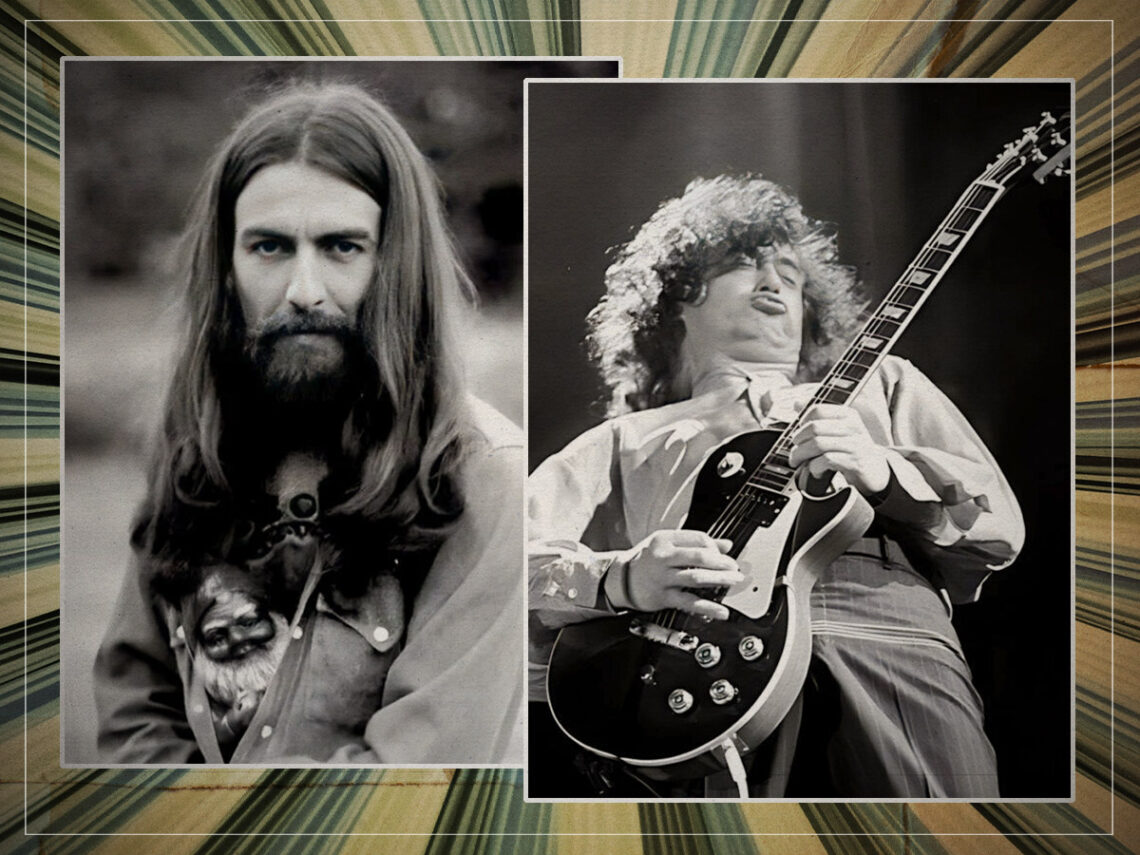
The one complaint George Harrison made about Led Zeppelin: “The problem with you guys is that you never do ballads”

After their formation, it didn’t take Led Zeppelin long to take the rock world by storm. Due to the prestige attached to Jimmy Page’s name, thanks to his session work, they had record labels swarming for their signature off the bat. As a result of the interest, they signed a unique deal with Atlantic Records, which gave them significant creative control, and soon enough, everybody knew their name.
Typically, bands have to work hard at intimate venues before they can achieve success. For example, The Beatles performed six shows daily in Hamburg for many months and regularly at The Cavern Club, which proved vital for their evolution as a live act. However, each member of Led Zeppelin had already paid their dues and arrived as a fully formed act capable of taking on the biggest stages.
By the end of 1970, after only two years of active activity, Led Zeppelin had become the biggest band in the world after three albums. Their arrival was perfect timing, as the world was crying out for a new group to conquer the musical landscape and fill the void left by the Fab Four. While The Beatles were still technically active when Led Zeppelin formed, they’d stopped touring years before. With them out of the picture, the next generation of fans craved something new, refreshing, and invigorating: Led Zeppelin.
George Harrison first became aware of their existence when The Beatles were making Let It Be, thanks to engineer Glyn Johns. “Is he the one that was in The Yardbirds?” Harrison exquisitely asked Johns with a sense of excitement in his voice. His ears pricked up further when he discovered John Paul Jones was the bassist, to which Johns explains: “He’s like the guv’nor. He’s very young; he’s about 24. The guv’nor bass player. Really good.”
The engineer then adde: “A kid called John Bonham on drums who is unbelievable,” to which Harrison adds, “I think he was in a session with Paul [McCartney] last year with some of the other people there.”
Following the glowing endorsement courtesy of Johns, who he trusted greatly, Harrison made it his mission to witness Led Zeppelin perform and see if they lived up to the hype bestowed upon them. Unsurprisingly, Harrison was mightily impressed by what he saw, but there was one piece of advice he gave Bonham regarding the band’s catalogue of songs. Page later revealed to biographer Brad Tolinski: “George was talking to Bonzo one evening and said, ‘The problem with you guys is that you never do ballads’.”
Rather than take Harrison’s complaint the wrong way, they listened, and it was the fuel Page needed to write one of Led Zeppelin’s most beloved tracks. He continued, “I said, ‘I’ll give him a ballad,’ and I wrote ‘Rain Song,’ which appears Houses of the Holy. In fact, you’ll notice I even quote ‘Something’ in the song’s first two chords.”
Led Zeppelin’s formula worked greatly, but they weren’t stuck in their ways enough to ignore Harrison. At this stage, he had been a major component in the world’s biggest group for nearly a decade and was well-placed to give advice. He wasn’t telling Led Zeppelin to write ballads exclusively, but the guitarist knew it would enhance their live sets to pepper one or two into the show. With his words ringing in their ear, Page duly obliged by writing ‘Rain Song’.
Although Harrison’s comment could be considered a complaint, it came from a place of love, which is why it registered with Led Zeppelin. Harrison enjoyed what he had heard from the group and wished them the best, which is why he told Bonham his true, unfiltered opinion on where they could improve.

Never Miss A Beat
The Far Out Led Zeppelin Newsletter
All the latest stories about Led Zeppelin from the independent voice of culture.
Straight to your inbox.