


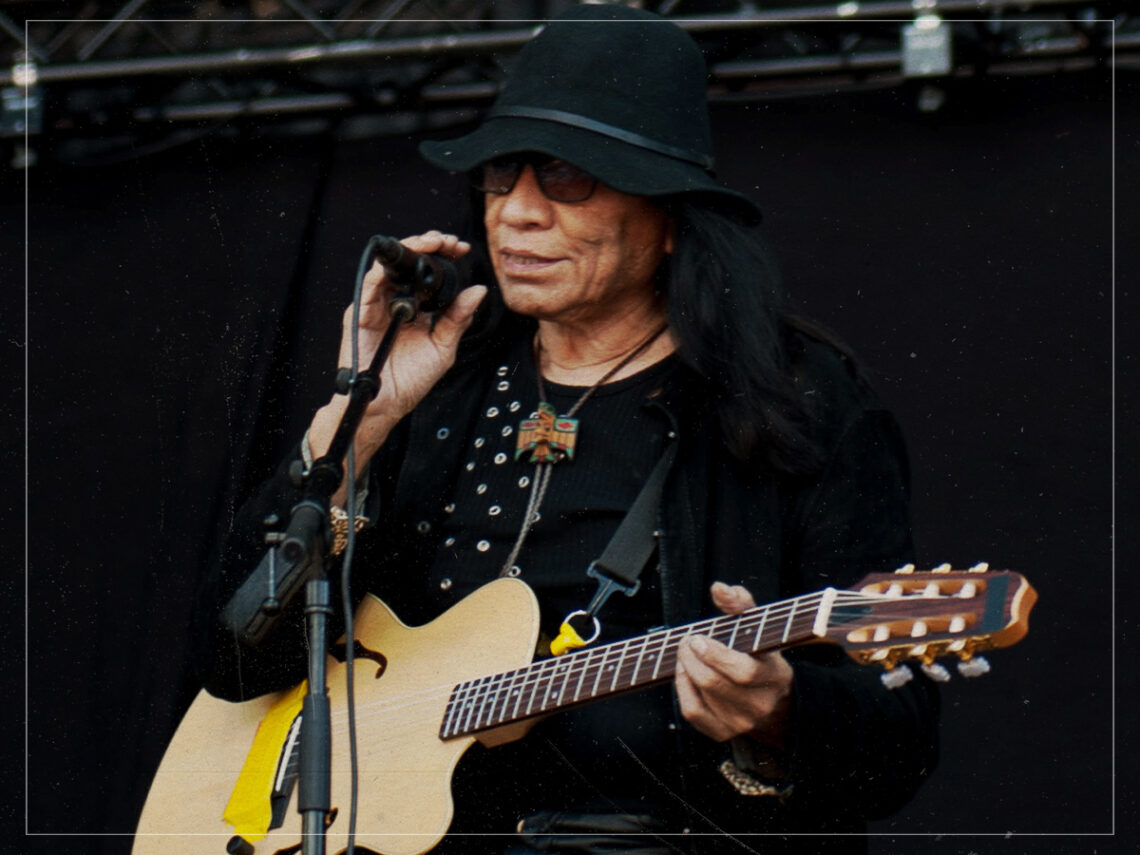
“It altered my life”: The genre that Sixto Rodriguez called “heartbreaking”

Music fans will always prioritise good music over everything; however, that’s not to say they’re not a sucker for a good story here and there as well. In the case of Sixto Rodriguez, we’re in luck, as both are attached to his record Cold Fact.
1964 was a huge year for music in America, as it was when The Beatles initially touched down in the States and the British Invasion began. The band’s music was inescapable, and in garages up and down the country, teenagers were forming bands and trying to come up with names that sounded somewhat British. It wasn’t until a year later that the Americans took back the charts thanks to a new style of folk music and a poetic way of writing.
Steve Van Zandt recalls the moment the British invasion began grinding to a halt, and two of the main artists responsible for this were Bob Dylan and The Byrds. “The floodgates opened until the summer of ’65,” he said, “When the Americans took the charts back with the folk rock of The Byrds and Bob Dylan.”
Bob Dylan was certainly a massive figure when it came to changing the way a lot of musicians wanted to brand themselves. There had been plenty of mainstream solo artists before, but very few had written their own songs. In that sense, he was one of the first singer-songwriters to make a name for himself, and as a result, a lot of other folk artists of a similar ilk came out of the woodwork and started making music.
One was Rodriquez, who had excellent lyrical ability and a distinctive voice. He would play in different bars, and a record label didn’t take long to snap him up. He recorded and released the album Cold Fact, an incredibly enchanting listen, but it didn’t get the praise it deserved at the time. This wasn’t anything personal; it was more just that a lot of people were making singer-songwriter music, so Rodriguez blended into the background slightly.
While the record might not have performed in America, overseas in South Africa, it was granted a new lease of life. The album became a much-loved piece of music for families across the country, as his songs were adopted as anti-apartheid protest songs. Some of his music was banned in the country as a result, but his impact was already being felt, as his record sales in South Africa rivalled those of the Beatles, Rolling Stones, and Bob Dylan.
Rodriguez had no idea about his success in South Africa, and the people of South Africa had no idea who he was. It wasn’t until decades later, when two people tracked him down, that he was made aware of his fame. After that, he travelled to South Africa to perform in stadiums up and down the country.
So, that’s one hell of a story, but where did it all begin for Rodriguez? Obviously, he was a huge fan of Bob Dylan and the way he was able to bring the folk artist into a brand new light; however, there was a lot more music that had influenced him before that. One of the genres in particular that moved him and that inspired him to pick up a guitar in the first place was Mexican folk music.
It was his Dad who introduced him to the genre, and his Dad who subsequently introduced him to the guitar. Without these two factors, the world would never have had both the music and the story of Sixto Rodriguez. “I would always listen to his heartbreaking songs,” he said. “He loved music and I picked it up through him […] It altered my life.”
