


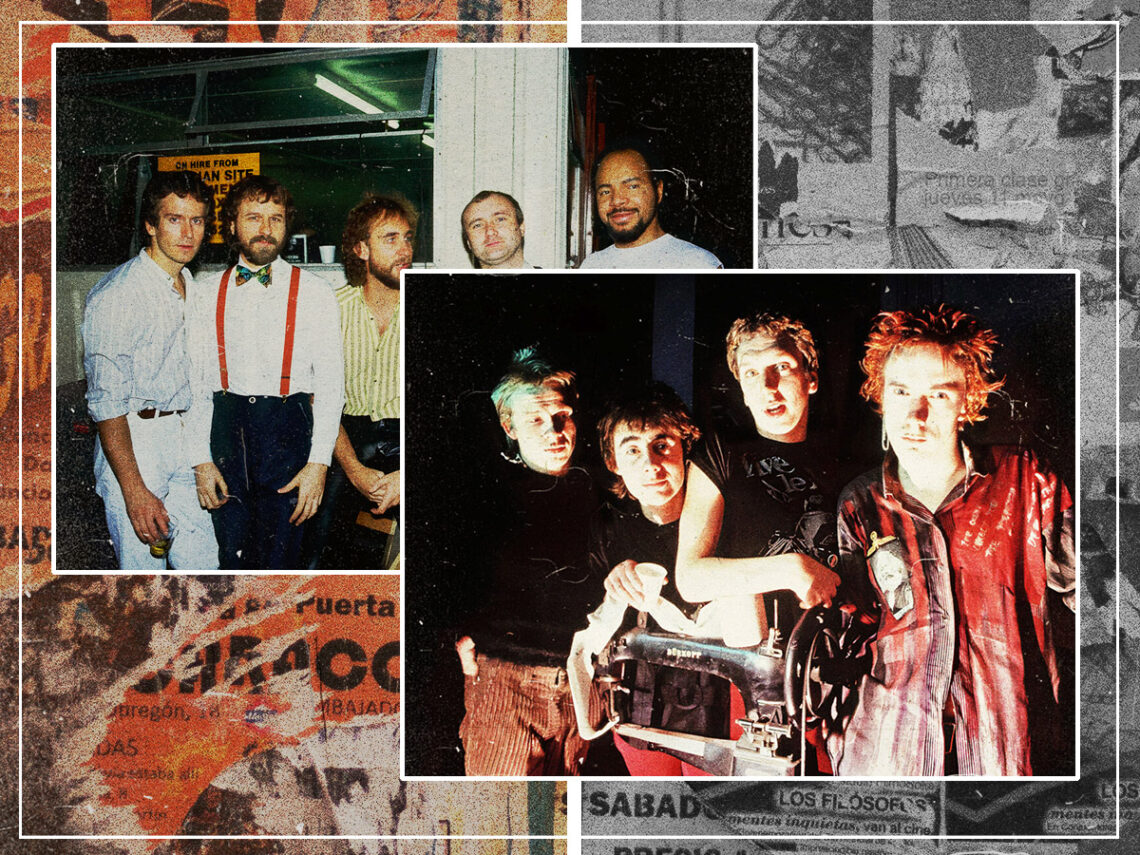
Genesis vs Sex Pistols: the battle that defined two halves of the 1970s

“When you hear the Sex Pistols record,” Phil Collins once said, “It was very well produced – it just sounded so legitimate. So I kind of liked it, and then I realised that we were the enemy. We were the people they were trying to get rid of in a way.” In fact, such was their war with prog that John Lydon was even etching ‘I Hate Pink Floyd’ onto his t-shirts.
Collins would even later bump into Lydon and recall that he candidly declared, “I kind of didn’t like the way you people sang deliberately out of tune. [You] deliberately detuned instruments or untuned them. I kind of felt there was a bit of cheating going on.” Never has a compliment been more back-handed, but there’s no doubt that Lydon would’ve taken it as one.
However, his Genesis bandmate, Peter Gabriel, didn’t give the Sex Pistols a chance to misinterpret his thoughts on punk. Comparing punk to The Beatles, Gabriel believes one was a movement and the other was a fashion fad. “It was to my mind and my ears,“ he said of ‘Please, Please Me’, “far more of a breakthrough than, say, the Sex Pistols, which was more stylistic, I think, and not really about the music or revolution.”
And he was keen to tell Mojo that he had also given them the time of day. “I saw the Sex Pistols, quite by chance, at the 100 Club,” he said recalling the legendary show in Mojo. But he was still happy to dismiss them, “There were only about 40 people in the audience, not the hundreds that have claimed to be there. There was a vibe, for sure, but I preferred the Clash musically. But we were the declared opposition, what punk was there to destroy.”
The reason he thought this was based on class disparities. “It used to piss me off seeing all these ‘people’s hero’ musicians – like Joe Strummer – who’d come from a similar background to mine but were keeping it quiet,” Gabriel explained. “In Genesis, we were always very straight about where we came from, and we were middle-class, not aristocratic.”
However, Lydon would argue that the point of punk was to be anti-elitist rather than class-fixated. The message of the Sex Pistols was that expression outstripped virtuosic ability in a world where art tried to shape society rather than merely reflect it or showcase skill. With the 1970s seeing a dystopia set in, the likes of the Sex Pistols asked, ‘What does a wailing viola solo supposedly mimicking an ayahuasca epiphany have to say about my life?’
Following Woodstock, rock ‘n’ roll had tried to mellow out the comedown. Whereas punk came along and tried to revitalise the explosion. As Patti Smith once explained to the proto-punk beat writer William S. Burroughs in a Spin feature: “I think what [punk] was was a hunger that we didn’t know that a lot of us had. We all felt loneliness as a hunger for something to happen. As we thought we were lonely, a group like Television thinks they’re alone. The boys that later became the Sex Pistols thought they were alone. All of us people that should have been perpetuating, or helping to build on, the ’60s we were dormant. And we thought we were alone.”
So, to the punks, Genesis were not really the enemy, but they were an alienating force in some ways that made young would-be artists feel alone. Thus, it seems fitting that now their voices have been equally amplified, they exist in harmony, with Collins recently admitting: “I think the Pistols are a great band. I actually did meet Lydon at a Mojo awards show. I went up to him and said, ‘I just got to say hello to you, because I think you’re great’. He said, ‘Phil! What a pleasure!’ I don’t think he was taking the piss. I got a picture that is my studio at home of me and him together.”
