


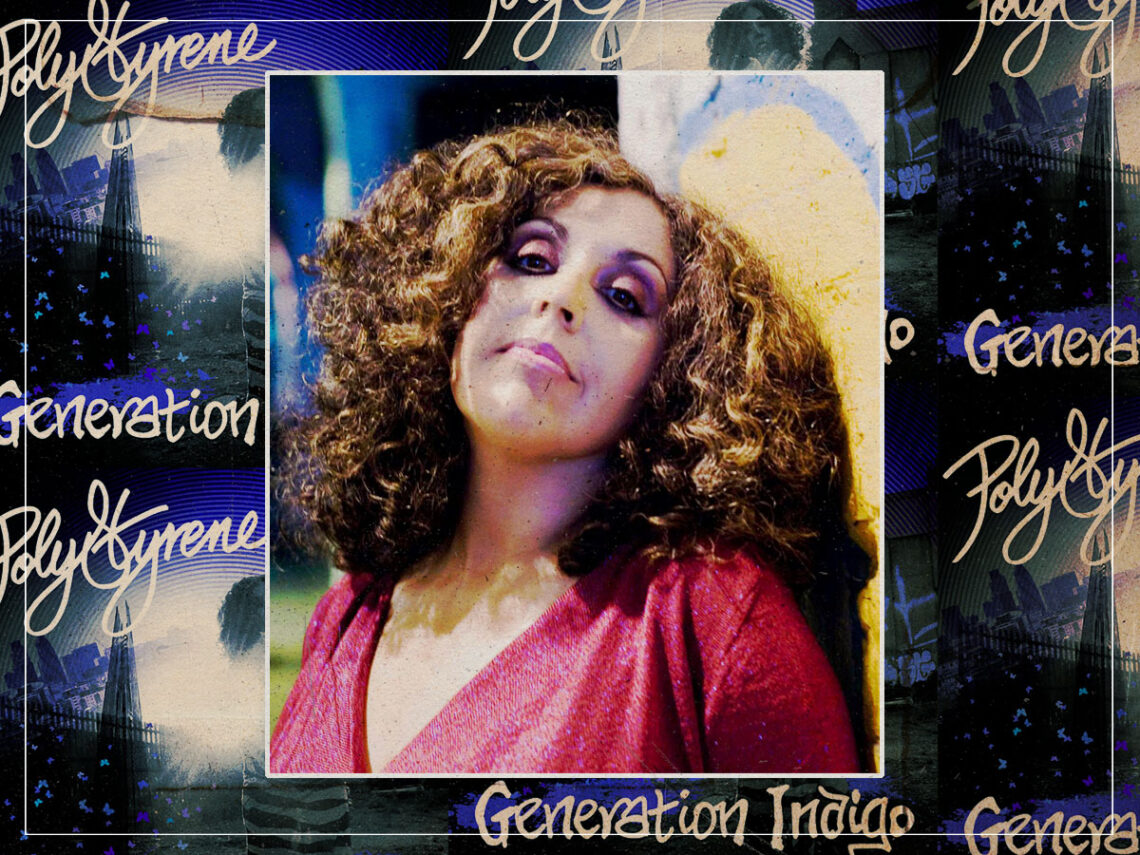
‘Generation Indigo’: the triumphant return of Poly Styrene

Punk rock, as a genre, is not short of iconic lead singers or frontpeople. The likes of Iggy Pop, Siouxsie Sioux and Joe Strummer became synonymous with the musical movement as a whole. Their defiant, powerful and energetic performances orchestrated a widespread musical revolution worldwide. Perhaps the greatest frontperson of punk rock – certainly the most criminally underrated – was Poly Styrene, the leader of X-Ray Spex.
Poly Styrene, born Marianne Joan Elliott-Said, was a true original in every sense of the word. Among the widespread performativity and complacency of mainstream punk – the manufactured revolution of the Sex Pistols and Malcolm McLaren – Styrene was orchestrating her own day-glo rebellion. The best art comes from alienation, and Styrene experienced that in abundance. One of the first in a generation of mixed-race children in the UK, she faced rejection both from white society and Black: too Black for some, not Black enough for others. Added to the fact that she was operating as a woman in a heavily male-dominated music scene while battling with constant mental health struggles, it seems as though nobody knew alienation quite like Poly Styrene.
With X-Ray Spex, Styrene rallied against consumerism, gender identity, racism and every in-between. Characterised by her distinctive vocals and the blaring saxophone of Lora Logic, later replaced by Rudi Thompson, X-Ray Spex were among the most fiercely original and interesting groups of punk’s first wave. But alas, just like punk’s first wave, Poly’s band proved to be depressingly short-lived. Shortly after the release of their seminal debut, Germfree Adolescents, Poly experienced hallucinations at a gig. After being taken to hospital, the frontwoman was misdiagnosed with schizophrenia and subsequently sectioned.
That was the beginning of the end for X-Ray Spex, who disbanded in 1979. Styrene vowed to retire from music on the advice of doctors, but they could not keep her down for long. During the 1980s, she abandoned the abrasive stylings of punk, recording a transcendental jazz-influenced solo record, Translucence, inspired by her time in the Hare Krishna movement. Despite the brilliance of the album, it failed to make much of an impact. When X-Ray Spex finally reformed in the 1990s for the long-awaited sophomore album Conscious Consumer, the result was much the same – musical excellence overlooked by the masses.
That could have been the end of Poly Styrene, the brightest spark of the punk explosion left to slowly fade out into obscurity. That certainly seemed to be the way it was going, especially after the release of her Flower Aeroplane album in 2004, which was her most ignored effort to date. Of course, it was never going to end that way – energy cannot be created nor destroyed. It simply changes form. In 2011, Over 30 years after the release of Germfree Adolescents, Styrene achieved her magnum opus: 2011’s Generation Indigo.
Featuring the same anti-consumerist message of her early work, with added pop tendencies and the peak of the revolutionary attitude she had spent years perfecting. Styrene, by this point, had led a tortured life of misdiagnosis, mental health struggle, and illness. All these intense emotions that had been building inside her for years seemed to explode within the grooves of Generation Indigo. It was inarguably her most personal and intimate effort to date, yet it retained the punk attitude that had first put her on the map as an artist.
Tragically, Marianne Joan Elliott-Said – Poly Styrene – died on April 25th, 2011, less than a month following the release of Generation Indigo. While her musical rebirth may have been cut short, its legacy is long-lasting. Poly created a variety of incredible work throughout her life, but the final catharsis of Generation Indigo was perhaps the most important.

Never Miss A Beat
The Far Out Punk Newsletter
All the latest Punk content from the independent voice of culture.
Straight to your inbox.