


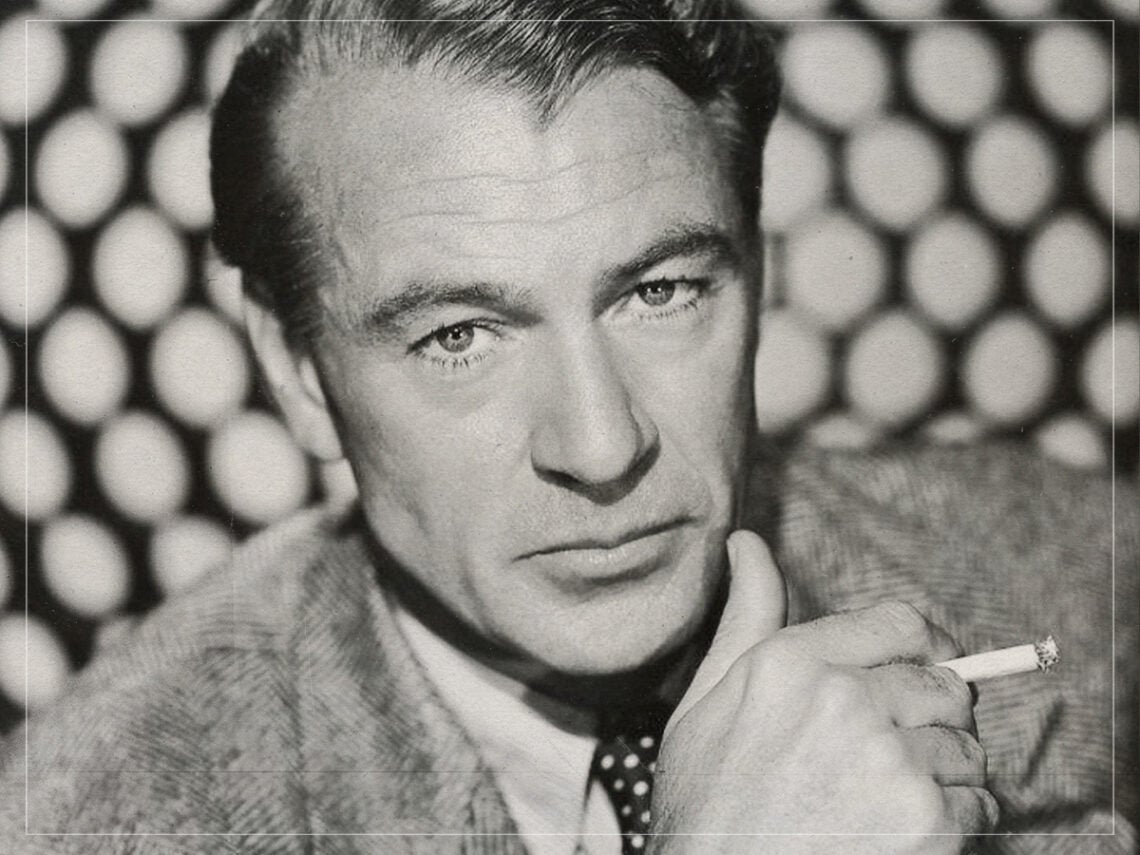
“He had everything”: Gary Cooper’s favourite co-star of all time

Gary Cooper was an actor who tended to play dashing, heroic leading men, but in real life, he was blown away by a frequent collaborator.
Cooper’s status as a legend of cinematic history almost surpasses his qualities as a performer; he is seen as the embodiment of what noble, outspoken heroism looks like, and was often cast to play protagonists with impeccable moral clarity. Cooper had a fairly consistent track record of playing these roles and was an educated man who befriended others who took the pursuit of art seriously.
It’s perhaps because of the cultural weight that he has taken on that Cooper sometimes isn’t given enough credit for just how great an actor he was. While there would be no argument as to how effective he was as a “movie star”, Cooper had far more range and dynamism than some of his contemporaries, such as John Wayne, Yul Brenner, and Steve McQueen.
Cooper’s Oscar-winning performance in High Noon is among the best depictions ever of a western hero because he showed both vulnerability and compassion; similarly, Cooper made a compelling biopic with Pride of the Yankees, long before doing these types of films became a cliché.
Cooper may have been one of the rare actors who could get audiences to come and see one of his films based purely on the fact that he was involved, but he was also generous in his work as a member of an ensemble. While not every star from this era was particularly complimentary about their co-stars, Cooper was forthcoming when discussing the fellow actors that he admired.
“I’ve been with some good ones, but maybe the best was Franchot Tone,” Cooper said. “I made two pictures with him, and he stole both of them. Something went wrong with how he was handled, or who knows, maybe it was Joan Crawford, but he had everything – great at comedy and also at serious stuff if given the chance.”
Cooper went on to state that Tone was more critical to the success of their collaborations than he was personally. “Now, The Lives of a Bengal Lancer is one hell of a picture, but you could take me right out of it, and it would still be one,” Cooper said. “But it couldn’t be much without Tone.”


The Lives of a Bengal Lancer was the second of the two films that Cooper and Tone worked on together, and was based on the 1930 autobiography of a British soldier who led his men in defending their base when stationed in British India. Although the film had been planned to be shot earlier in the decade, it wasn’t released until 1935 due to delays caused by the stock crisis.
The first of the two films that Cooper and Tone co-starred in was slightly more acclaimed. Today We Live was directed by Howard Hawks and was inspired by a short story by William Faulkner. Cooper and Robert Young played two airmen in World War I who both fall in love with a woman played by Joan Crawford; Tone played the brother of Crawford’s character, who encourages her to tell the truth before they all go back to war.
While it’s one of the earliest examples of the “love triangle” premise being used in a war film, Cooper alluded to Crawford’s being not easy to work with. Since the characters played by Cooper and Tone are friendly in the film, their dynamic may have ended up feeling more authentic than the main romance.
