


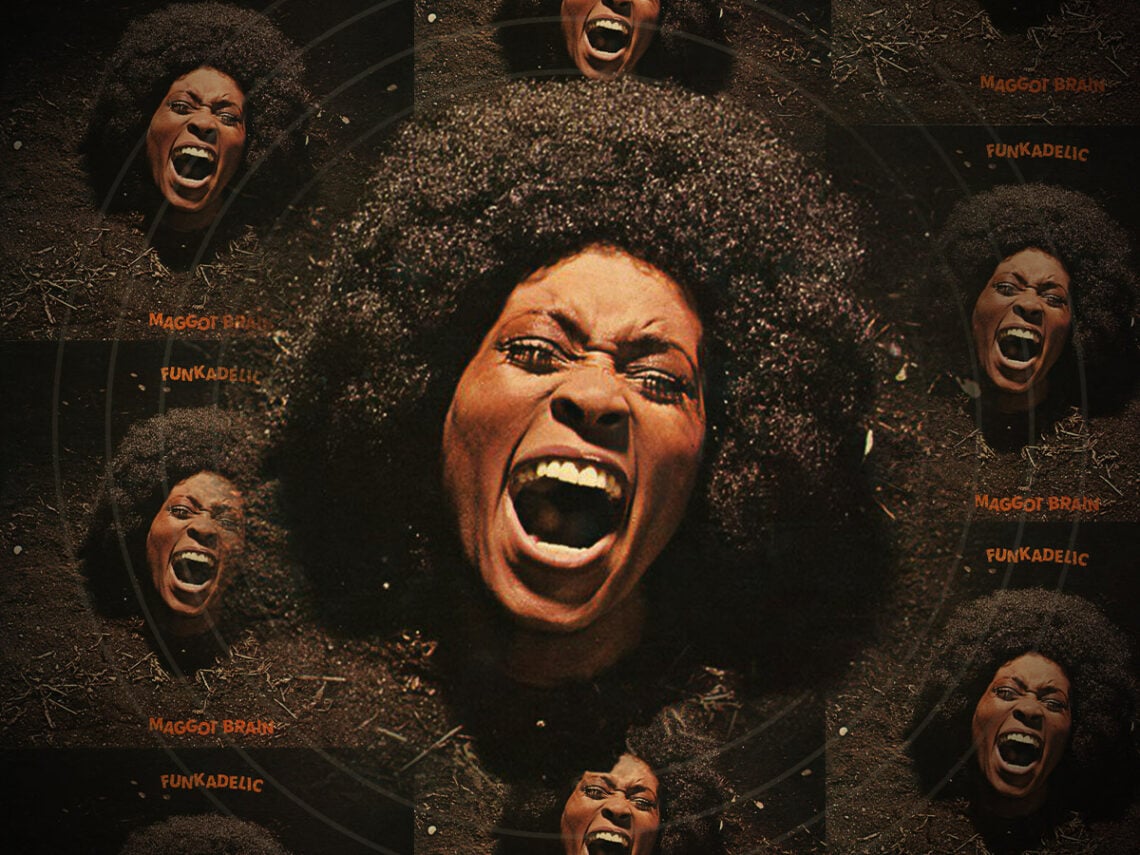
How Funkadelic managed to capture Mother Nature’s howl in sound and image on ‘Maggot Brain’

Early on in the turbulent 1970s, George Clinton was captaining the P-funk machine amid much darker terrain than the Mothership extravaganza to come at the decade’s end.
It’s all there on the howling cover of 1971’s Maggot Brain. Funkadelic’s third LP depicts Mother Nature in all her Black power screaming from the Earth into the abyss, sporting an incredulous expression of pained anguish or some kind of weird, sensual liberation. Somewhere in the middle lies the truth. Amid Maggot’s Brain’s spectral centre lies such swirling tension, though a cautionary warning hovers throughout; the LP’s back cover is switched with a skull staring straight at the viewer with mortal horror.
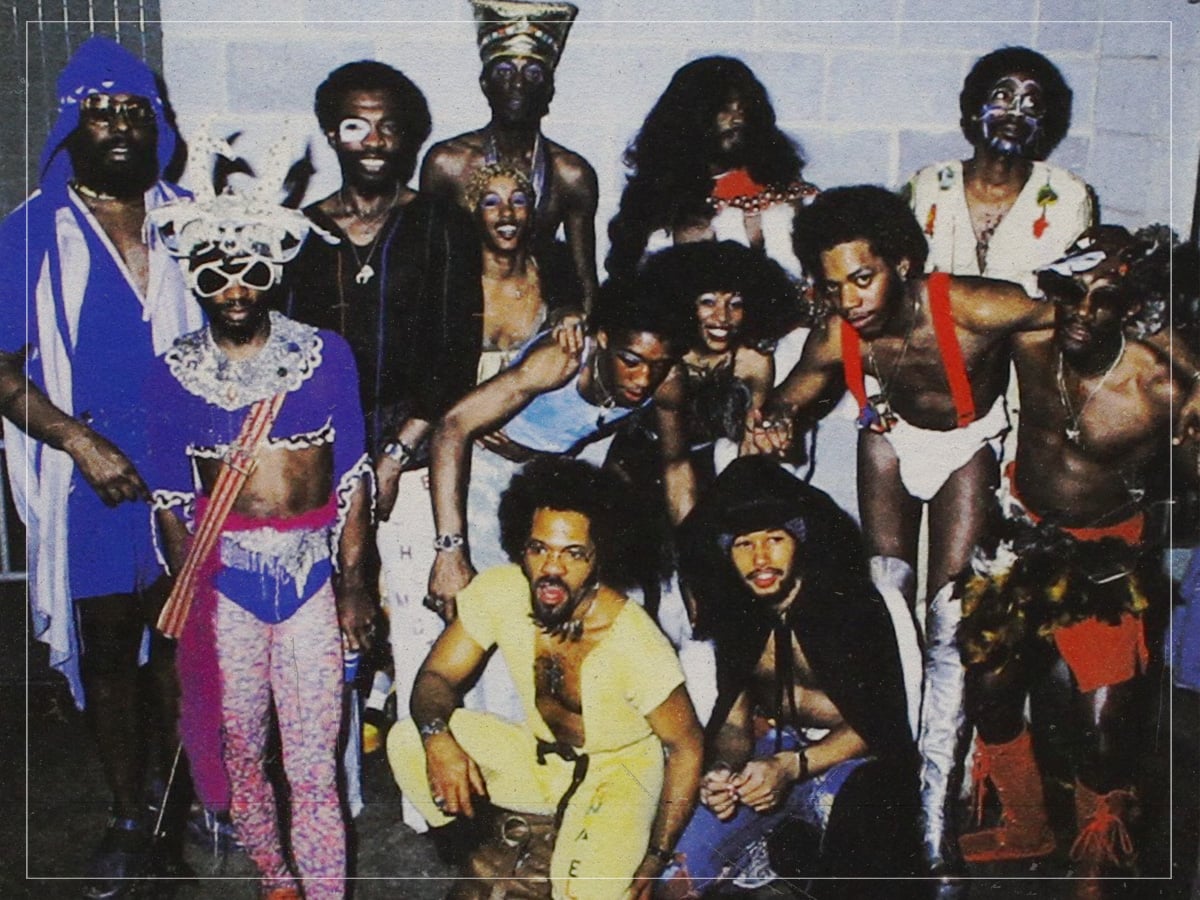
Only several years earlier, a doorway had been unlocked for the young Clinton. The former New Jersey barber had been immersed in the doo-wop scene since his teens, graduating to a Motown songwriter for hire with partial success. It was the counterculture where Clinton would find his calling. Before long, the Black entry into rock and roll via Jimi Hendrix and Sly and the Family Stone, copious amounts of LSD, and a taste for extravagant clobber would all inform the emerging Parliament-Funkadelic Janus soul project.
Such rag-tag surrealism suited Clinton just fine. “We couldn’t keep our ties alike,” he’d tell 2005’s One Nation Under a Groove documentary. “We couldn’t keep our suits clean. Our hair was always undone. You realise that the reality of that was actually quite silly.”
While Parliament’s Afrofuturist sci-fi would beam off in earnest later, early on in the 1970s, Funkadelic stood as P-funk’s premier and most vital half of Clinton’s entourage, as well as its most politically fierce. A cosmic, urban reportage would lyrically hover around Funkadelic’s heady brew of lysergic rock attack, taking a hatchet to American mythos, capitalist failure, peace and love’s death rattle, the waning confidence in the Civil Rights’ initial promise, and the riots waged across the nation protesting the US War Machine amid Vietnam’s napalm nightmare.
The States’ apocalyptic fever dream would radiate most potently on Maggot Brain. There’s plenty of lore surrounding the record’s arresting title, including the rumour that Clinton had found his dead brother’s body infested with maggots in his head. But a listen to the title-track’s opening narration gives a poetic but intuitively understood clarity on the spiritual realms Funkadelic were aiming for: “I have tasted the maggots in the mind of the universe / I was not offended / For I knew I had to rise above it all / Or drown in my own shit.”
Grand renewal awaits those who have the courage to reach into their inner core and scoop out the maggots that maintain ignorance, deter self-knowledge, or, specific to the Black community, scupper one’s own empowerment. Such a cathartic cleanse of psychedelic debridement was scored by the album’s haunting title track, a ten-minute wander across scorched Earth rumination that hisses and howls outside the cut’s womb-like sanctum, guitarist Eddie Hazel letting rip a phantasmic solo directed by Clinton’s instruction to “play like his mother had died, to picture that day, what he would feel, how he would make sense of his life…”
Expunging the mind and soul of those gnawing larvae seems to head straight back to where life enters the world on Maggot Brain. Playing like your momma just died, Barbara Cheeseborough’s scream on the Maggot Brain cover now doesn’t just balance precariously between liberation and oppression, but life and death in its cyclical inevitability, the baby born into the brief, terrible and beautiful existence of life howling at an ugly world they know they’ve inherited.
Such lofty readings feel pretty certain when riding ‘Maggot Brain’s apparitional heartache, but P-funk wouldn’t be P-funk without their flair for the absurd. Tiki Fulwood’s driving R&B percussion snakes and wrestles amid a collaged funk stomper replete with chanting protesters, cuckoo clocks, crying infants, gunshots, canned laughter, a heavy blast of flatulence, before the final destructive coda of an atomic bomb. In the face of such eccentric drama, Mother Nature takes a more sinister form, a deity mocking and cajoling American society’s dedicated hurtle toward its own destruction.
Released July 21st, 1971 and peaking at 108 on the Billboard 200, it’s hard not to imagine Maggot Brain having been swiped off of many a record store shelf from its fearsome yet amorously commanding cover alone. A sign ‘o the times, Funkadelic’s third LP offered not just the perfect 12 x 12-inch window into Clinton and the gang’s lysergic bite, but a dark summoning of the chaos down on the street and in the hearts of mankind.
55 years later, floating in a world it tapped into so presciently, Maggot Brain’s equal parts howl and shrieking mirth still reverberate around the US empire in decline with no less surrealistic snarl.
