


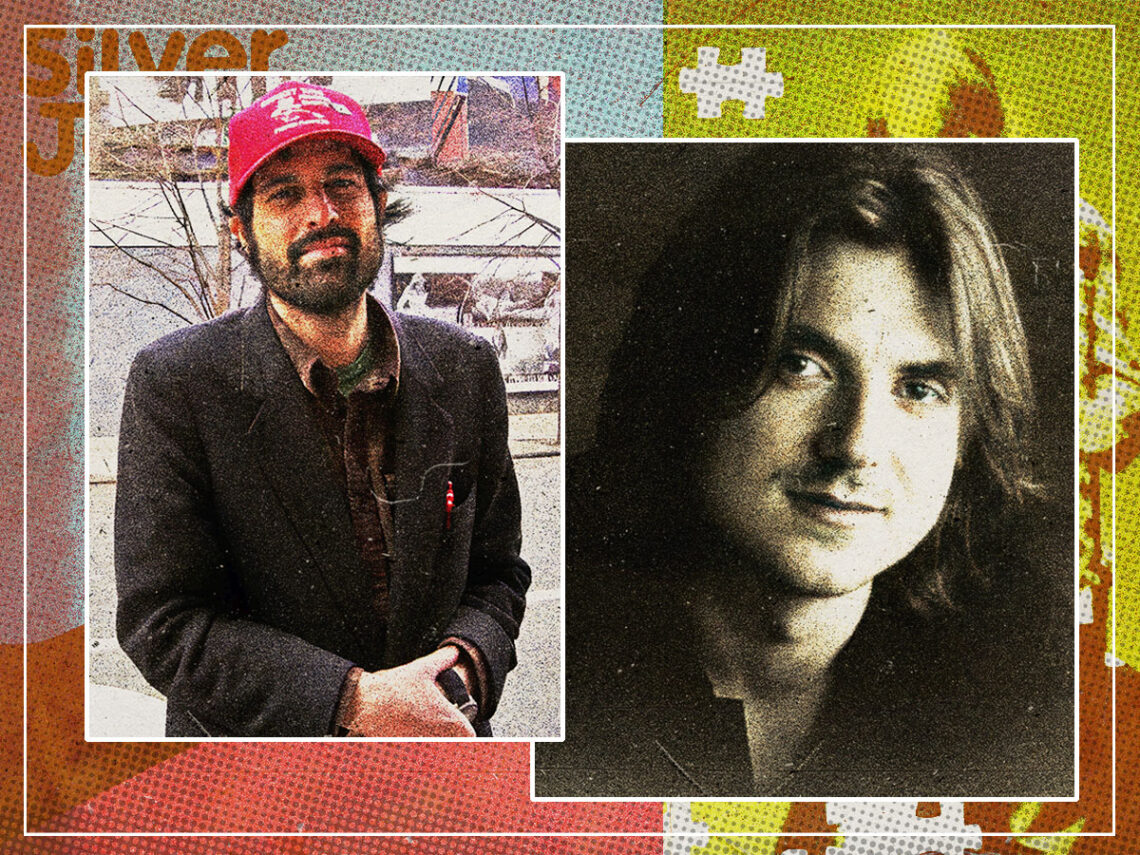
From Silver Jews to Mitch Hedberg: How the 1990s embraced ‘shoddiness’

When it comes to art these days, they say there’s nothing new under the sun, but they’ve been saying that since the first Neanderthal scribbled on a cave wall, making the point rather moot. The beauty of art is that you don’t have to reinvent the wheel to create something new; you just have to mould what exists to fit your individual muse and the world around you—there will always be ways to subvert, twist and tweak. The 1990s saw a mass rehashing of stuff for the shitter, and the likes of the Silver Jews and Mitch Hedberg were its most forthright proponents.
Ironically, they also happen to be two of the finest things to come out of the era. I adore both of them, but only a foolhardy fan would deny that being just a bit shoddy was a central tenet of their sloppy work. This was, in some way, the ne’er-do-wells of this world’s reinterpretation of the arts. Contrary to what Jeffrey Lebowski yelled at his namesake, the bums won with aplomb in the ’90s, at least on the creative battleground.
It seems that since pop culture dawned, you had a range of yoyo-ing ideals. Elvis Presley thrust it forward with visceral fun, the folky poets of Greenwich Village then wrestled it towards timeless profundity, then the virtuosos of prog pushed this towards soloing epiphanies, punk and disco then rallied against this and allowed anyone to get behind the wheel of culture as long as you had something to say and so and so on. Until it arrived at the youngsters in the ’90s, and they thought, ‘What on Earth is there left to do?’ Not a lot was the answer, so their response was to do just that.
Punk had been about opening the world of art up to everyone, about driving expression uber-alles and to hell with stuffy notions of being qualified. Ironically, however, it came with an unstated rule book of its own, a sort of uniform and attitude. But in the ’90s, these unspoken rules were ditched in favour of a fully liberated approach. Few folks followed this wayward path as well as Hedberg and the band he had a great deal of kinship with, Silver Jews.
Any comedy manual would tell you that you have to start strong and get the audience on board with a grabbing opening bit. By contrast, Hedberg nervously crept towards the microphone, mumbled inaudibly, then fired off an absolutely awful bit, such as: “I fuckin’ hate arrows, man. They try to tell me which direction to go. It’s like, ‘Fuck you, I ain’t going that way, line with two thirds of a triangle on the end!'” When the audience would rightfully not laugh, he’d then chuckle charismatically and grumble something like, ‘Don’t worry, I’ll get you soon’.
And I’ll be damned if he didn’t. And I’ll be damned even further if the odd stinker: “I didn’t go to college, but if I did, I would have taken all my tests at a restaurant, because the customer is always right” – didn’t add spades of charm to his set. You grew to love these ‘bad’ bits somehow. Whether it was because of the inventive way they played with form or that they added quirks of individualism to his comedy is hard to tell, but they became integral parts of some of the finest stand-up sets ever delivered.
This is also echoed in the music of Silver Jews. Like the rule of the solid opening line in comedy, since the dawn of the guitar, the solo has always been used as a flashy way to showcase talent; then David Berman and his band came along and turned that on its head. They happily departed from an intricate melody to dole out an angular dissonant patch of pure soloing shit in a jagged storm of atonal missed notes as a way to almost subvert the norm of rock and celebrate slacker sensibilities.
Likewise, Berman was, in my view, the greatest lyricist of his generation, but on every record he put out, there was always at least a couple of lines that were like the dastardly cardamom pod amid the otherwise delicious curry. However, as any chef will tell you, those blips of unpleasantness are a vital flavouring of the dish as a whole. If it was all pure poetry, then would the personality be diminished?
Perhaps what we saw with the likes of Silver Jews and Mitch Hedberg was a celebration not only of character and being yourself but the stripped-back essence of the joy of creativity. As Tom Waits told his friend Beck: “Where does this ‘Best’ thing come from? Is that human? Is that American? Is it all over the world? Everyone wants the best eye surgeon, the best babysitter, the best vehicle, the best prosthetic arm, and the best hat. There’s also the worst of all those things available and they’re doing rather well. Denny’s is doing great. It’s always crowded. You have to wait for a table.”
Hedberg and the Silver Jews never really set out to be the best, and as a result, they became the most personable, original, and, ultimately, human in their craft. It seems this was because they relished the liberation of their work. As their sorry ends prove, they both had their problems, but what we see in their work is them addressing this and trying to overcome it to help reconcile the world with a sense of joy, shoddy old day-brightening joy that gave a wry smile towards its own self-professed shortcomings in a way that a lot of art before it had failed to adjudge. This subversive approach created some of the best art of the era, and it just so happened that part of its constitution was just being a little a bit shit in places.
