


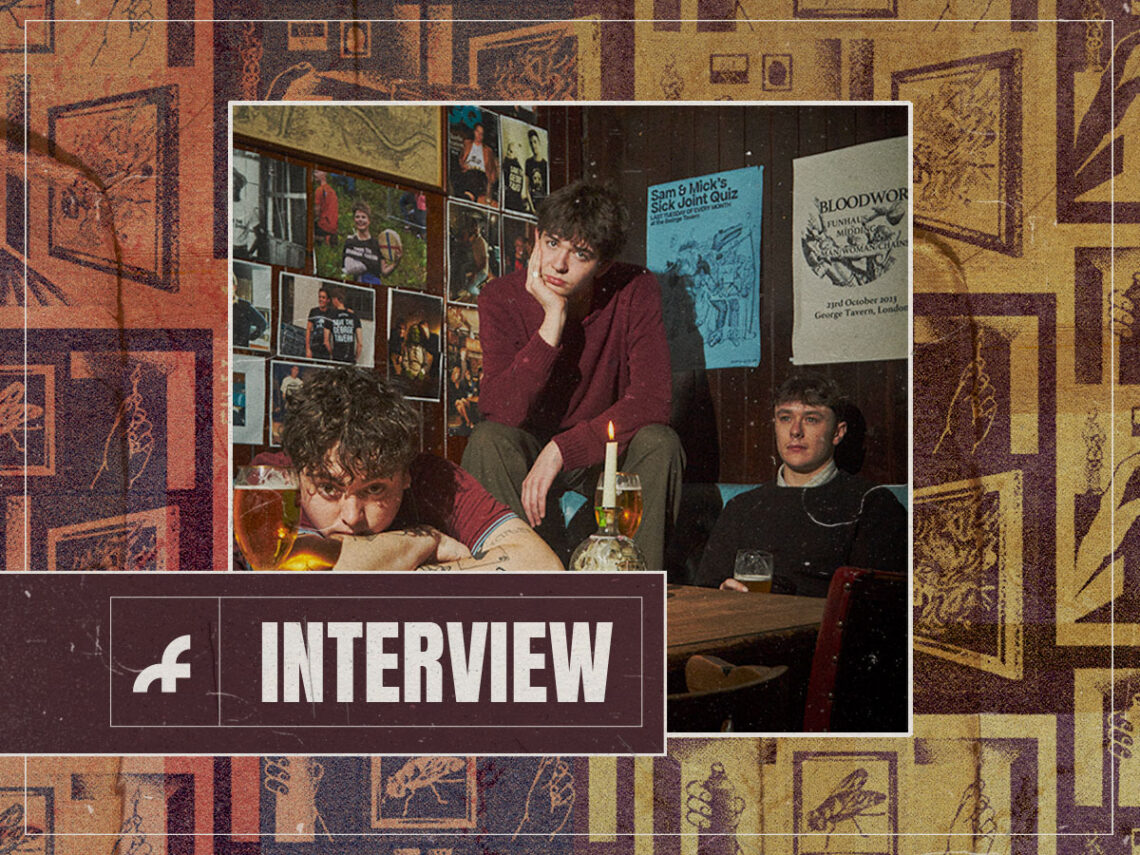
From Peckham to Paris: Play Dead debate London vs Europe

“Redhill! Reading! Luton! Epping!” a man is shouting next to me, pasting a faux cockney accent over his rich French tones. We’re in a packed out venue just by Bastille as south London’s Play Dead are a long way from home, headlining Paris’ Super Sonic for one night.
I laugh at it all. On stage, the three boys are singing deeply London-centric tales of gentrification, barbershop squabbles and bumping the gates on the Thameslink as you’re pushed further and further out of the catchment. As they do, the Parisian crowd is going absolutely wild. A mosh pit takes up the entire floor while more faces hang over the balcony, headbanging and chanting along with the odd word they can pick up. Those that aren’t singing are dancing, like my French friend who doesn’t have a clue what they’re on about but is loving it.
“Everyone is chanting the names of shit suburbs right on the outskirts of London,” I said to my friend, and she laughs. Later, when I asked her why French crowds always seem so up for it, she explained, “I think French people consume music in a different way. So much of the biggest and best music is in English; it’s fine if we don’t understand as long as the beat is good.”
An hour or so later, smoking cigs and drinking wine at a roadside cafe, the band themselves come to the same conclusion and chalk their success on this run of shows around France up to the fact. “I think that’s what we do well is having a core beat and sticking to it,” drummer Elias Brewin tells me. “It’s nothing too fancy. We are trying to keep it really heavy but with a real sense of catchiness.”
Singer Joe Blair affirms the message, “Catchy music won’t ever get old. There’s no expiry date.”
On stage, they race through their setlist, with most songs coming in at just about two minutes. Each is an absolute roaring tour of punk rock, with a clear and easy-to-follow beat that almost dares you to stand still, raging guitar lines that grab you by the collar and pull you along, and choruses you pick up quickly. As post-punk in all its extended drabness seems to have taken hold of the south London music scene that birthed Play Dead especially, they stand out as an antidote with a formula that defies any scene, country or language, it seems.
I wonder whether it’s what I’m coining, ‘the Sex Pistols effect’. I pondered if the UK has an international reputation for birthing the wildest punk outfits around so audiences come ready to witness it and get involved. For the band, they think it all comes down to an energy exchange that seems to be lacking in London.
“We put in as much energy as we can, and the crowd always seems so much more up for it here. Then that feeds back to us. It’s easier to get into it when you see the energy in the room,” Brewin says, “A lot of the time in London, you’re playing to a room of people stood with their arms crossed, or people that fuck off after seeing their mates as the support act.”

As for my French friend, she suggests it all comes down to saturation. “There are fewer rock bands here, and typically, the French are less into rock. So bands that play it get more attention or more support,” she says. In contrast, you can’t swing a tote bag in London without hitting five frontmen. “One guy we know wanted to set up a Windmill Fight Club, make all the bands battle to the death, and only a few can remain,” bassist Ollie Clarke says as we joke about needing a mass cull of the weak links so the good acts can do better.
“There are so many fucking bands in London, it’s hard to break through,” Blair says. I know the story well. From friends in bands, I’ve heard horror stories of promoters docking fees for not selling enough tickets for a gig on a night when millions of other shows are going on. If bands get paid at all, by the time Ubers to get gear to and from venues are paid for or tubes are taken, the members might get a mousey £10 that somehow feels more insulting than nothing at all.
For Play Dead, these European dates feel like seeing into a utopian future that the UK music scene could only dream of, as their love for music translates into a genuine and real culture of respecting and treating performers well. “In London, you play a gig, and you get 50 quid a slap in the face,” Brewin says. “Then you come here, and you get a good amount of money. They always give you accommodation and food. There are people that can actually make a wage gigging around here.”
Blair chimes in, “In London, you lose money playing a show.”
“The biggest artists in the history of music are all from Britain,” Blair says as we sit back and despair for a second. With one of the best and most iconic exports of music and talent in the world, why doesn’t the UK have the live music culture to back it up? Far beyond the need to support artists, the conversation with Play Dead highlights the need for everyone on every level to play their role better; promoters need to be kinder, audiences need to be more energetic, venues need to be more accommodating to touring artists, the money men at the top need to cash out more to make it all feasible.
Both were on brief trips over to the city from London, and we all felt the same; we didn’t want to go home. On a Monday night, the crowd were keen to dance. The drinks are cheap, the bars stay open way beyond midnight, and the metro runs late and only costs a few euros. On a perfectly strange night where French crowds just screamed out names of outer borough towns, romanticising the places at the very end of the tube map with their love for music and excitement to be there with it, we’re left with one shared mood and simple question; why on earth would anyone live in London?

