


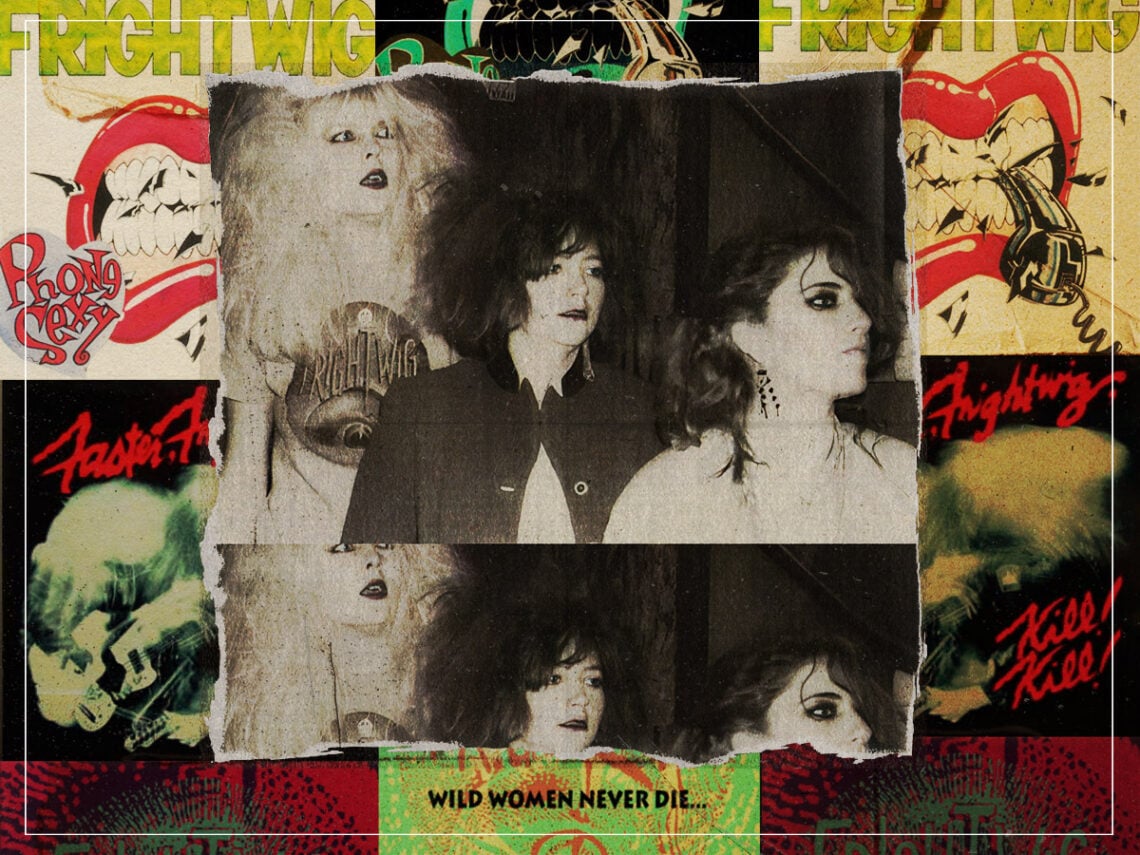
Frightwig: the forgotten punk band that inspired Riot Grrrl

The Riot Grrrl movement of the early 1990s was so much more than merely a music scene; it was an all-encompassing way of life, characterised by political awareness, artistic expression and a complete rejection of traditional gender roles and ideas of femininity. While punk rock had been around for a few decades prior to the advent of groups like Bratmobile and Bikini Kill, there had never been such a revolutionary and important punk scene. So, where did it all come from?
The roots of Riot Grrrl go back as far as the origins of punk rock itself. For as long as there has been defiant and countercultural music, there have been prominent female artists using music to call for liberation and denounce the patriarchal and misogynistic attitudes and institutions of society. Artists like Patti Smith and, later, The Slits, X-Ray Spex, The Raincoats and The Bags blazed a vitally important path for women in punk rock, which was an indispensable influence on the development of Riot Grrrl and wider feminist punk rock.
In terms of sound, however, there are some stark differences between, for instance, The Slits and Bikini Kill. That distinctive Riot Grrrl sound came from somewhere much closer to the Riot Grrrl ground zero of Olympia, Washington, the revolutionary and far-too-often overlooked world of Frightwig. First formed in San Francisco back in 1982 by Deanna Mitchell and Mia d’Bruzzi, Frightwig pioneered a distinctive West Coast punk sound that would later be adopted by Kathleen Hanna and Bikini Kill, permeating throughout the wider Riot Grrrl scene as a result.
The initial run of the band lasted until 1994, during which time Frightwig released only two studio albums and an EP. However, within that limited discography sat some truly groundbreaking compositions. On 1986’s Faster, Frightwig, Kill! Kill! (taking its name from the iconic exploitation film Faster, Pussycat, Kill! Kill!) the group contrast fun, humourous tracks like ‘American Express’ with songs like ‘Punk Rock Jail Bait’, which denounced the widespread misogyny of the punk scene and wider patriarchal attitudes.
Elsewhere on that same record, Frightwig paid tribute to Linda Lovelace on the track ‘Booby Prize’. Lovelace originally rose to prominence as a pornographic actress before revelations came to light that she had been forced into that role by her abusive husband, Chuck Traynor. She was very outspoken about the abuse and rape she suffered, later becoming a staunch anti-pornography campaigner – reflecting the attitudes of many within the Riot Grrrl scene.
Although the band never achieved any degree of mainstream success, they were far too important to become lost in the sea of obscure San Francisco punk outfits. Luckily, Frightwig’s records found their way into the hands of artists like Kathleen Hanna, Courtney Love, and Allison Wolfe, who then used the inspiration provided to form their own groups. If you listen to early tracks by Bikini Kill, they sound incredibly similar in sound to those forgotten Frightwig records, with Hanna readily admitting that she is a disciple of the San Francisco band.
There are many overlooked and underappreciated artists within the world of punk rock, but few had such an important and lasting impact as Frightwig. From their obscure origins, the San Francisco punks were a vital factor in the development of Riot Grrrl which, in turn, inspired countless future generations. Frightwig are still going strong to this day, having released a long-awaited third studio album, We Need to Talk…, which gave confirmation to the idea that the group’s sound is timeless and compelling.

Never Miss A Beat
The Far Out Punk Newsletter
All the latest Punk content from the independent voice of culture.
Straight to your inbox.