


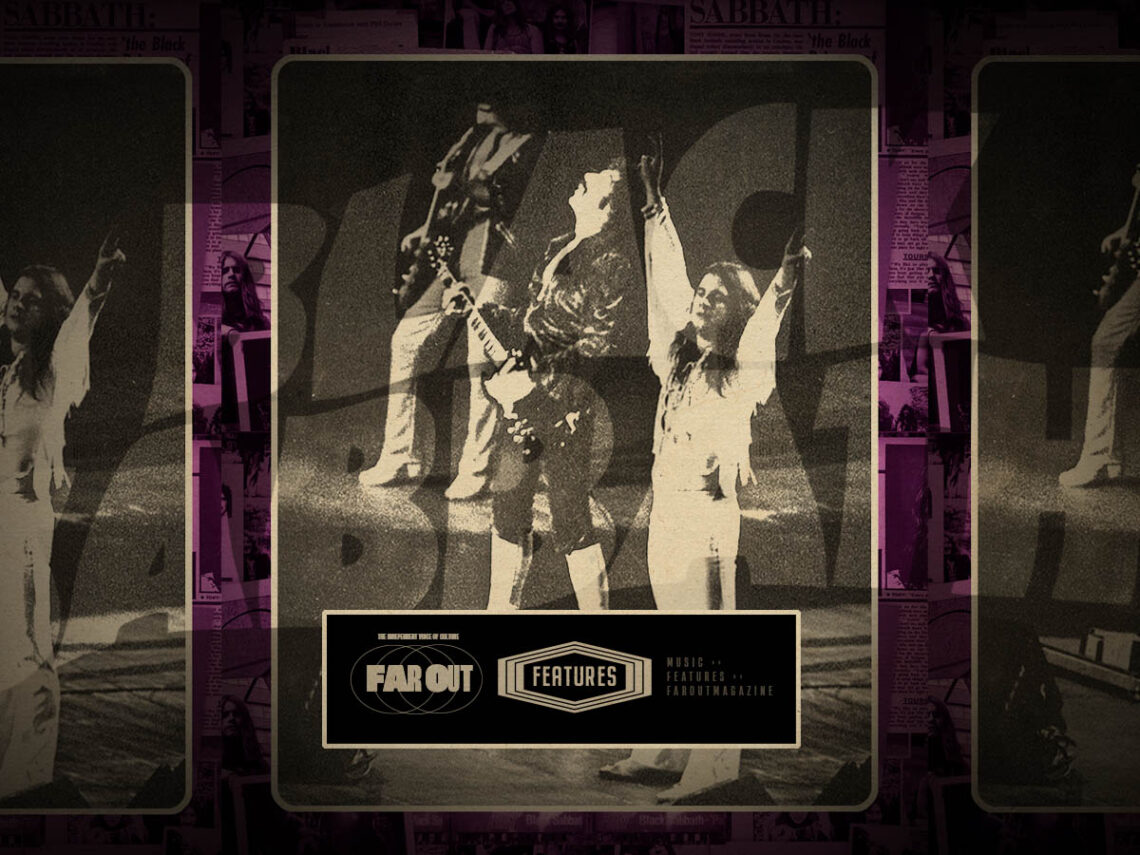
Why Friday the 13th was anything but scary for Black Sabbath

As much as they’re hailed for being the band who arguably gave birth to the genre of heavy metal, Black Sabbath were regarded as being just as controversial as they were innovative when they first arrived in the world.
With the 1960s having brought about more sexual liberation and openness about drug use thanks to the emergence of artists who weren’t afraid to speak frankly about such topics, those who were outraged and appalled by this descent into perversion and abandonment of all traditional values were keen to stamp their foot down when anything vaguely controversial arose in the media. Moral panic was a genuine concern of the public at this time, thanks to hippie and counterculture movements happening in the US, and the prim and proper folk over in the UK weren’t going to let this happen to them.
When Black Sabbath first formed at the tail end of the decade, the term ‘heavy metal’ wasn’t in widespread use, but the sound that this group from Birmingham were peddling seemed to be this Satan-worshipping style of music that sounded demonic. Of course, those who were easily perturbed by things that could potentially corrupt the youth and encourage rebellion weren’t too pleased that this was gathering steam and showing signs of becoming popular.
So, what better way for the band to formally announce themselves to the world than releasing their self-titled debut album on Friday the 13th, a day considered to be bad luck in many Western cultures, and a day commonly associated with occultism, devil worship and anti-religious sentiment? On top of this, the name itself, Black Sabbath, was an indicator of darkness enveloping the world on a holy day, which falls on a Friday in many religions, which did nothing but irk those from different denominations of faith.
Now, this alignment of the date, the band’s name, and the release of their album didn’t happen by mere coincidence, but nor was it a simple case of the band thinking that it might be cool to release their first full-length record on this day. In fact, it was a carefully calculated attempt to add fuel to the fire that was already brewing, and they knew that if they deliberately courted controversy through such a simple tactic that would bring the detractors out in full force, it would ultimately help them find their audience who would come out in opposition to these naysayers.
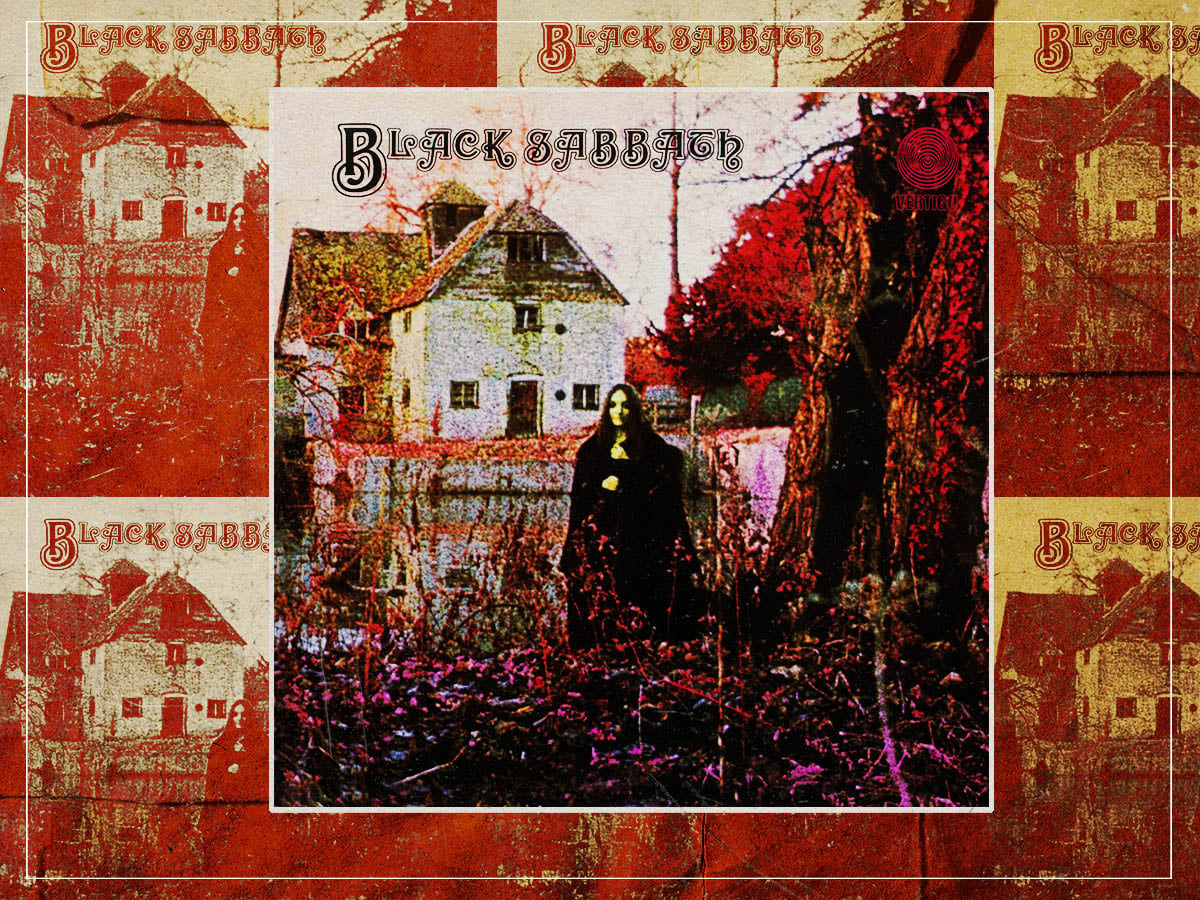
If people were already annoyed by the existence of a purportedly Satanic band, this was only going to annoy them more, but it would also earn them fans among people who wanted to invest in a new style of music with a bit more edge to it. Rock and roll had already evolved into straightforward rock, and then hard rock, but trends were moving at such a clip that an even more extreme variant of these styles was bound to emerge at some point; Black Sabbath just happened to get there first.
For all of the hubbub surrounding the idea that Friday the 13th is a mark of ill fortune, it proved to be anything but for the Black Country disruptors, with the release of Black Sabbath proving to be a success. The album peaked at number eight in the UK charts and managed to break into the top 25 in the US, establishing itself as a force to be reckoned with thanks to its innovative style.
The history of the date bringing bad luck stems back to the crucifixion of Jesus Christ, with him having been condemned to his execution on what is now known as Good Friday, coming directly as a result of his disciple, Judas, having betrayed him at the Last Supper, where he was one of 13 guests. With this superstition having stemmed from a religious, specifically, a Christian origin, for a band to be dealing with matters of the anti-Christ while releasing music on this unholy day was the main source of controversy, although the album itself delves even further into this world.
It leans into its Satanic influence with its aggressive and dark atmospheres, the apocalyptic riffs played by guitarist Tony Iommi, and the iconic blood-curdling howls of frontman of Ozzy Osbourne. Not only that, but the lyrical content that Osbourne produced for the record sees him even assume the role of Lucifer in the song ‘NIB’, and appears to turn himself into the embodiment of evil on the opener, ‘Black Sabbath’.
While the band arguably topped their debut with their subsequent groundbreaking releases in heavy metal, Black Sabbath remains a masterpiece of a record to this day, and one tells you exactly what you’re in for within the opening moments. Granted, it’s nowhere near as shocking by today’s standards as it was upon release, but for its time, there hadn’t been anything quite as transgressive and provocative as it, and it stands up as a major turning point for creating music that evokes the darkness of such demonic subject matter. Friday the 13th isn’t an unfortunate or unlucky day if you’re a fan of Black Sabbath; it’s a day of worship.
