



“Friction”, “fiction”, and the space in between: exploring the persona of Tyler Ballgame

David Bowie once said, “I’m a person who can take on the guises of people I meet. I’m a collector, and I collect personalities and ideas.” Somehow, Tyler Ballgame might be reincarnating that notion.
It’s not as if he is going to don some space-age costume and paint a bright red bolt over his eye anytime soon; you don’t have to worry about that. But in terms of the idea of persona, characters, and bringing a guise of oneself to the stage rather than the human left behind, the LA songwriter might be the closest modern example we’ve seen since the classics.
Ballgame has taken the indie world by storm since the release of his debut album, For the First Time, Again, in January. This was only four months ago, of course, but it seems that the fortunes have suddenly very much spun in the singer’s favour, having signed to Rough Trade and already being compared to everyone from Harry Nilsson to Roy Orbison.
It’s a remarkable rags-to-riches story for a man who openly admits to the fact that he was still living in his mother’s basement as relatively recently as 2021, having dropped out of a songwriting degree four years prior and being unsure of what to do with himself otherwise. He had a background of musical theatre and being in bands from his studies, and so blagged himself a way to LA.
And ever since late last year, the heads have been truly turning. He’s just completed a tour of the UK and Europe – with three dates still to come in Manchester, London, and Bristol this September – but as I sit opposite him in Glasgow, on the second day of shows, it strikes me that Ballgame, real name Tyler Perry, is not all that he seems.
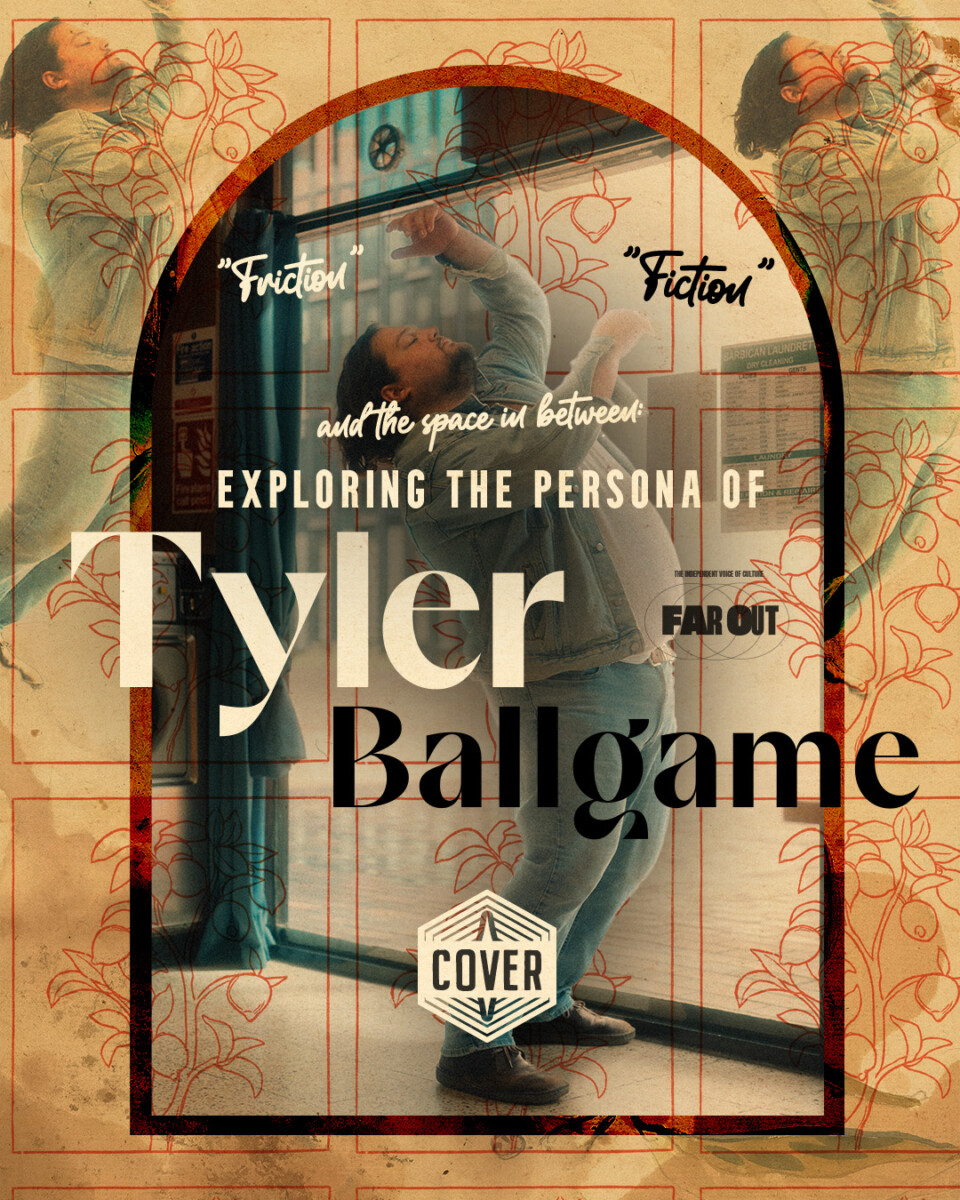
On stage, his presence is unmistakable and booming, his voice ranging from an operatic quality to a quiet yet electrifying whisper. By comparison, as we meet in a nameless chain coffee shop in the heart of the city’s business district – just down from his venue that night at King Tut’s – I can’t help but give a wry laugh at the pair of creatives being slightly out of place, side by side with the corporate heavyweights sitting on tables around us.
Undoubtedly with enough whimsy for an artist’s calibre but a quiet seriousness that sets him plainly apart from his persona, Perry comes across as a little bewildered by everything that’s taken place of late. “I mean, yeah, it’s surreal,” he replies, as the biggest possible understatement to what has happened to him the past few months.
“We’re playing these shows, and people are singing along to the album tracks, and not just the singles. Clearly, they have a relationship with the songs and with the music,” Perry muses. “That’s just really special for me, because I never thought that my music would ever be that to anyone. And here it is happening, you know? So it’s pretty magic.”
Yet as the conversation deepens, it becomes more evident by the second that while this may be his own trajectory, most aspects of the singer’s artistry are rooted in his myriad influences. We share a slightly geeky moment over the “swooping voice” of Michael Crawford in Phantom of the Opera, whom Perry credits for his opera-style tones. But at the same time, he also pulls on everything from Elvis Presley to The Beatles to Bowie himself.
In this sense, the roots of the Ballgame persona, inspired by the nickname of the Boston Red Sox baseball player Ted Williams, begin to present themselves. “Being on stage, whether you know it or not, you’re presenting a character,” the maker astutely says, in doing so revealing that he consciously chose to tap into that intriguing side of artificiality.
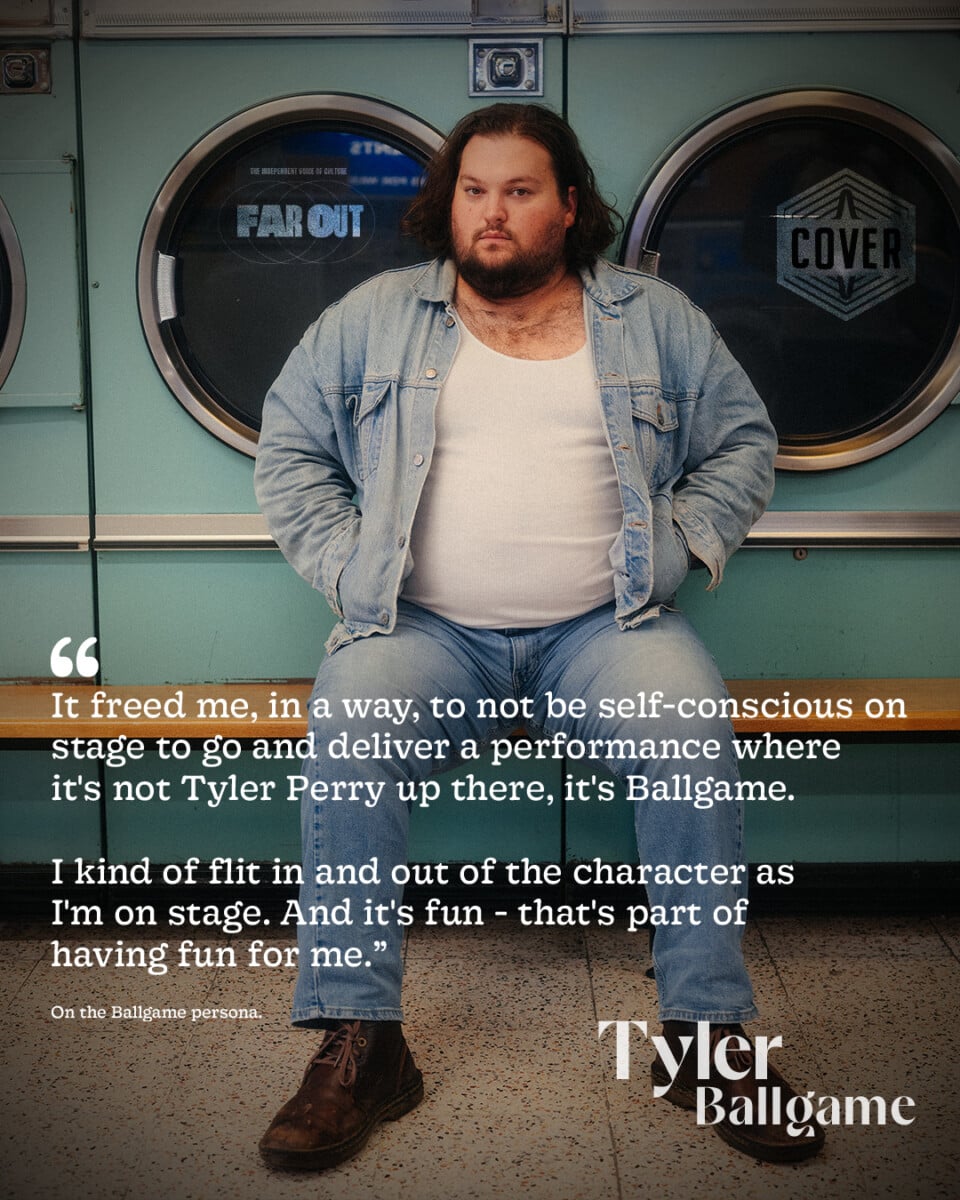
But in his words, “It freed me, in a way, to not be self-conscious on stage to go and deliver a performance where it’s not Tyler Perry up there, it’s Ballgame. I kind of flit in and out of the character as I’m on stage. And it’s fun – that’s part of having fun for me.” That all stands for a valid reasoning, but what do the traits of Ballgame actually mean?
“I think it’s some of the parts of my persona that are a bit dormant,” he replies, adding that it’s “maybe parts I want to be, as the archetypal frontman – the raw, machismo sexuality of Jim Morrison, or the boldness of an Elvis, or the wildness of The Beatles, kind of where it gets beyond personality.”
Of course, these are all the types of icons who commonly adorn the bedroom walls of future stars in their formative years, educational as they are entertaining, and powerful in their command of the fans’ ever-forming human condition. It’s something that still strongly informs the Ballgame persona to this day.
“When I was a teenager, idolising people and dreaming up what I wanted to be, that’s what I was really into. Someone like David Bowie – that theatricality and the strong melodies – I mean, that’s kind of all I’m interested in. I don’t really listen to much modern music or fashion myself after modern people. I’m just drawn to that era,” he explains.
Yet even through this litany of benchmarks, it’s clear that Perry remains in the trenches of trying to figure out what this means for himself as a performer. He readily admits that he’s “still figuring it out” when it comes to the line between himself and Ballgame when he steps on stage, and where the two, consciously or otherwise, come to converge.
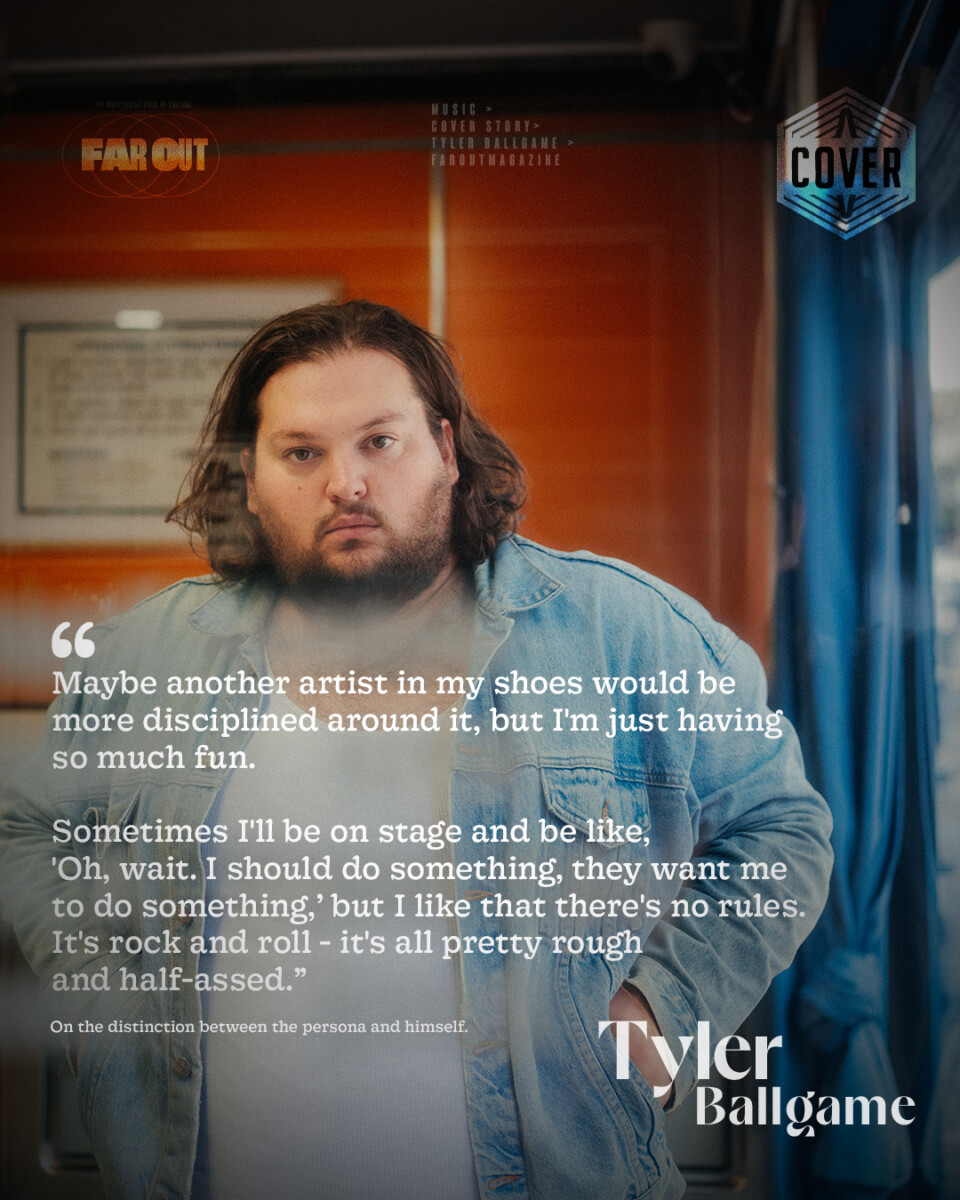
“Maybe another artist in my shoes would be more disciplined around it,” he considers, “But I’m just having so much fun. Sometimes I’ll be on stage and be like, ‘Oh, wait. I should do something, they want me to do something,’ but I like that there’s no rules. It’s rock and roll – it’s all pretty rough and half-assed.”
Noticeably, this sparks something off in his head, as he continues, “If there were rules or something, then it automatically becomes a prison.” To this end, the second Ballgame album is mostly done, Perry reveals, where he “didn’t feel affected by the character at all.” It’s a notable act of resistance that provides an intriguing tension to his artistry – a “friction in the fiction”, as he sings himself on For the First Time, Again’s ‘Got A New Car’.
“I can see how you could fall into the trap of, like, ‘Oh, the character worked. Let me do more songs in the character.’ I just do whatever my gut is telling me to do… that’s all you can trust.” Naturally, when you consider other personas of the ilk, using Ziggy Stardust as the prime example, the realisation then dawns that this could have the potential to climb to a terrifying height.
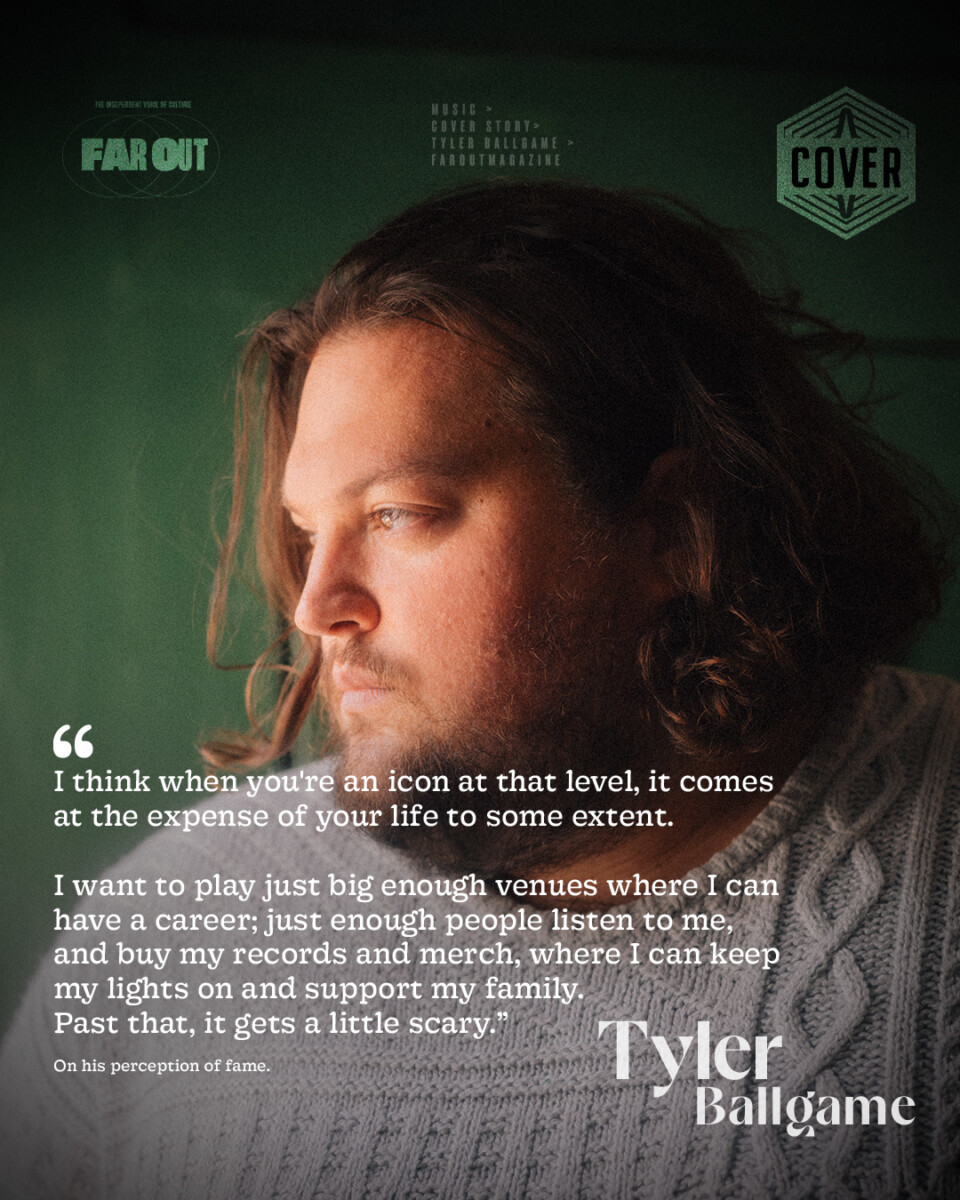
“I don’t want that,” Perry says, quite soberly, as himself. “I think when you’re an icon at that level, it comes at the expense of your life to some extent. I want to play just big enough venues where I can have a career; just enough people listen to me, and buy my records and merch, where I can keep my lights on and support my family. Past that, it gets a little scary.”
He talks about the frequent social media furore around Chappell Roan, or the fact that fans would raid through Bob Dylan’s trash, as the epitome of what he doesn’t want from his fame. Would the inner, commanding heart of Ballgame want it, though? It’s difficult to know.
From there, we weave into a discussion about the bones of the album, with Perry throwing out statements surrounding the “perennial nature of love”, the “peace underneath the rises and falls of your personality”, and the fact that “you’re not the king of your own world” with such casual poetry that it’s quite beguiling to listen to.
As a result, it gives me a small air of amusement when he says the next album is set to be “less flashy, maybe, and more raw,” almost like the complete opposite of everything he’s just told me. On one hand, the split between Ballgame and Perry is pretty impossible to understand, even, at times, to the person who’s at the behest of it.
He has made no secret, both in our conversation and in previous interviews, of the mental health issues that he has suffered with over the years. It’s still clear that there’s a pertinent sense of fear surrounding the supersonic prospect of fame, but in a juxtaposing way, the ability to release his own music at this stage in his journey has also been surprisingly freeing.
Perry claims that the opportunity to not take himself so seriously now, as he may have done at other points prior to this, is what “saved my life and set me on track to what I’m doing now, once I realised that and internalised it and could write about it. I think the world needed to hear that message too, and that’s why it’s become successful, because underneath all these songs is a message that needs to be heard, and that’s serving something bigger than myself.”
It’s a noble mantra from someone incredibly sure-footed, yet by the same token, the man who sits before me is so gentle and kind, warm and unassuming in himself, that I feel a pang of guilt jumping into the question that could feel like a punch in the jugular: Is Ballgame going to last forever?
Thankfully, he doesn’t show any signs of offence. “I think it’s always going to be changing – look at someone like Bowie. Ziggy Stardust only lasted one album,” he validly points out. “I don’t think you could live within one persona for your whole life. I don’t think anybody does. I think that’s part of suffering: when you understand yourself as being one thing and then don’t give yourself the flexibility to change and move and grow. I’ll be a moving target for the rest of my career.”
Yes, the song ‘Got a New Car’ comes to mind again. I don’t think that “friction in the fiction” is ever going to completely ease.
