


‘Les Diaboliques’: the French film that laid the groundwork for the erotic thriller

When most people think of the erotic thriller genre, they probably think about Sharon Stone uncrossing her legs in Basic Instinct or Glenn Close boiling the household pet in Fatal Attraction. Anyone who knows the genre inside and out might even cast their mind back to the constant perspiration in 1981’s Body Heat. But while the subgenre sprang up during the 1980s and ‘90s and was largely inspired by film noir of the 1940s, it was a French thriller from 1955 that bridged the gap and set an impossibly high bar that no other film in the genre has cleared.
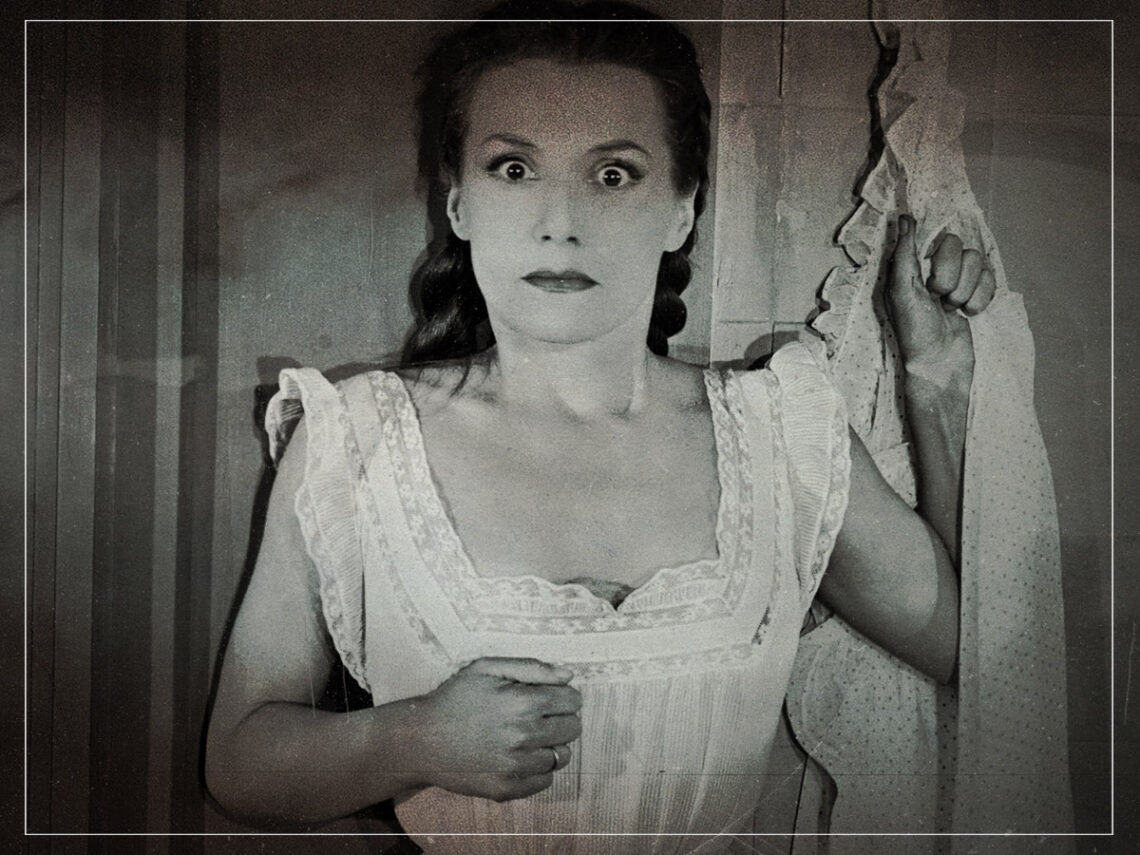
Directed by Henri-Georges Clouzot, Les Diaboliques is set at a boys’ boarding school outside Paris where the cruel headmaster, Michel (Paul Meurisse), is carrying on an affair with the glamorous Nicole (Simone Signoret), in full view of his sickly wife Christina (Véra Clouzot). Michel is a tyrant. When we first see Nicole, she’s wearing sunglasses indoors to hide the black eye she sustained during a night of arguing. When Christina tries to avoid eating the rotten fish that Michel has purchased for the pupils and staff, he forces her to swallow it and then rapes her after the meal.
From the beginning, Nicole and Christina appear closer to each other than to Michel, and when they resolve to murder him together, it’s hardly a surprise. But this film is much more tricky than a simple revenge story. The women hatch an intricate plan to dispose of their tormenter without a trace, but just when it seems that they are finally in the clear, strange things begin to happen. His body disappears. The suit he was wearing when they murdered him returns from the dry cleaners. And when the school photograph is taken, Michel’s face appears through a window in the background like a ghost.
This seemingly supernatural element of the story signals that it is no straightforward film noir. It is eerie rather than menacing, with elements of horror rather than action. Far from being the hard-boiled crime thriller that movies like Double Indemnity and Out of the Past are, it is haunting and unnerving, with a murdered villain-turned-victim who quickly transforms into a mystery.
Central to the film’s success is the contrast between the two women. They are opposites in every way. Nicole is the hard-edged, glamorous mistress who dresses like an off-duty Hollywood star and doesn’t suffer fools gladly. Christina is the childlike former nun with a heart condition whose timidity is compounded by her strict religious beliefs. Clouzot subverts the usual visual symbolism of light and dark, taking a cue from the 1946 noir The Postman Always Rings Twice by giving the worldly, sexually assertive character platinum blonde hair and the sheltered, childlike character jet-black hair.
The plot hinges on the man in their lives, but in his absence, the story centres on the women. As with Ingmar Bergman’s Persona, the relationship of two female characters becomes the driving force of the emotional narrative. As a study of two women, Les Diaboliques is a renegade of its time. Even when erotic thrillers exploded in the 1980s, the female characters were still portrayed as the psychotic enemy of the male protagonist. In Clouzot’s film, the women are the protagonists – victims, murderers, allies, and enemies all at once.
The sexual undertones of Les Diaboliques are, of course, nowhere near the laboured panting and sweaty pawing of the ‘80s and ‘90s, but they are also more explicit than other films of the era and more subversive. The overt sexual triangle between the women and Michel is clear from the beginning, and with him out of the picture, the clash of Nicole’s dominant masculinity and Christina’s gentle femininity becomes sexually charged. The book on which the movie is based addresses the homoeroticism between the women directly, and even though the film seems almost quaintly chaste by 21st-century standards, the subtext is simmering just barely beneath the surface.
Made between the heyday of the film noir and the rise of the erotic thriller, Les Diabolique stands out as one of the greatest examples of both, even though it does not neatly fit either category. At one point, Hitchcock was allegedly pushing for the rights to the novel, and while the ‘Master of Suspense’ would no doubt have turned it into a memorably stylish affair, it’s hard to imagine that he could have matched the stripped-backed cruelty and layers of psychological intrigue that Clouzot captured. Seven decades after its release, it remains an outlier.
