


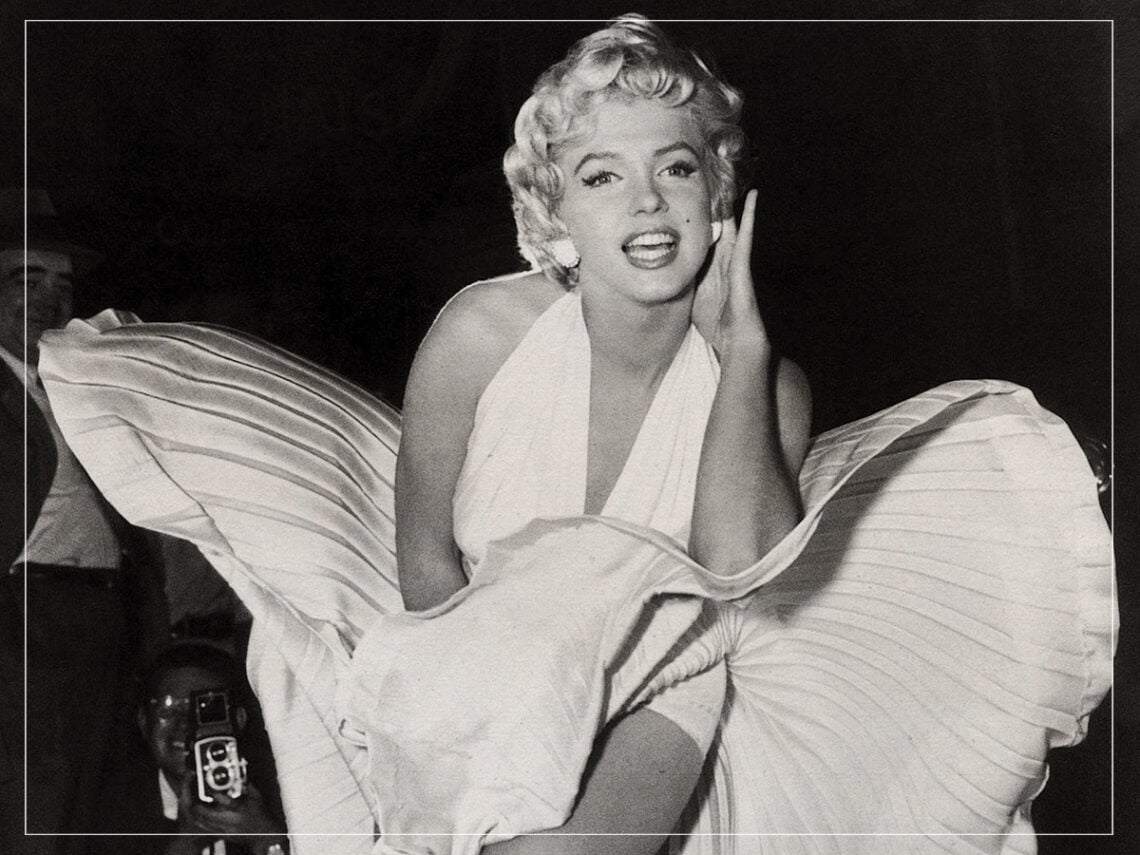
The four people that built the myth of Marilyn Monroe: “A number of people contributed”

Marilyn Monroe never existed. She’s one of the most famous names and faces in all of Hollywood history but really, she was nothing but a mirage, a character, an invention from the mind of Norma Jean and a cast of figures she credited for helping her.
The myth the woman wanted to create is an understandable and admittedly obvious one. It’s ironic, really, like all the stereotypes and judgements people have always thrown at Monroe, deeming her nothing but a sexed-up, dumb blonde, were all a sign that she’d succeeded. Really, she was using the patriarchy against itself.
Growing up in tough conditions, with abusive stepfathers and coming a ward of the state after her mother’s mental breakdown, Monroe did not have the childhood people would expect. But it gave her a dream, as she once said, “I didn’t like the world around me because it was kind of grim … When I heard that this was acting, I said that’s what I want to be.” She didn’t just want to be an actor, though; she wanted to be a famous actor. Raised without privilege or even support, so can anyone really blame her for growing up and wanting the stability and money that success would bring her?
But realistically, Norma Jean wasn’t getting anywhere fast. After doing some early pin-up modelling work, she realised how she could speed it up. If men wanted the fantasy, and if the fantasy made money, she decided to set about becoming it, using their predictable desire to earn herself financial freedom, a powerful career and power. She dyed her hair the signature platinum blonde, used her modelling money to get a few nips and tucks and changed her name. Marilyn Monroe was born.
The icon is more than a look though. The legend of Marilyn Monroe is a 3D character with a voice, an energy, a humour. That took a team as Monroe said, “[A] number of people have contributed greatly.”
When considering the people Monroe credited for helping shape her public persona, it becomes strikingly clear that building the myth of herself was an ongoing project. “Working with my coach, Natasha Lytess, she helped me very much from the very beginning,” she said as the first step, honouring the woman who remained her acting coach until 1955 and truly took Monroe under her wing during her first studio contract at Columbia.
Monroe was never shy about the impact teachers had on her, never once claiming that her talent took no effort. As another key influence, she thanked another coach, “I also got a great deal from attending classes with Michael Chekhov.” This connects to a whole other side of the myth. While the ditzy blonde sex symbol may be her caricature, Monroe was a serious actor who had every intention of furthering her skill and broadening her range. Her crediting the Russian actor and director, who was helping her prepare for more intensive, straight-plauing roles, proves that.
The other two pillars are given to two key directors. “I think when John Huston wanted me for the part in Asphalt Jungle, and I think when Billy Wilder wanted me for the part in Seven Year Itch, I think that was very important,” she said. In the first instance, it was John Huston who was arguably the first to take a leap of faith on Monroe, giving her a role that, while being small, was still spotlighting, helping put her in people’s minds as a future star.
Then, when it comes to Billy Wilder, the myth of Monroe gets its ultimate image thanks to The Seven Year Itch. You know the one: the superstar in the white dress standing on the vent. In that moment alone, history was made, and Monroe was written into it, providing one of the most iconic images in pop culture that also captures exactly what the myth was and who Monroe is: seductive yet utterly knowing and aware of how to use that for her own power.
