


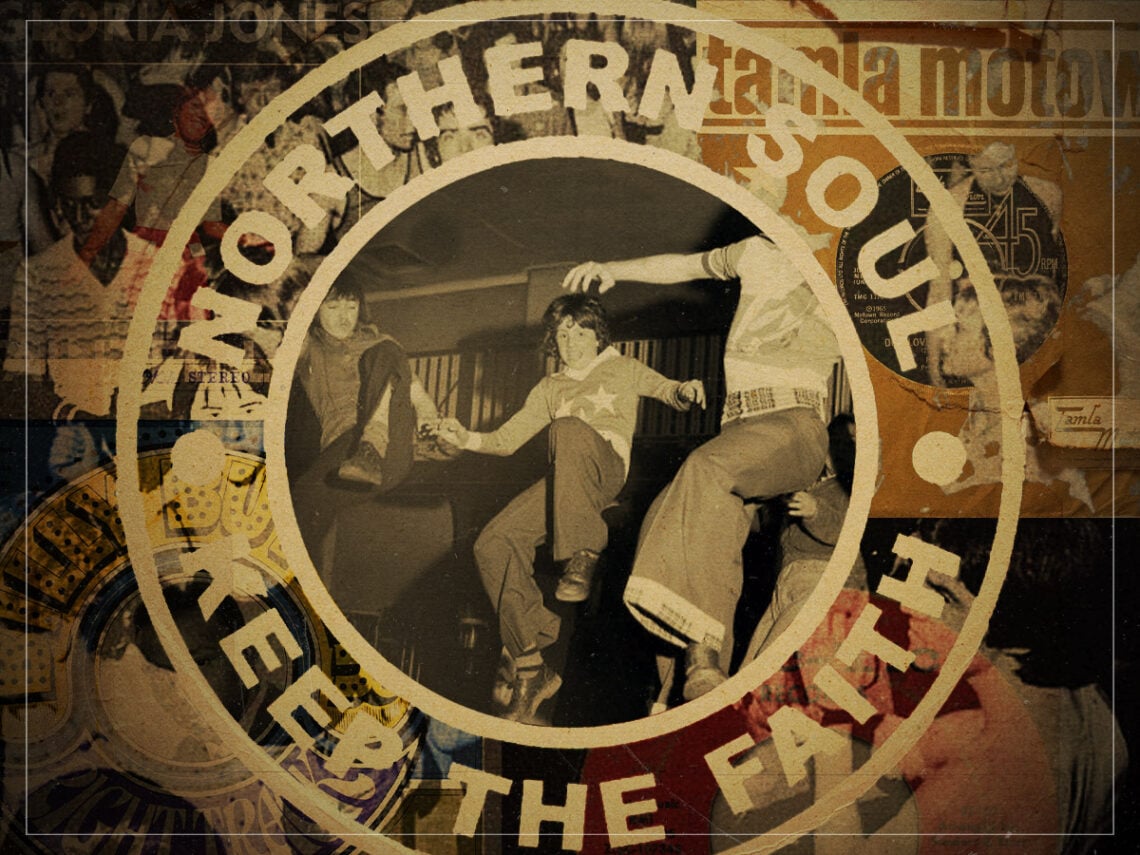
How football away days gave the northern soul scene its name

Jumpers for goalposts, the concrete welcome of the terraces, and loyalties passed down through the generations; football is woven into the cultural fabric of Britain, and its impact on the musical landscape is impossible to ignore. We’re not just talking about John Barnes’ rapping skills, either.
Regional differences aren’t what they once were, with the advent of the internet and increasing levels of people moving around the nation for work. Back in the 1960s, though, London might as well have been on a different planet from the industrial heartland of the north.
While tripped-out hippies and sharp-suited mods might have been riding around England’s capital on scooters or acquiring new threads in Carnaby Street, the youth of places like Wigan, Manchester, or Bradford were busy working in mills, factories, and mines, their four-button tonic suits switched for soot-stained overalls.
In those days, the only time these two very disparate worlds collided was at three o’clock on a Saturday afternoon, if a football club from the north was scheduled to play against a London club. Inevitably, then, when fans from those northern clubs arrived in the capital to support their team, they became exposed to the vibrancy of the city’s music and fashion scene, taking a little part of it back home with them later that weekend.
This was how the mod subculture of the 1960s spread from its London origins, infecting cities and provincial towns of the nation via train stations and away-day coaches. Some years later, it was those football away days that also sparked the northern soul scene, or at least gave the scene its title.
While the trendy soul scene of London had largely moved on to deeper, funkier and more politically-charged climbs by the time the 1960s drew to a close, audiences in the north were still yearning for the uptempo, four-on-the-floor rhythms of 1965, seeking out increasingly obscure, forgotten records to play at clubs like Manchester’s Twisted Wheel. When a little record shop in south London realised that fact, the term ‘northern soul’ was born.
Recalling its origins in the new documentary film Northern Soul: Still Burning, David Nathan, who worked in that record shop, shared, “Dave Godin and I ran Soul City Record shop in London, and on Saturdays, there would be a group of people come down from the north to support their football clubs. They’d come to the shop, and Dave Godin noticed there was a particular sound, they were almost always uptempo records, that seemed to appeal to this customer base.”

Being the enterprising businessman that he was, Godin soon instated a specific section of his shop exclusively for that customer base, entitled ‘northern soul’. Within a few short years, that northern soul term had spread like wildfire, owing in part to the football fans and DJs who frequented Soul City. In fact, over half a century later, northern soul is still going strong.
Northern soul would have still existed without Dave Godin and the legions of football away fans visiting Soul City, but it perhaps wouldn’t have the same strength of identity. What Godin did for the scene was to make it more tangible and identifiable, marking it out as a separate entity from the mainstream soul scene of the day.
