


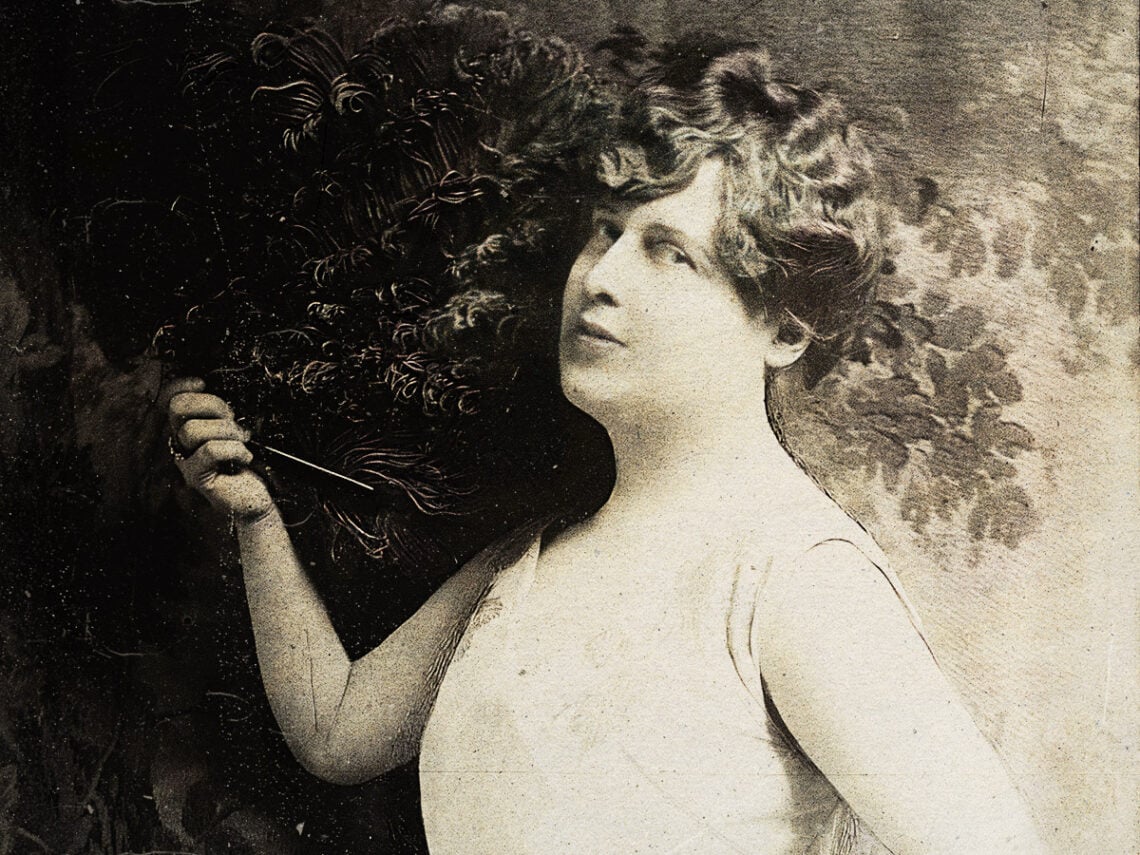
Florence Foster Jenkins: How the worst singer in history became a sell-out sensation

The only thing comparable to the thrill of a truly brilliant artist is that of a truly terrible one. The liberating phenomenon of a performative pratfall has seen shows like The X-Factor and Britain’s Got Talent boom and rendered movies like The Room so bad that they’re good. The opera star Florence Foster Jenkins typifies this appeal more than most, and her strange story helps to illuminate just why we’re so fascinated by watching a truly dreadful flop.
The poet William Meredith summarised the appeal of Jenkins in flowery fashion when he wrote: “What she provided was never exactly an aesthetic experience, or only to the degree that an early Christian among the lions provided aesthetic experience; it was chiefly immolatory, and Madame Jenkins was always eaten, in the end.” In other words, the spectacle of Jenkins was akin to the macabre frisson of a car crash.
However, it was rather more nuanced than that when it came to Jenkins – most atrocities might attract a passing guffaw of temporary attraction, but Jenkins became a monumental star of the 1930s era – her life beforehand had a huge bearing on her billowing infamy. You see, as Meredith hints, the appeal to the Pagan Romans of seeing a Christian caged with a lion was not just in witnessing the debased carnage that ensued but rather that it was also a Christian on the receiving end.
Jenkins’ background was one not often prone to public humiliation or indecency. She was born into one of America’s most wealthy families in 1868. With reverence ruling the family roost of Charles and Mary Jane Foster, they could never have thought that they had begotten the certified worst opera singer of all time. And they certainly couldn’t have foretold that the family trait of success would’ve still followed all the same.
As a youngster, Jenkins dabbled in music, reciting cute piano pieces at society functions as Little Miss Foster, but in time her performances dwindled away. Her passion for music remained and her lavish fortune meant that she could study the subject, but for all intents and purposes, this was merely a background pursuit. While she wished to study music in Europe, this hope was dashed when she was refused permission by her sceptical father. Marriage soon followed for Jenkins, but when she contracted syphilis from her senior husband, she filed for divorce.
So, for most of her adult life, she sustained herself by giving piano lessons and lived the life of a busy little socialite in New York City. Here, she engaged with opera’s elite. When her father passed away and she became the inheritor of a handsome trust, she decided it was time that she joined them despite being 44 at the time. So, in 1912, her musical career began in earnest.
Unlike most people, as a member of the upper classes, Jenkins merely had to decide to be an opera singer. However, while fortune may have favoured her, this was not a move she made without sincere passion. In fact, her enthusiasm for the art would ensure that in the years to come, she ploughed on unabated and blindly interpreted the laughter of the audience as riotous applause. She was living her dream, in the sense that dreams are delusions.
All the while, her popularity boomed, ticket sales went through the roof, and ticket prices followed. She was a certifiable star. And the bubble never burst. In fact, it grew and grew. At the age of 76, she was able to book out the Carnegie Hall for her grandest recital to date. Despite all the great music that the famous venue had held, her concert was the fastest-selling in the history of the Hall. This feat pushed her career beyond the reaches of a high society in-joke and brought her to national attention.
The press claimed that she seemed to have defied music in the same way that a painter might defy art by completely missing the canvas. She was an outsider artist ironically at the heart of society. As Stephen Pile retrospectively wrote in his novel, The Book of Heroic Failures: “No one, before or since, has succeeded in liberating themselves quite so completely from the shackles of musical notation.”
There was no way for Jenkins to reappraise the title of the world’s worst singer as applause, and the stress of this sudden tumble from faux grace is said to have induced the heart attack that killed her a mere month later. It’s a tragedy that only the Greeks in their pomp could’ve cooked up, but beyond that are a slew of interesting whys and wherefores about her success and rapid unsuccess that tell us a lot about society.
You see, part of the reason that her high society friends seemingly embraced her was because she broke from the stiff traditions of their set. This made her both a mocked marvel, and a secret source of liberation; she genuinely was passionate, and her pursuit of this – no matter how bad – gave many of them the subconscious sense that there was a life beyond cocktail parties and parcelled careers. This is why the joke was still funny for so long: at its heart it was deadly serious.
Then, much like Bob Dylan’s ‘Like A Rolling Stone’, the laughing lies of the elite built up a delusion of grandeur that catastrophically burst upon impact with the stark reality of society at large. This mix of derision and misguided humanity is something that pervades much of modern entertainment in reality TV. In some ways, Jenkins was the first reality star and although she might not have hit a single note, her fame was no mean feat.
