


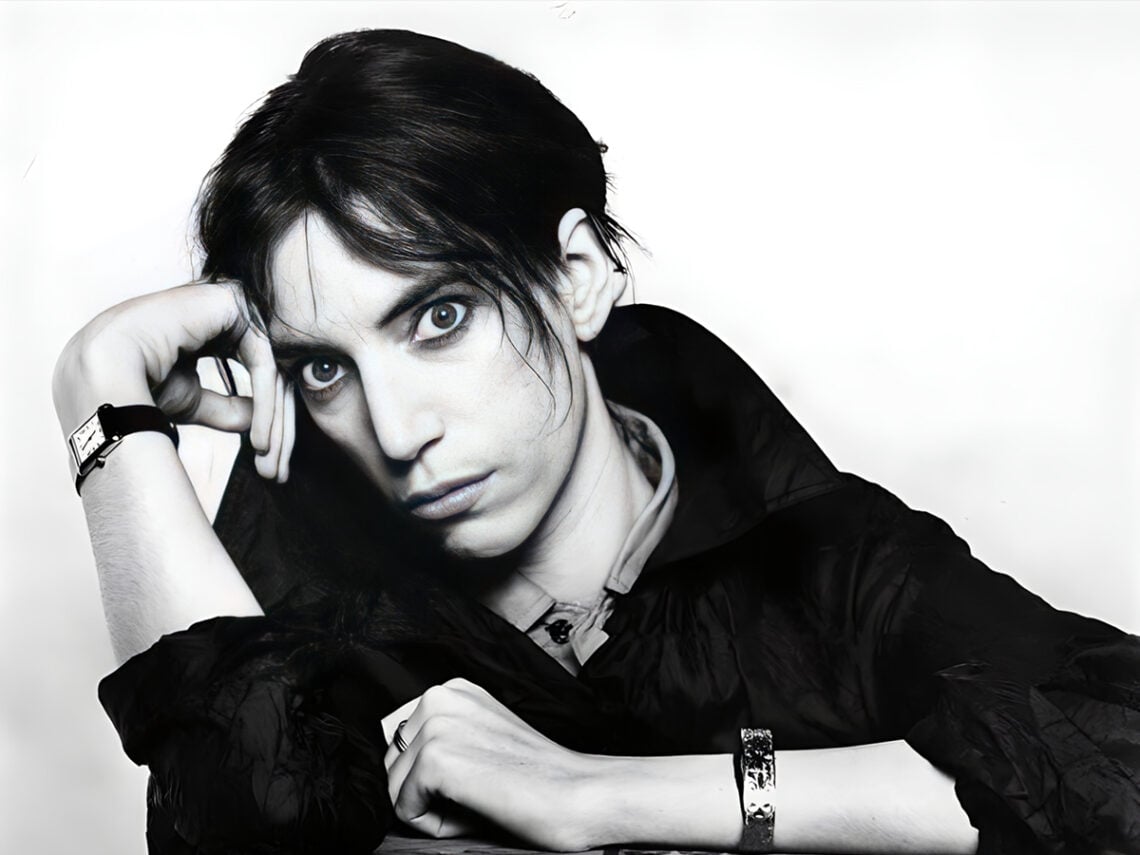
‘Easter’: The flawed and “amateurish” album Patti Smith was still proud of

For all of her many merits, let’s just be honest with ourselves: Patti Smith is not necessarily the most accessible artist out there. She may be a bona fide icon within certain cultural circles, but her demonstrable lack of mainstream success speaks volumes about the heights of her musical echelons.
To be clear, that was not meant as a criticism in any form. Even if you’ve only read her autobiography, Just Kids, as an introduction, it’s clear that Smith was part of the essential fabric of the uprising of New York as a cultural epicentre throughout the course of the 1960s and 1970s. The fact that she garnered limited mainstream acclaim is not to be dressed up as a failure in this regard, but more a testament to the exclusivity of the scene at that time, where artists were creating beacons that may have only reached a limited audience, but left an indelible imprint.
This is also a means to say that Smith herself has never seemed all that bothered by trying to cultivate the attention of the masses, so long as she is producing something valuable for those who want to listen. In turn, although her single ‘Because the Night’ became her greatest commercial success – reaching number five in the UK and 13 in America – it was a symbolic gateway to an album she ultimately branded “flawed” and “amateurish”.
As a whole, the record that ‘Because the Night’ came from – Easter, released in 1978 – did become her biggest-selling body of work. But in Smith’s own mind, “That didn’t matter,” she said, speaking to the ethos of a woman who has always walked to the beat of her own drum. That was ultimately the asset that, despite the album’s retrospective range of pitfalls, always made the musician remember that it was still something to definitely be proud of.
To this end, she added, “I’m not desperate. I always knew that if I didn’t have complete control over everything I did, I could walk away. I could print out my poems myself or go sing in the street. I’m not saying I was always great. Or that I wasn’t flawed, or my singing wasn’t amateurish, or I wasn’t presumptuous in my thinking. You can say all those things. But you can never say I did anything to appease the music business.”
That’s a sentiment for which there isn’t a single seed of doubt when it comes to Smith, because come hell or high water, she has never once shifted or softened her position when it comes to doing things her own way. It goes without saying that this has obviously served her well over the decades, as there is always something to be gained from the artists whose endless creativity has been cultivated from a concrete sense of their own minds.
Of course, this is not letting Smith off the hook to simply put out any old thing she can and class it as high art, therefore seemingly rendering it devoid of critique. There are intricate processes and thought details which are embedded into the heart of everything she has ever done, whether that’s music or writing or anything in between.
All of that deserves to be lauded just as much as the oversights warrant explanations. But regardless of the overall legacy, Smith is clearly the biggest backer of her own work. In some ways, that’s quite refreshing to hear.
