


Anatomy of a Scene: Anton Ego’s flashback in ‘Ratatouille’

Few movies capture the emotional power of food quite like Pixar’s Ratatouille. The 2006 animation is probably the best film ever made (take that, Citizen Kane) and definitely the greatest film about food (sorry, Big Night). I mean, come on, it’s about a gourmand Parisian rat operating a talentless human chef from beneath a hat…what’s not to love?
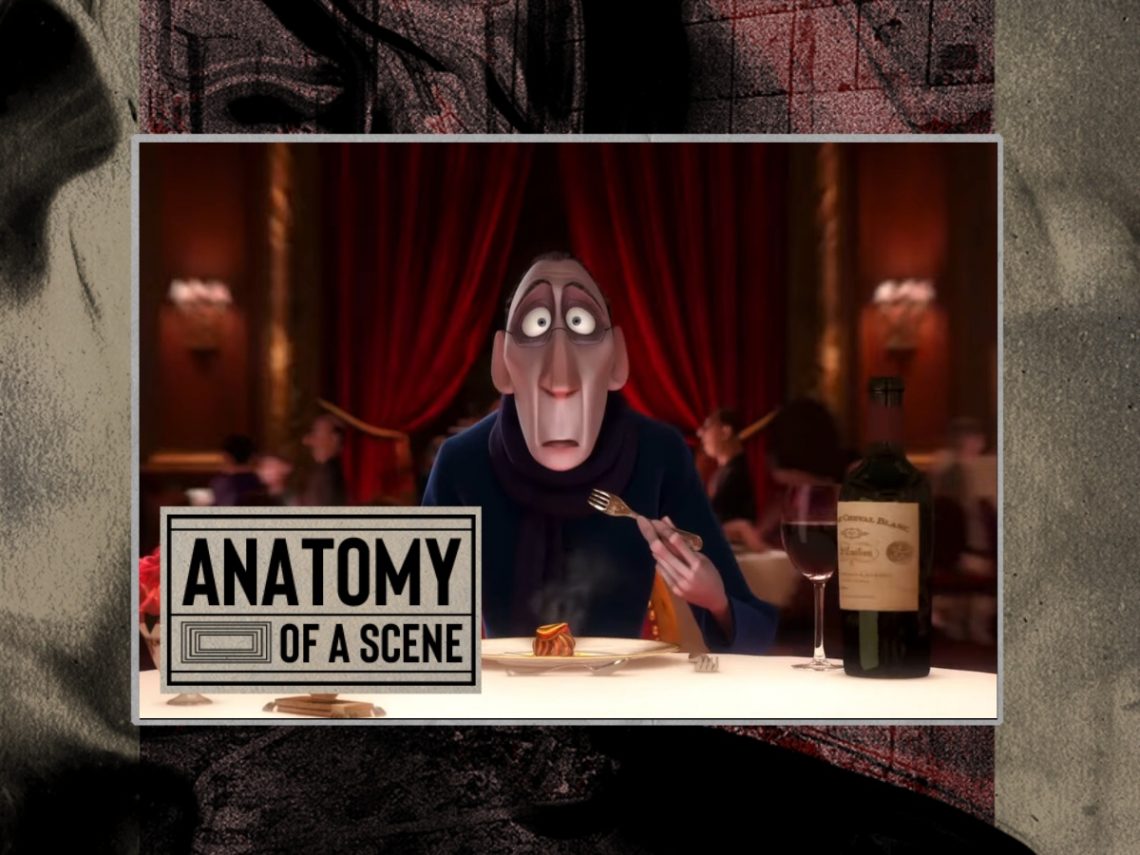
Ratatouille’s greatest strength is its recognition that food links us to our childhoods and to those we love. This idea is best explored during the scene in which Anton Ego, the cynical food critic – whose crushing review of Chef Gustau’s restaurant destroyed its once-lofty reputation – tastes the ratatouille prepared for him by Remy and Linguine.
So, what is it that makes this scene work so well? First off, let’s remind ourselves of the action. After deciding to serve Anton Ego a simple “peasant dish” made of stewed vegetables, Remy and Linguine set to work crafting a stunning, restaurant-quality ratatouille. Plate in hand, Linguine roller skates into the dining hall and sets down the food.
Ego, ready for the kill, clicks his pen and makes a note. He then raises a forkful of steaming vegetables to his mouth, taking a bite. The taste fires up his senses. His sunken eyes widen into a stare, and through those eyes, we step back in time. Suddenly, Ego is not a dour food critic but a boy of eight who has just grazed his knee riding his bike. The light is warm, and we see Ego sit down at the family table. His mother, looking to comfort him, passes a steaming bowl of ratatouille, which he dives into enthusiastically.
People love referring to this scene when discussing their favourite dishes, so it clearly captures something essential about food and our enjoyment of it. More importantly, however, it reveals something new about our antagonist. Until this point, Anton Ego has been portrayed as a soulless, unfeeling cynic. His cruelty implies that he is unable to love and that his life has been a quest to make everyone feel as miserable as him.
The flashback does two important things. Firstly, it tells us that Remy is right – eating is a powerful sensory experience everyone should cherish. It also completely changes our view of Ego, who suddenly becomes an emotionally complex character who we sympathise with because his experience of food as a balm is one many of us can understand. It transpires that his career as a food critic was motivated not by a desire to punish hard-working chefs but by an emotional investment in food, just like Remy. When the flashback is over, Ego’s pen, the symbol of his former self, falls from his hand. Through food, he has been reborn.
