


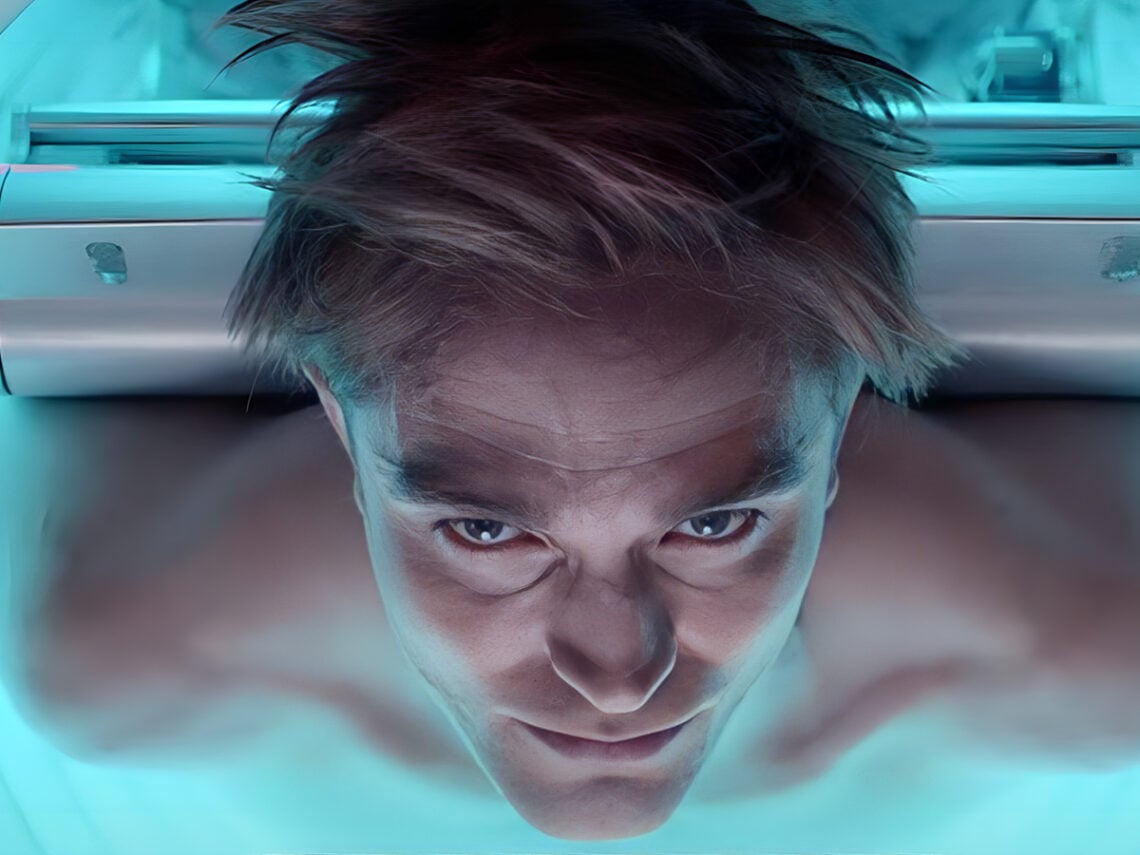
Boy wonder to beloved weirdo: Five times Robert Pattinson surprised Hollywood

He started out as a pretty boy, known for having sparkly skin and being good at Quidditch. But by the time Robert Pattinson left his 20s, he had already worked with an enviable list of directors like James Gray, Werner Herzog and David Cronenberg.
His ability to shed the pallid skin of his Twilight hero, Edward, is truly admirable. It seemed as though the hit-making franchise was set to claim its leading actors as victims, with the careers of Kristen Stewart and Taylor Lautner struggling to get off the ground in any meaningful way. However, Pattinson rallied against the set of pictures almost immediately and seemed to help him escape the albatross pendant it looked certain to be.
It was once a phenomenon worth remembering that this seemingly superficial movie star had jumped into a series of smaller and stranger films. But now Pattinson has been playing the weirdo for longer than he was ever the teen idol.
It’s become a comfortable set of uncomfortable roles for the actor while he still manages to keep his hands on the bigger paycheque attached to the Batman series helmed by Pattinson in the lead role and directed by Matt Reeves. However, the number of surprising roles for the former teen idol far outweighs his moments of conformity.
Five times Robert Pattinson surprised us all:
Remember Me (Allen Coulter, 2010)
Before he was on the call list for the Cronenbergs and Herzogs of the world, Pattinson had built up a lot of cachet as a Hollywood heartthrob, especially following his appearance as Edward Cullen in the Twilight films. Those with long and unforgivably precise memories will recall middle-aged women in T-shirts proclaiming an erotically charged allegiance to either Team Edward or Team Jacob despite both characters being played by actors in their teens.
But before Pattinson made his way into the indie world, there were transitional roles – a young elephant trainer in Water for Elephants and lover-boy Tyler in 2010’s Remember Me.
Here, it’s not the role itself that surprised audiences but the ending. With respect to spoilers for a film that’s about to turn 15 years old, let’s just say that Pattinson’s character ends up a direct casualty of a tragic historical event involving two tall buildings right in the last minute of the movie. There’s no prior warning that the film is building up to something like this or even a clear indication that it’s a period piece. It’s a famously surprising ending that still has audiences scratching their heads.
Cosmopolis (David Cronenberg, 2012)
This marked a shift from big-budget teen-marketed romance and fantasy to a decade of work in smaller movies with more complex artistic ambition from auteurs like David Cronenberg, Claire Denis, Werner Herzog, and the Safdie brothers. This was when he switched from a teen heartthrob to an object of interest for cinephiles, starring as isolated billionaire Eric Packer in Cronenberg’s adaptation of Don DeLillo’s novel of the same name.
It’s a film as ambiguous as it is provocative, with an amoral central figure who spends the runtime hunkered in the back of his moveable office—a limousine on the streets of Manhattan. Dramatically, it’s the kind of role that has become Pattinson’s bread and butter in the last few years. But at the time, for audiences who knew him primarily as Edward Cullen and Cedric Diggory, there was nothing more surprising than a collaboration with a director like Cronenberg.
Perhaps people should have been less surprised. Cronenberg had lent indie cred to an actor known as a teen sensation before with James Spader’s lead role in Crash. Pattinson said he and fellow young actor Jay Baruchel were terrified to work with the esteemed director, saying he was hired “basically in the throes of a panic attack”.
But while Pattinson himself may have had some uncertainties about his role in the project, it ended up setting up the blueprint for his next decade, with performance after performance in strange movies by even stranger directors.
Good Time (Safdie brothers, 2017)
Thankfully, the shedding of Pattinson’s heartthrob image was fully complete by the time he joined the Safide brothers to complete the movie Good Time. The picture came as a surprise to many used to Pattinson in the lover-boy mode, as he took on the criminal role of Connie Nikas, a bank robber with a morally ambiguous code of conduct as he navigates the New York underbelly.
One of the first movies the fraternal directors worked with A24, at the time a small time indie production company, the raw intensity of Pattinson in the role arguably set him up for the work that was to come. Nikas was dark, comic and deeply complex. It became a showcase for the actor’s growing range.
Perhaps the most surprising part of the movie was Pattinson’s pursuit of the role. Pattinson had discovered the previous work of the two directors and became obsessed with getting the role, personally reaching out and remaining determined to work with them. It would be a transitional moment that would change his career forever.
The Lighthouse (Robert Eggers, 2019)
It was no big surprise that Pattinson – by now an indie darling – would choose to work with Robert Eggers off the back of his folk horror hit The Witch. But what no one expected was how totally Pattinson would transform into the sputtering, sweaty, masturbating lighthouse keeper who locks horns with Willem Dafoe’s grizzled old wickie for the entire film.
Slack-eyed, moustachioed and sweat-glistening, Pattinson in this movie can all but be smelt through the screen. The dialogue-heavy screenplay and limited setting give the film a stage-play feel, and Pattinson, for the first time, is really given a chance to project his voice to the back of the room.
While other complicated roles in indie dramas like Cosmopolis retained some sense of restraint from the character, The Lighthouse is in all ways batshit, and Pattinson surprised audiences the world over by being right there to grapple with it.
The Batman (Matt Reeves, 2022)
The first surprise came when Ben Affleck stepped down from both the director’s chair and the cape and cowl for the Batman solo film that had been whispered about for years. Suddenly, there was nobody behind the mask, and rumours abounded. Apparently, Nicholas Hoult, Aaron Taylor-Johnson and Armie Hammer were shortlisted, but The Batman director, Matt Reeves, wrote his script with Pattinson in mind after seeing his madcap performance in the Safdie Brothers’ Good Time.
The next surprise was that Pattinson took the part. He’d spent almost a decade away from the machinery of big Hollywood franchises, honing his craft across an increasingly diverse range of roles under the directors that everybody wants to work with. But as Pattinson would put it, Bruce Wayne is not so different from the other oddballs he’d appeared as in the last decade. As the actor told Total Film: “Even my agents were like, ‘Oh, interesting. I thought you only wanted to play total freaks?’ And I was like, ‘He is a freak!'”
And perhaps the biggest surprise was a depiction of the Caped Crusader that manages to strike a note even closer to Alex Proyas’ The Crow in tone than this year’s Bill Skarsgaard-starring remake. Pattinson’s Batman is harrowed and tormented, rotting away in his decaying mansion when not beating people up in his mask and costume. It’s an honest portrayal of what a masked vigilante in a cartoonishly crime-ravaged city like Gotham would actually be like, especially if he listens to the haunting wails of Kurt Cobain on ‘Something in the Way’ on repeat.
