


Spooky muses: Five times musicians were inspired by something supernatural

Even the sceptics among us can hold a fascination with a good ghost story or tale of the supernatural.
For many, spectral sightings or eerie encounters with strange presences are believed with utmost sincerity, professing figures walking through walls or detailing poltergeists moving objects at will. This has played out in the music industry as much as your mate down the pub.
Kendrick Lamar once claimed to have been visited by the ghost of Tupac Shakur, directly inspiring To Pimp a Butterfly’s ‘Mortal Man’, and pop star Kesha recounted a sexual encounter with a spirit on the ectoplasmic ‘Supernatural’, a cut celebrating the phantom’s devious entrance to her bedroom one night during a stay in Los Angeles’ Rural Canyon area.
Horror in general is a genre that never dies, always existing in some fashion but changing form and shape to reflect the social anxieties of the day. With this, the paranormal and occult are never too far away from the charts, from Screamin’ Jay Hawkins’ 1950s ‘I Put a Spell On You’ black magic to Lady Gaga’s ‘The Dead Dance’, Michael Jackson’s zombie-infested ‘Thriller’ towering at pop’s centre as an eternal Billboard behemoth of horror pop.
Apparitions, too, can serve as a perfect illustration of the human condition. Loss’s spectral echoes, wandering the life’s dark terrain, unsure of its dangers, unresolved history, or the anguish of judgment that awaits a lifetime of regret, supernatural themes need not be mere campy fun, but can examine a profound insight into our collective nature.
With such heady foil, we examine the rock and pop canon and highlight the numbers that have best captured a quintessentially spooky energy.
Five times musicians were inspired by the supernatural:
The Eagles – ‘Hotel California’

Los Angeles soft rock stalwarts the Eagles were already one of the decade’s most successful artists. Their Greatest Hits (1971–1975) compilation still stands as the fifth biggest-selling album of all time.
Yet dual frontmen and principal songwriters Don Henley and Glenn Frey weren’t done yet. With major assistance from Don Felder, 1976’s Hotel California would be propelled to stratospheric levels of unit sales off the back of its title track second single, a seemingly breezy number that explores the perils of fame and the death of the 1960s with subtle haunted fervour.
Conceiving the lyrical angle of a weary long-distance driver stopping by the titular hotel and encountering ghostly figures occupying different rooms of shifting reality, ‘Hotel California’ reveals itself to be more a crooked house than a yacht pleasure palace, Frey stating his initial seed of the song framed up “like an episode of the Twilight Zone”.
Such a spooky sense of cinema remained lost on many of its fans, nabbing the namesake album and again gifting the Eagles with another record-selling LP, despite its eerie thematic centre.
Fleetwood Mac – ‘Rhiannon’

A mystical aura always seems to effortlessly follow Stevie Nicks. Be it her platinum-selling contributions to Fleetwood Mac or the dramatic pop-folk conjurings of her solo work, Nicks’ earnest belief in the spiritual realm guides much of her work, harbouring a veneration for the unknowable ether beyond our mortal coil.
Nicks has made all kinds of statements over the years, from claiming the ever presence of her departed mother to mooting a previous life’s decapitation for her recurring neck issues.
A fascination with mythology would inform 1976’s ‘Rhiannon’ from the previous year’s Fleetwood Mac, her and Lindsey Buckingham’s first appearance with the band. Often introducing the number on stage as “a song about an old Welsh witch”, Nicks pours her love for the old ‘Maiden of the Otherworld’ story, as discovered by Mary Bartlett Leader’s Triad novel, and explores all the preternatural qualities of the mythic goddess that plays a central role in Celtic, pagan lore.
According to drummer Mick Fleetwood, Nicks’ performances of the evocative cut were “like an exorcism” during their heyday.
Iron Maiden – ‘The Number of the Beast’
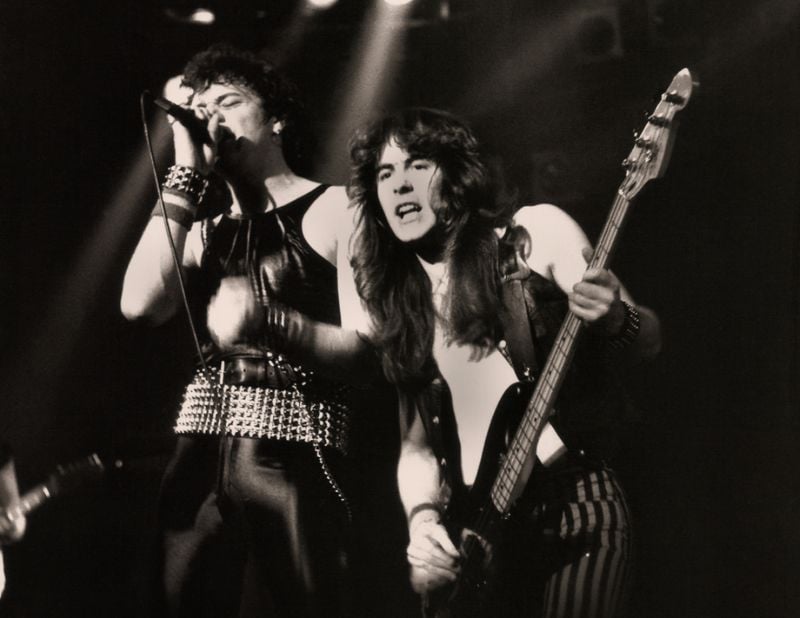
If there’s one defining album for the new wave of British heavy metal titans Iron Maiden, it’s 1982’s The Number of the Beast, and if pushed for their enduring anthem, many fans would opt for its dramatic title track.
Their third album, but first with frontman Bruce Dickinson, all the essential ingredients would be cemented on their major breakthrough record, the riffs pile driving, solos shredding that bit harder, and the lyrical dabble with Beelzebub so provocative that much of the US Bible Belt was rubbed up the wrong way by their supposed satanic sympathies.
The hellish metal attack was, in fact, inspired by a nightmare bassist Steve Harris had suffered after watching Damien: Omen II late one night. Lyrically borrowing a little from 18th-century Scottish poet Robert Burns’ ‘Tam o’ Shanter’, and opening the cut with actor Barry Clayton reciting from the Book of Revelation, ‘The Number of the Beast’ cemented Iron Maiden’s apocalyptic mark on the world of heavy metal from then on.
The promo video’s Eddie proved so frightful for children, MTV had to issue edited versions omitting the band’s ghoulish mascot.
The Specials – ‘Ghost Town’
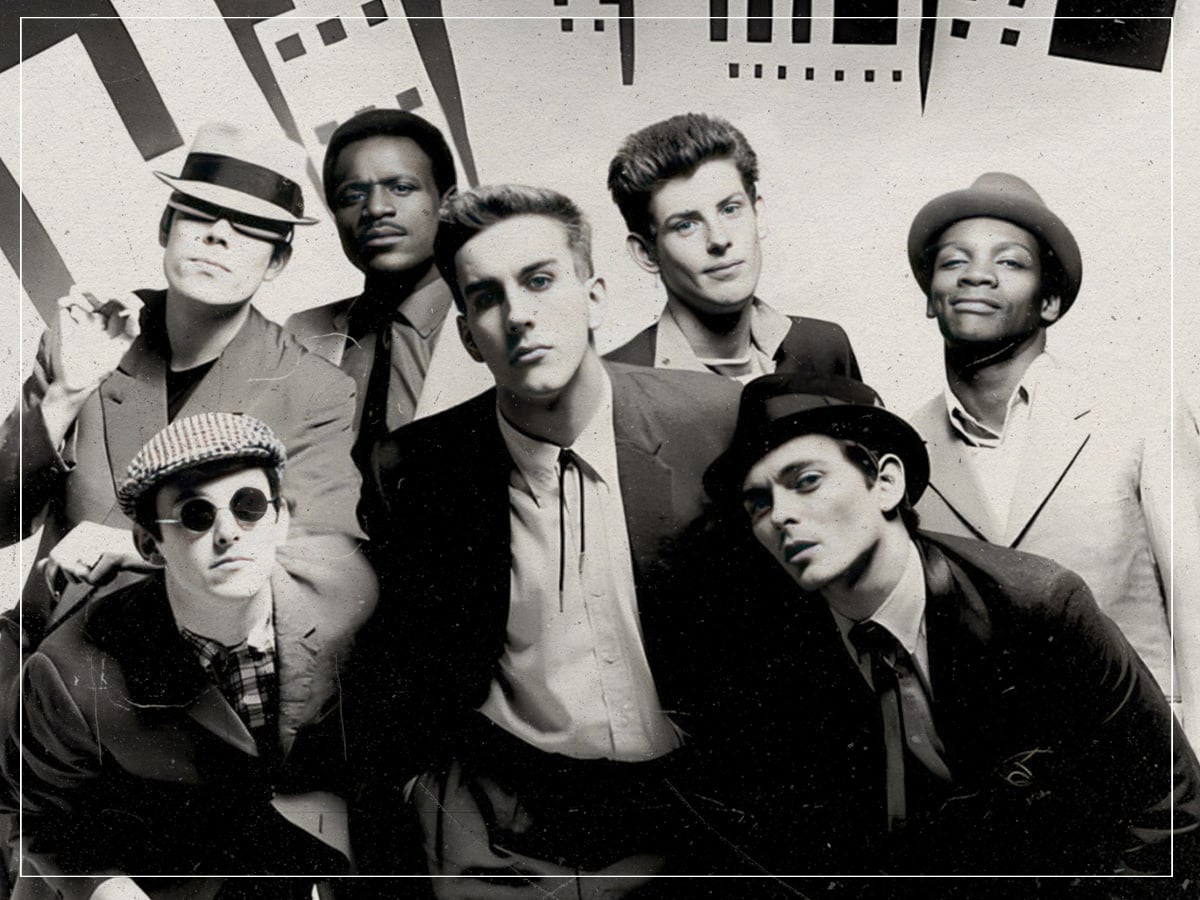
Supernatural inspirations are perhaps a stretch, but The Specials’ truly classic swansong before the ska outfit’s perennial band rejigs and incarnations captures such eerie dread that any musical horror list would be remiss to omit the 2-tone classic.
In two short years since their eponymous debut, Prime Minister Margaret Thatcher’s class bludgeoning had scraped all joy out of life, exacerbating the hungover malaise of the previous decade’s end, overseeing a downward spiral of unemployment, economic decline, riots, and deep, urban decay.
Such political rot needed a befittingly eldritch score. Having become enamoured with subtle electronic flourish and low-key psychedelia for sophomore LP More Specials, Jerry Dammers again pushed the band toward new sonic terrain, eager to translate the shuttered-up doom and broiling anger that hung in the air.
Phantasmagorical vocal chants, forlorn brass bleats, rusty fairground keys, and the unforgettable synthesizer whistle that echoes cavernously all illustrated the barren fug that was cast by a dismal Conservative government. Hooky yet downbeat, and flashing a stark mirror to the scarred lay of the land, The Specials’ ‘Ghost Town’ still stands as one of the most unique and pertinent singles to top the UK Singles Chart.
Black Sabbath – ‘Black Sabbath’

The grandaddy of all spooky rock. Obsessed with the occult back in the days when Black Sabbath were playing under their prior Earth moniker, frontman Ozzy Osbourne allegedly had gifted bassist Geezer Butler a sinister book in Latin and filled with bedevilled illustrations of demons and depictions of Satan himself.
Such an ominous item went nicely with his apartment’s reportedly matte black painted walls and inverted crucifixes decorated for good measure. Having thumbed through the sinister present, Butler went to sleep that night, but awoke in the middle of the night to a dark entity looming at the end of his bed staring straight at him. Supposedly, Butler had run to the bookshelf to find the eerie manuscript removed from its original place.
Anyone who’s been struck with sleep paralysis will find all this pretty familiar, minus the missing book, but it still makes for one hell of an immortal heavy blues chiller. Truly paving the path for metal, Black Sabbath’s 1970 eponymous title track channels everything dark and mysterious that lies in the heart of the spectral wood or forgotten crypt, slow, creeping bass thuds skulks along Tony Iommi’s horror riffs, all swirling around Ozzy’s “What is this that stands before me?” with a stirring seizure of doomy claustrophobia.
