


Five sorely overlooked one-off albums

Sometimes, the lightning bolt of creative inspiration is fleeting, captured only for a brief moment and resulting in one singular, intriguing artistic statement. Whether due to ego clashes, lack of label support, or the complacency that often creeps into bands navigating the cutthroat music industry, some sorely overlooked groups managed to muster the will and energy for just one studio album.
The one-album punch for many artists is a major feature of their enduring appeal, their legacy untainted by rubbish follow-ups or petered-out stagnation. 1998’s The Miseducation of Lauryn Hill still towers as an acclaimed, universally loved album from the former Fugees singer and would prove the ultimate test of ‘the difficult second album’ if she were ever to tackle a sophomore effort. Highly influential artists like Young Marble Giants or The La’s dissolved after their debut, but the one album crown surely goes to Nevermind the Bollocks, Here’s the Sex Pistols, the band’s ’77 LP which preceded their break-up a mere few months later.
Intriguing side-projects or supergroups often only possess a short shelf life. Trent Reznor’s How To Destroy Angels with his wife Mariqueen Mandig, the psych-rock gettogether of Blind Faith, or Mark E Smith’s and Mouse on Mars’ underrated collaboration as Von Südenfed all ventures that offered abrupt flashes of brilliance before returning to their day jobs.
With a slew of one-album gems buried underneath the recognition they deserve, we’ll take a lot at five sorely overlooked examples that you should listen to pronto.
Five sorely overlooked one-off albums
The United States of America (The United States of America, 1968)
One of the first groups to utilise electronic instrumentation along with Silver Apples, The United States of America took psychedelia to infinitely headier territory, fusing Jefferson Airplane’s lysergic garage with a hazy mist of Radiophonic Workshop samples and ring-modulated electronics, a fever dream of experimental pop that still sounds light years ahead.
Centred around singer Dorothy Moskowitz and composer and card-carrying communist Joseph Byrd, Their self-titled album is a politically charged collage of satirical appropriations of American patriotism, dreamy hypnagogia, and sudden bursts of garage freak-outs. An influence on the hauntology pop that bred bands like Broadcast in the 2000s, The United States of America is a landmark record that still sounds just as immersively eerie now.
Music for Parties (Silicon Teens, 1980)
A virtual band after The Archies and long before Gorillaz, Silicon Teens was the vehicle for Mute label founder Daniel Miller, writing and performing the entire album under the alias Larry Least (a play on ’60s producer Mickie Most) and recruiting Fad Gadget’s Frank Tovey as the ‘frontman’ for all media interviews and promotional clips.
Moving away from his prior ‘Warm Leatherette’ single as The Normal, Miller playfully subverts the rock ‘n roll and bubblegum pop songbook, feeding Chuck Berry and The Kinks into the latest synthesizers to create a ‘chip ‘n roll’ synthpop, poking fun at the critical purists who still dismissed the movement as button-pushing non-music. Fizzy, fun, and still fresh, Music for Parties is a fantastic document of the synth-wave revolution.
Blue Sunshine (The Glove, 1983)
1983 was a busy year for Robert Smith. Heading The Cure’s post-Pornography foray into pop with that year’s ‘The Walk’ and ‘The Lovecats’, plus joining Siouxsie and the Banshees as lead guitarist, Smith still managed to eke out some time in his hectic schedule to form the carnivalesque new wave outfit The Glove, along with Banshees bassist Steve Severin.
Smith was contractually only allowed to sing on two tracks. Banshees drummer Jeanette Landray’s then-ex-girlfriend primarily fronted The Glove, a short-lived project that anticipated The Top‘s kaleidoscopic exotica. Landray adds a new dimension to Smith and Severin’s songwriting and boasts the cracking Smith-sung ‘Mr. Alphabet Says’. Blue Sunshine is a superbly upside-down swirl of colourful, surrealist pop.
Music for Sick Queers (German Shepherds, 1985)
Born from San Francisco’s art-punk scene in the early ’80s, Stephen Scheatzle and Sandy Stark mulched their love of The Residents and Pere Ubu as German Shepherds dealing in dank, electronic post-punk exploring paranoia, stalkers, and the fester underneath American suburbia.
Their self-released Music for Sick Queers, long out of print but finally reissued by Superior Viaduct in ’12, is a fascinating but creepy collation of hissing bedroom minimalist, atonal synths and brittle rhythm boxes that feels forbidden and voyeuristic with every listen.
Apple (Mother Love Bone, 1990)
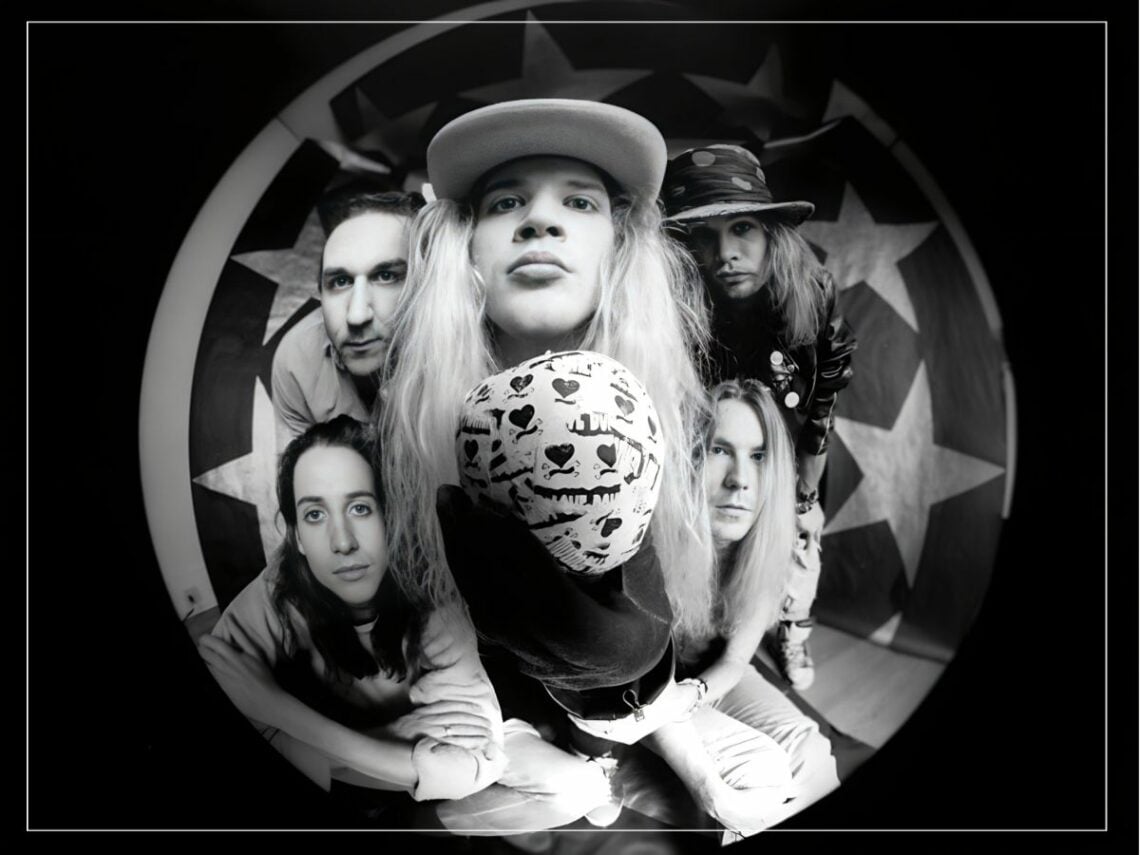
A regional star in the Seattle scene long before Nevermind‘s shock success, Mother Love Bone’s slamming hard-rock and glam swagger proved to be hugely influential on the nascent ‘grunge’ generation and comprised of ex-members of Green River and future Pearl Jam.
Fronted by the charismatic Andrew Wood, Apple is an electric bombast of strutting metal that deftly veers between plumbing anthemic depth while also promising a good time, a spike of soaring decadent optimism lacking in the grunge artists who followed. Dying from a heroin overdose at the age of 24 before the album’s release (and influencing Alice in Chains’ ‘Would?‘), Mother Love Bone’s brief but essential tenure is as much a Seattle blueprint as it is brilliant.
