


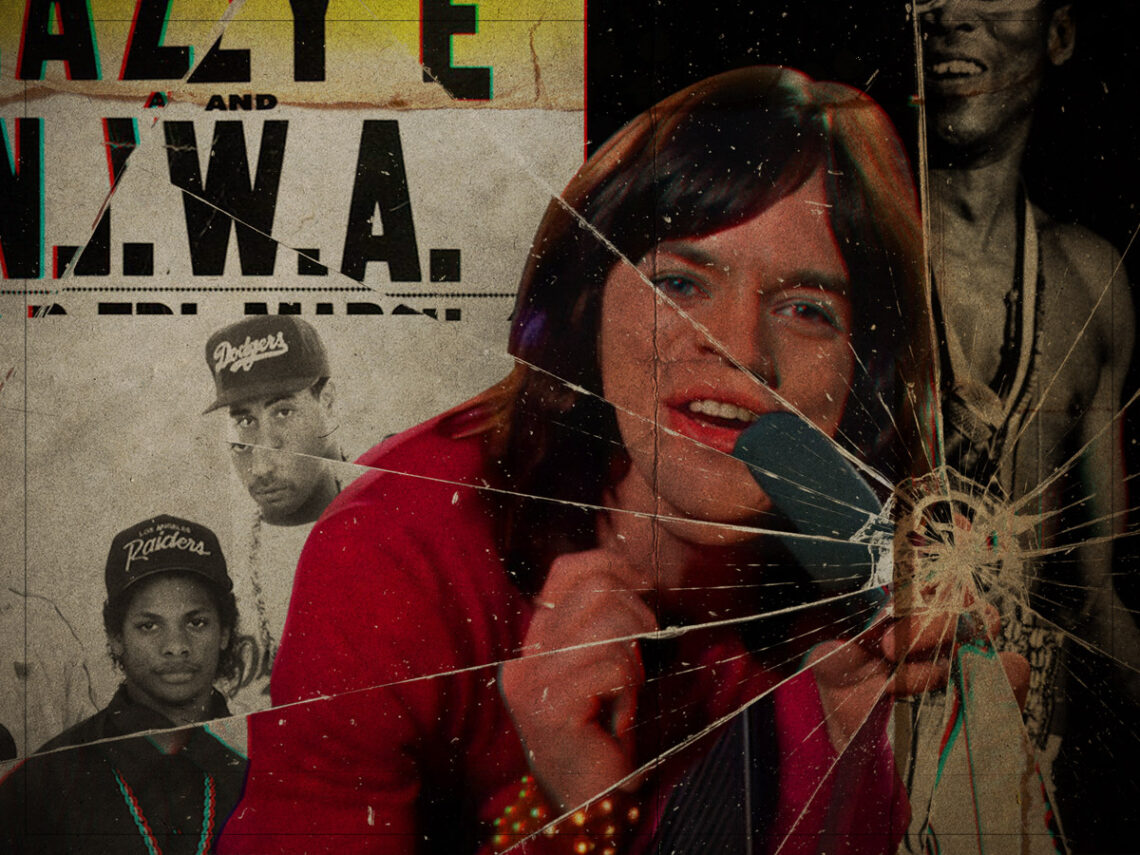
Five classic songs that sparked riots

When Bob Dylan came to a small village in northeastern County Meath, Ireland, to play a show at the Slane Castle in 1984, The Irish Independent may have been looking ahead to such a historical event but ended up reporting on a “weekend of terror”, and “the battle of Slane”.
Windows of local businesses and residential homes alike were smashed in, leaving the streets filled with broken glass and an eruption of violence in the days leading up to the concert. When the local gardaí tried to contain the issue and repel the revellers, the mob then surrounded their station and pelted the on-duty guards with rocks and bottles. “The Rolling Stones was a teddy bear’s picnic in comparison to what happened here last night, that people were actually afraid in their own homes; had to barricade their doors with furniture,” a local publican said in an interview with RTÉ following the riot. “They feared for the safety of their children.”
It wasn’t the first time that Slane Castle had seen such action, with The Battle of the Boyne taking place just a few short miles away way back in 1690, and nor was it the first time that Dylan had come up against such a quarrelsome audience, either. Everywhere he went in 1965 and, especially in 1966, he was met with angry mobs, entitled and violent crowds and combative ‘fans’ who would rush his stages, interrupt his shows, and, even at one gig in New York, attack his band members, leading Dylan to quip that it was “like the attack of the beatniks around here”.
Such scenes were becoming more commonplace in the 1960s and into the ’70s, with violent fans famously overrunning and overwhelming the 1970 Isle of Wight Festival, setting fire to the stage and causing multiple artists to flee for their safety until Leonard Cohen came out and calmed the crowd. But it was not such a new phenomenon, really. As far back as the 18th century, there have been reports of audiences causing a stir during performances, either in reaction to what is being performed or to the political implications of the changing times.
Some of the most famous musically inspired riots include the response to the debut performance of Stravinsky’s ‘The Rite of Spring’ at the Théâtre des Champs-Élysées in 1913, the estimated 35,000 fans—mostly women—who stampeded in New York in 1944 to get a glimpse of Frank Sinatra or the infamous, racially motivated and homophobic Disco Demolition Night of 1979. Sometimes it just takes a single artist to light the fuse under a crowd, sometimes it takes a whole festival or genre. Other times, it only took one song to tip things over the edge.
Five songs that incited violence:
‘Zombie’ – Fela Kuti

At first glance, the name of this 1976 Fela Kuti song and the album it comes from may not seem especially provocative, but to his audience, disciples, and fans, the message was clear. Kuti is not singing about Frankenstein’s monster here, but the real-life horrors being unleashed by the government in his native Nigeria and the “zombie army” that was displaying such corpse-like obedience at their command.
The song and the album were a huge hit among the people of Nigeria, who got the message of rebellion and a call to arms, but as a result, they were naturally less popular with the government. In an effort to silence Kuti, a thousand soldiers were ordered into the Kalakuta Republic, a commune that Kuti had established within the country. Kuti himself was badly beaten during the raid, while his elderly mother, the educator and political activist Funmilayo Ransome-Kuti, was fatally thrown from a window. Kuti’s home, studio and empire were burnt down and destroyed. Everyone who was living with him was either beaten, abused or driven out, and Kuti found himself exiled.
Though now living away from his homeland and without his family, Kuti remained undeterred and unbeaten, and, in a mark of his bravery and fighting spirit, he continued to sing the song in concert. However, during a 1978 performance of ‘Zombie’ at a show in Accra, Ghana, the crowd became as ecstatic, vicious, manic, dangerous and unpredictable as the song itself and began to riot. As a result, Kuti was deported from Ghana and banned from returning to Accra.
‘Fuck Tha Police’ – NWA

This one may not have incited a riot by itself, but it certainly soundtracked one when it became the unofficial anthem of the 1992 LA riots, which broke out following the acquittal of four white police officers following their trial for beating black motorist Rodney King, who had been stopped for speeding. The incident, in which the officers beat, kicked, stunned and tased King over 50 times, was caught on camera, but no charges were brought against the officers. The riots that followed the court proceedings saw over $1bn worth of damage unleashed on the streets of LA and resulted in over 60 fatalities.
For Ice Cube, one of the primary songwriters, the scene was a familiar one. As he told the BBC: “I’m sick of getting hassled. I was tired of seeing my friends come home with scars and stuff, police beating them up for anything and everything, so I was like, ‘Yo, it’s time to retaliate, you know, it’s time to retaliate in song’.” And that’s precisely what he did.
‘Fuck Tha Police’ is a damning indictment of a corrupt, dishonest and fundamentally and institutionally rotten system which oppresses and penalises the citizens it is supposedly set up to protect and which disproportionately harms and, even kills, those citizens if they happen to be from a minority group. As NWA put it in their song, the police force seemed to think that “they have the authority to kill a minority”. Not wanting to stand for the suffering any longer, NWA put the police on trial in the lyrics, and the verdict is guilty.
‘Fuck Tha Police’ could equally have been the unofficial anthem of the protests, riots and unrest that followed in the wake of the brutal murders of Eric Garner, Michael Brown, Tamir Rice, Walter Scott, Alton Sterling, Philando Castile, Stephon Clark, Breonna Taylor, George Floyd, Daunte Wright and countless others at the hands of white officers in the years since, or against the police who upheld the Jim Crow laws and tried to repress the civil rights movement in the past.
‘Rocket Queen’ – Guns N’ Roses

When Guns N’ Roses brought their Not In This Lifetime Tour to St Louis in 2017, it might have seemed like just another night on the road to the casual fan, but it was a momentous occasion to anyone who knew about the group’s history with the city. It marked the band’s first St Louis show in 26 years and the first time they’d return to Mound City since their July 2nd, 1991, show at the Riverport Amphitheatre, which turned riotous.
Halfway through their performance that night, during the song ‘Rocket Queen’, singer Axl Rose spotted something in the crowd that he took exception to. Upon seeing someone in the audience snapping photos of the band, Rose broke off from singing the chorus to order someone from security—supplied that night by the Hell’s Angels—to confiscate the camera.
Unsatisfied with the response from both the crew and the crowd, Rose took matters into his own hands, saying, “I’ll take it, goddamn it!” before launching himself headlong into the crowd and entering into an altercation with the offending fan, and a couple of other surrounding audience members as well. The music onstage fizzled out while Rose was brawling in the crowd, but before long, he was dragged back to the stage, at which point he grabbed his microphone and shouted, “Well, thanks to the lame-ass security, I’m going home!”
After smashing his mic into the ground and quitting the concert, the rest of the band confusedly followed him off, and all hell broke loose in the crowd.
The audience, so incensed at the early ending of the concert, rioted through the city for the next three hours and smashed up the band’s equipment, the venue and the surrounding areas, with dozens being injured in the process. Rose was later arrested and charged with inciting the riot, although a judge found that there was not enough evidence to support the charge.
‘I’m Alright’ – The Rolling Stones

The Rolling Stones are no strangers to controversy, unpredictable encounters, dicing with death and angry audiences, or, in other words, with rock and roll. When a fan stormed the stage at a show in Hampton, Virginia, in 1981 and charged towards Mick Jagger, Keith Richards wasted no time at all in unlatching his guitar from his neck, swinging for the fan with his axe and chopping the stage invader down before popping the guitar back onto its strap and picking up where he left off with the riff to ‘(I Can’t Get No) Satisfaction’ without even missing a beat.
It’s a move he might have wished he’d mastered almost 20 years before, when Stones shows would regularly degenerate into violence. The most famous came at the end of the 1960s, and at the end of the age of innocence, at the Altamont Speedway Free Festival—feted to become the ‘Woodstock of the West Coast’—where the security, again being supplied by the Hell’s Angels, murdered audience member Meredith Hunter during the Stones’ set. Jagger later said that the band had only finished their show in the hopes that they could prevent a full-scale riot from breaking out.
They were no strangers to such scenes. The crowd at a July 24th, 1964, show at the Empress Ballroom in Blackpool had already hounded the warm-up act from the stage, chanting, “We want the Stones!”. But when they got what they wanted and the Stones rolled onto the stage, things didn’t improve too much.
“They punched their way to the front, straight to the stage and started spitting at us,” recalled Keith Richards of the night. Ever the diplomat, Richards responded in kind by kicking one of the overactive concertgoers in the face from the stage. With missiles and projectiles thrown, chairs ripped from the ground, chandeliers smashed from the ceiling, the stage invaded, and equipment smashed, there were only 12 minutes between the start of the set and the police stepping in to put an end to things.
The Stones were promptly banned from Blackpool, but the violent scenes travelled with them where they went. A year later, during a show at the Adelphi Theatre in Dublin, the band were once again driven from the stage during a performance of their riotous song ‘It’s Alright’ by a stampeding audience.
‘Rock Around the Clock’ – Bill Haley and The Comets

From its very earliest days, rock and roll has carried with it a dangerous edge and the threat of violence. It has always struck fear and anxiety into the hearts of the gatekeepers of the established order and it is no wonder. Rebellion is in the lifeblood of rock and roll. Rebellion is in the oxygen that rock and roll breathes, as is the spirit of freedom, anti-authoritarianism and an anti-establishment rhetoric.
Sometimes, it has manifested in the sexual movements of Elvis Presley’s hips; sometimes, it has manifested in the fuzzy and overdriven guitar tones of the Kinks; and sometimes, it has manifested in the outright hostility of lyrics by Bob Dylan. In 1956, it was represented in scenes from Fred F Sears’ musical film Rock Around the Clock, which took its name from the Bill Haley and The Comets song. A socially progressive picture, the film advanced ideas of integration by depicting white performers playing in the same venues as black or Hispanic musicians.
If that wasn’t enough to get the attention of the cultural arbiters, there were elements of anti-establishment sentiments running throughout the film, as well. The old guard had been scared that the new sounds of rock and roll would unlock latent violence in the youth of the day, and their worst fears were confirmed when the young crowds who saw the film began to riot in response to it. Unrest was reported at screenings in America, while full-blown riots were reported following screenings in Germany, Austria and Denmark.
When Bill Haley and The Comets arrived in Germany on tour two years later, the young audiences didn’t seem to have calmed down. There were clashes between the police and the public during shows in Hamburg and Berlin, the latter of which involved over 500 members of the audience, landed plenty in hospital and caused tens of thousands of Deutsche Marks worth of damage to the venue.
The West Berlin senate declared a ban on all future rock and roll shows, while the official Communist Party newspaper of East Germany, Neues Deutschland, ran a front page editorial which claimed that Haley was “turning the youth of the land of Bach and Beethoven into raging beasts”.
