


Five songs that became embroiled in true crime scandals

Amid the crass sensationalism and lurid voyeurism that fuels the true crime industry, murder cases can prove to be furtive grounds for unlikely inspiration. The litany of infamous instances of violent crime so ingrained in the collective psyche often serve as conduits to wider explorations of environmental conditions or social failure. The Whitechapel murders of 1888, while generating a sad tourist industry to this day, thrust reformer Charles Booth’s poverty map of London to the centre of national discourse in the bloody aftermath of Jack the Ripper’s vicious attack on vulnerable women crushed in Victorian England’s brutal class oppression.
Jump to the 1950s American Midwest, and Charles Starkweather’s killing spree across Wyoming—carried out with his ‘partner’, Caril Ann Fugate, under his influential spell—prompted a stark reflection on the country’s barren hopelessness. Bruce Springsteen’s ‘Nebraska’, the title track of an album that explored the unravelling of ’50s America’s national mythos, captured this descent into despair and violence. The album’s themes were punctuated by the shocking Clutter murders in Kansas, as documented in In Cold Blood, and Ed Gein’s macabre obsession with the dead on his isolated Plainfield farm.
True crime has had a hand in the songwriting efforts of numerous bands, from Nirvana’s ‘Polly’, The Boomtown Rats’ ‘I Don’t Like Mondays’, and The Smiths’ ‘Suffer Little Children’, but what about the other way round? Unfortunately, some of rock and pop’s biggest names have been embroiled in some of history’s most infamous murder cases, songs taking on twisted interpretations wholly unintended by the artists who wrote them, yet forever associated with a killer’s murderous ends.
Any whiff of a song’s supposed influence on true crime can become further complicated by a political class that’ll pursue moral hysteria over systemic analysis every single time. Just as the New Testament can’t be blamed for ‘pro-life’ Michael Frederick Griffin’s fatal shooting of a reproductive care doctor in Florida, the legal persecution meted out on hard rock in the 1980s and ’90s threw all attention away from rational diagnosis of young people’s alienation; Judas Priest, Twisted Sister, and Ozzy Osbourne all endured legal challenges over their perceived malevolent influence on suburban American kids following highly publicised suicide cases.
With popular music’s long and thorny history of inspiring violence – and being scapegoated for it – we take a look at five songs that score some of history’s heinous cases.
Five songs embroiled in true crime scandals:
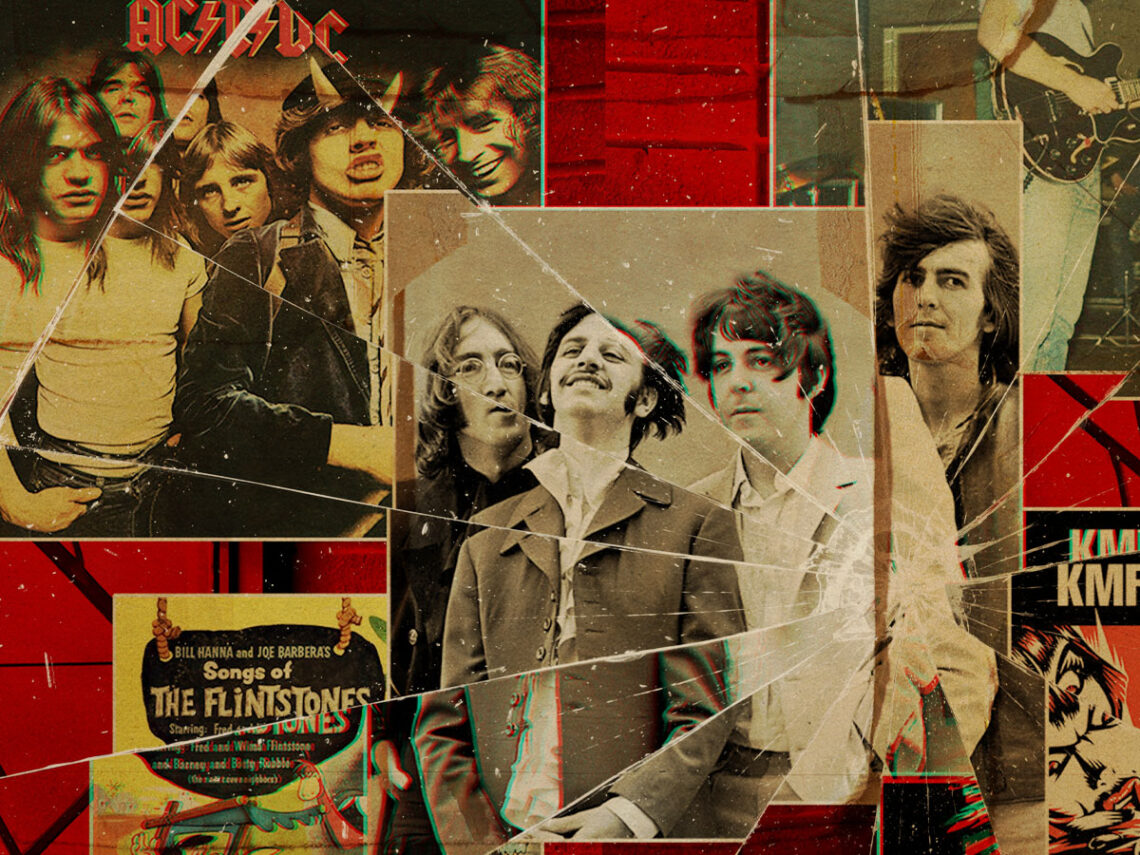
Hoyt Curtin, Joseph Barbera and William Hanna – ‘Meet the Flintstones’

In 1999, London’s Brixton, Brick Lane, and Soho areas were all targeted by Neo-Nazi fascist David Copeland in a racist and homophobic bombing campaign – the duffel bag explosive containing up to 1,500 nails planted in the Admiral Duncan LGBTQ+ bar claimed three lives. With a membership history in far-right parties, the British National Party and later the smaller but even more extreme National Socialist Movement, Copeland was committed to his fantasy of a UK race war; two giant swastika flags were discovered hanging from his bedroom wall when he was arrested in Hampshire.
The extent of his mental health issues is still up for debate, but psychiatric consensus did conclude that he had some fraying psychological deficits and was deemed to suffer paranoid schizophrenia and diagnosed with a personality disorder by professionals at Broadmoor Hospital. Alongside his sadistic dreams as an SS officer controlling women as slaves, The Flintstones‘ TV theme, sung by his parents, etched into his psyche with its refrain “we’ll have a gay old time” triggered a fear he may be a homosexual as a teenager, the innocuous ’61 jingle interpreted to be actively instilling a message regarding his developing sexuality, according to conversations with journalist Nick Ryan. Insecure agony plucked from a cartoon TV show is a stark illustration of how distorted beyond recognition one’s art can be once out in the ether.
KMFDM – ‘Stray Bullet’

It has become a byword for the dreadful modern phenomena that continue to plague America. On April 20th, 1999, twelfth-grade students Eric Harris and Dylan Klebold entered Columbine High School armed with semi-automatic pistols, shotguns, and homemade explosives, killing 13 before turning the guns on themselves. Even with the wave of school shootings that followed—including the 2024 Apalachee High School shooting in Georgia—the conservative right and the National Rifle Association, bolstered by relentless lobbying efforts, refuse to budge on even the most moderate legislative measures to address the country’s deadly gun epidemic. The lives of children, it seems, are a price worth paying so a select few can cling to their guns.
While shock rocker Marilyn Manson received the most heat from an outraged media and zealous Christian right, there was little evidence that Harris and Klebold were fans. It was the German industrial group KMFDM that Harris loved, posting the lyrics to ‘Stray Bullet’ on his website not long before the massacre. Wishing to quash any further misread of their values, frontman Sascha Konietzko issued a statement expressing their sympathies with the victims’ families and reiterating the band’s steadfast principles opposing war, fascism, and violence against others.
New Order – ‘True Faith’

In May 2012, Chinese computer engineering student Jun Lin was tragically murdered in a horrifically predatory case that shocked Canada and the world. Lured to an apartment in Montréal’s Décarie Boulevard through a promise of a sexual encounter via hookup site Craigslist, Luka Magnotta filmed himself killing and dismembering Jun, uploading the video to a notorious shock site under the title 1 Lunatic, 1 Ice Pick. Various limbs and body parts were mailed to Vancouver schools and the respective headquarters of the country’s Conservative and Liberal parties, the latter intercepted before arrival.
Throughout his horrific clip, New Order’s 1987 hit ‘True Faith’ plays in the background. There’s been much speculation as to why that one song was chosen, if not incidental. Some have theorised its selection could be from its usage in the American Psycho soundtrack; psychiatrist Marie-Frédérique Allard reports that Magnotta heard it in a “sitcom” but never divulged which. ‘True Faith’ became the feature of another grisly clip, as Scarlet Blake’s filmed killing of a cat, inspired by Magnotta’s internet history of animal cruelty, was carried out with ‘True Faith’ in the background, a warped nod to her hero.
AC/DC – ‘Night Prowler’

Los Angeles was struck with fear in the mid-1980s, when serial killer and sex offender Richard Ramirez, dubbed the ‘Night Prowler’ by the press, murdered at least 14 people in the greater metropolitan counties and even San Francisco’s Bay Area. Striking terror in the region across the fourteen months he was at large, it was revealed during his eventual trial that Ramirez held a fascination with the occult, flashing a pentagram in court and shouting “Heil Satan!” during the proceedings.
He was also a big AC/DC fan, with the LAPD claiming he wore their band T-shirt during his spree and leaving an official merch hat at one of the crime scenes. People who knew Ramirez claimed that his favourite song of theirs was ‘Night Prowler’ from ’79’s Highway to Hell, wrongly interpreting its lyrical ode to sneaking in one’s girlfriend’s room as her parents sleep upstairs as breaking and entering in the pursuit of murder. This hideous lyrical inference dropped the band in dire publicity, and their gigs were protested by ‘concerned parents’ in the area.
The Beatles – ‘Helter Skelter’

It’s near-impossible to chronicle the dark storm clouds that bookend the 1960s’ tumultuous close without touching on the Family cult’s brutal killings of at least nine people in LA. Orchestrated by long-time criminal and phoney guru Charles Manson, a pretence of countercultural profundity and daily doses of LSD garnered him a dedicated follower base who ate out the palm of his hand, commanding his gaggle of bewildered misfits and runaways to carry out vicious murders on the city’s celebrity world.
Playing The Beatles’ ’68 double LP on repeat at their Spahn Ranch hideout, Manson credited the entire album as prophesying his paranoid race war theory, highlighting Paul McCartney’s raucous ‘Helter Skelter’ as a major underpinning to his apocalyptic vision. Predicting the end times would be triggered by targeting the Beverly Hills neighbourhood, an entourage of zealots carried out the Tate-LaBianca murders, Manson asking upon their return, “Was it really helter-skelter?”, besmirching the title with a terrible new connotation.

Never Miss A Beat
The Far Out Beatles Newsletter
All the latest stories about The Beatles from the independent voice of culture.
Straight to your inbox.